Columbia – Home of the Underground Railroad – A Historic Society Tour

On Saturday, August 9, the Columbia Historic Preservation Society sponsored a tour of the route of the former Underground Railroad, the path to freedom for 19th-century slaves.  The tour started and ended in Columbia, with stops at the Lancaster County Convention Center, Lancaster’s Shreiner-Concord Cemetery, the Thaddeus Stevens College of Technology, and the Underground Railroad Visitors Center in Christiana. 

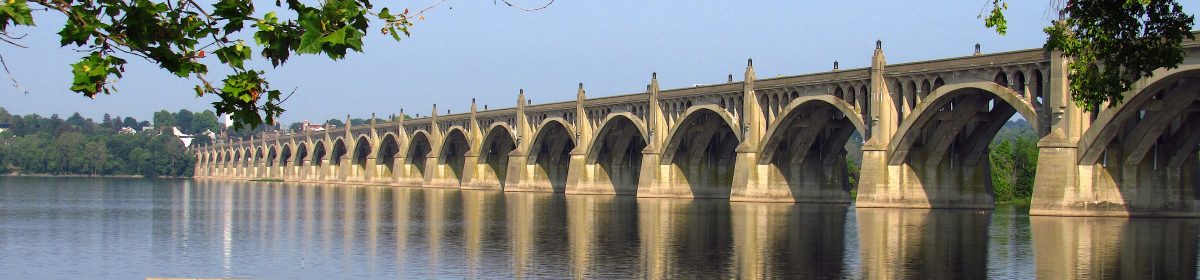
The term “Underground Railroad” is said to have originated in Columbia, and there is strong historical evidence to support this claim.  In the mid-19th century, Columbia was a thriving transportation hub, with a bridge, a ferry, and a canal system, as well as a secret network of safe houses, making it a recognizable and desirable stopover on an escaped slave’s route to freedom.

In his book The History of the Underground Railroad in Chester and the Neighboring Counties (1883), R.C. Smedley states the following:
“In the early part of concerted management slaves were hunted and tracked as far as Columbia [Pennsylvania].  There the pursuers lost all traces of them.  The most scrutinizing inquiries, the most vigorous search, failed to educe any knowledge of them.  Their pursuers seemed to have reached an abyss, beyond which they could not see, the depths of which they could not fathom, and in their bewilderment and discomforture they declared there must be an underground railroad somewhere.  This gave origin to the term by which this secret passage from bondage to freedom was designated thereafter.” 

William Wright, a Columbia citizen, is credited with laying the groundwork for this systematic transport of escaped slaves. In addition, William Whipper, an African-American businessman, owned railroad cars outfitted with secret compartments for hauling slaves, giving the term “Underground Railroad” a physical dimension, in addition to its metaphorical meaning.
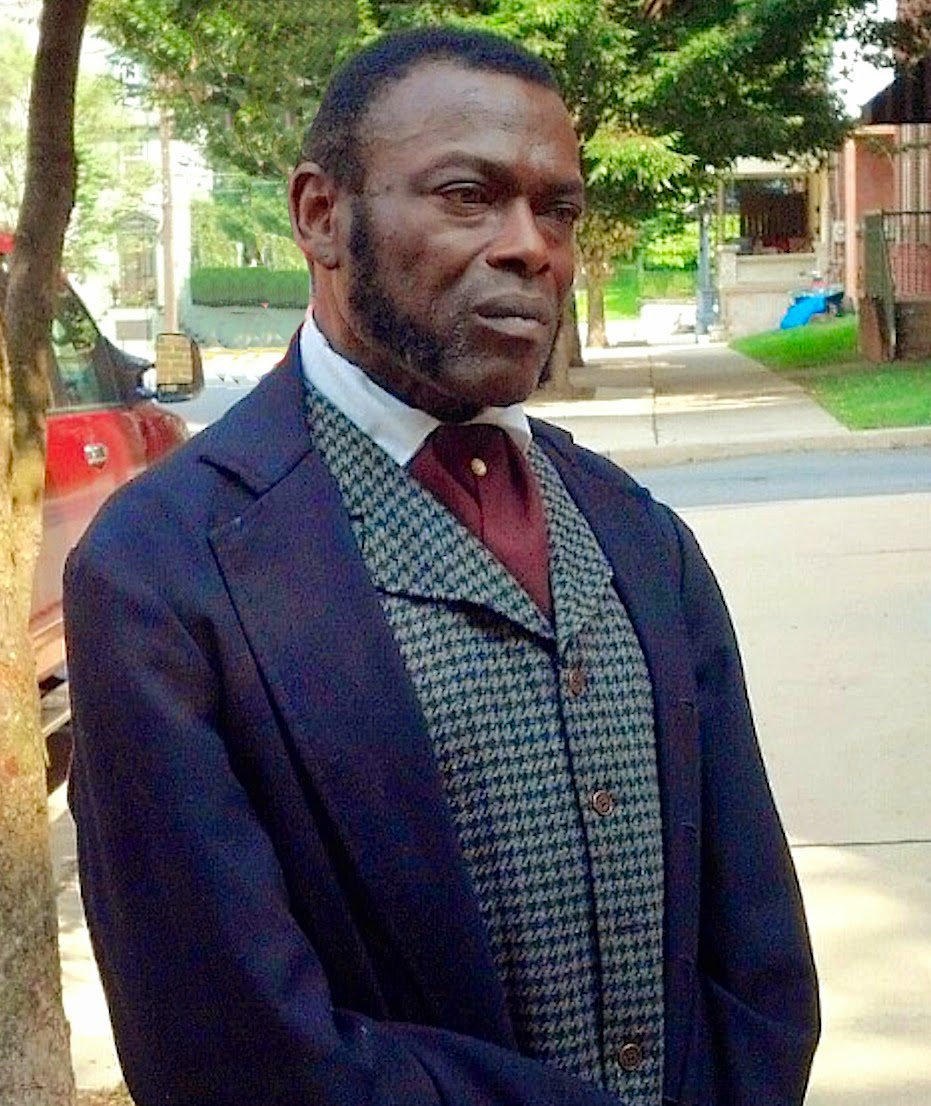
 Columbia’s Robert Brinson portrayed Columbia businessman William Whipper.

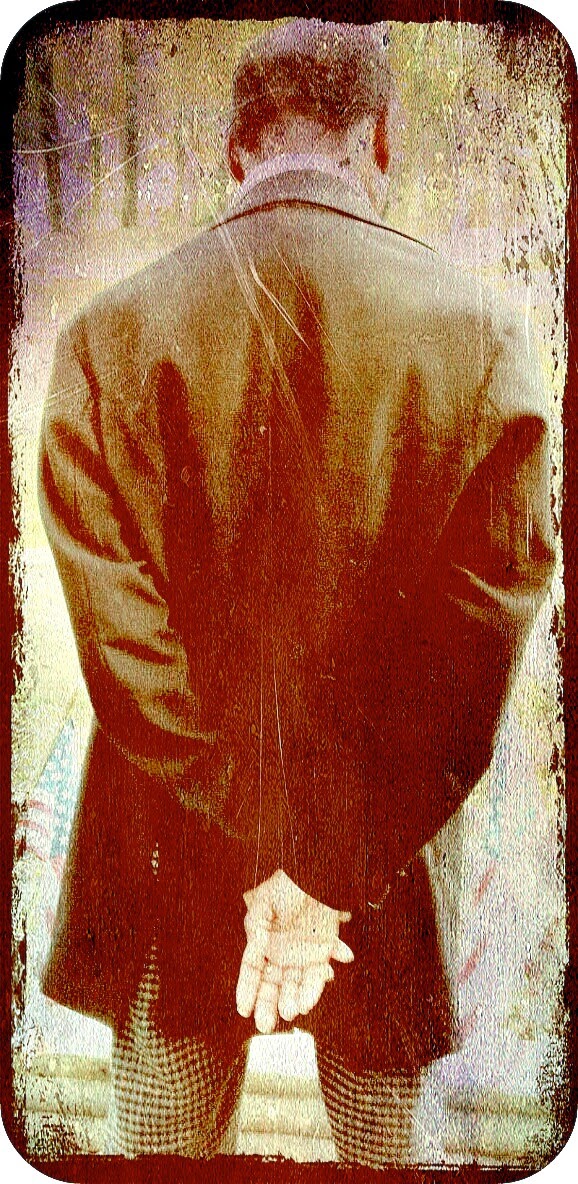
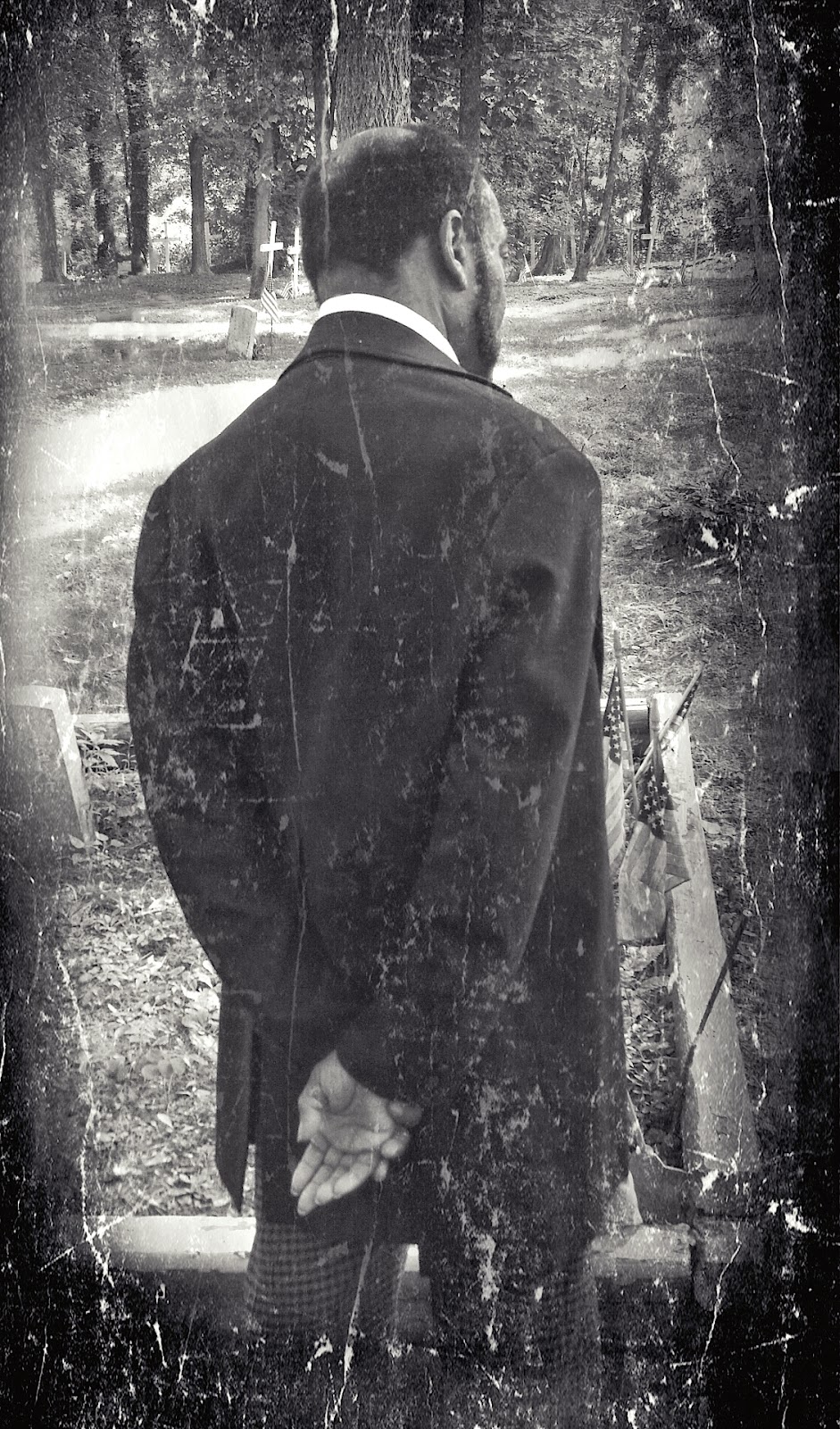
When the tour group arrived at Columbia’s Zion Hill Cemetery, “William Whipper” contemplated the sacrifice of black Civil War soldiers buried there, most of whom fought with the 54th Massachusetts Regiment. During the construction of the Route 30 bypass in the late 1960s, many of the grave markers were dug up and tossed aside.  In 1997, funds were raised, and dedicated community volunteers gathered and reset some of the stones, and added markers to probable grave locations.
The cemetery also holds the grave of Columbian Robert Loney, a soldier with Company I of the 32nd United States Colored Troops (USCT) Regiment.
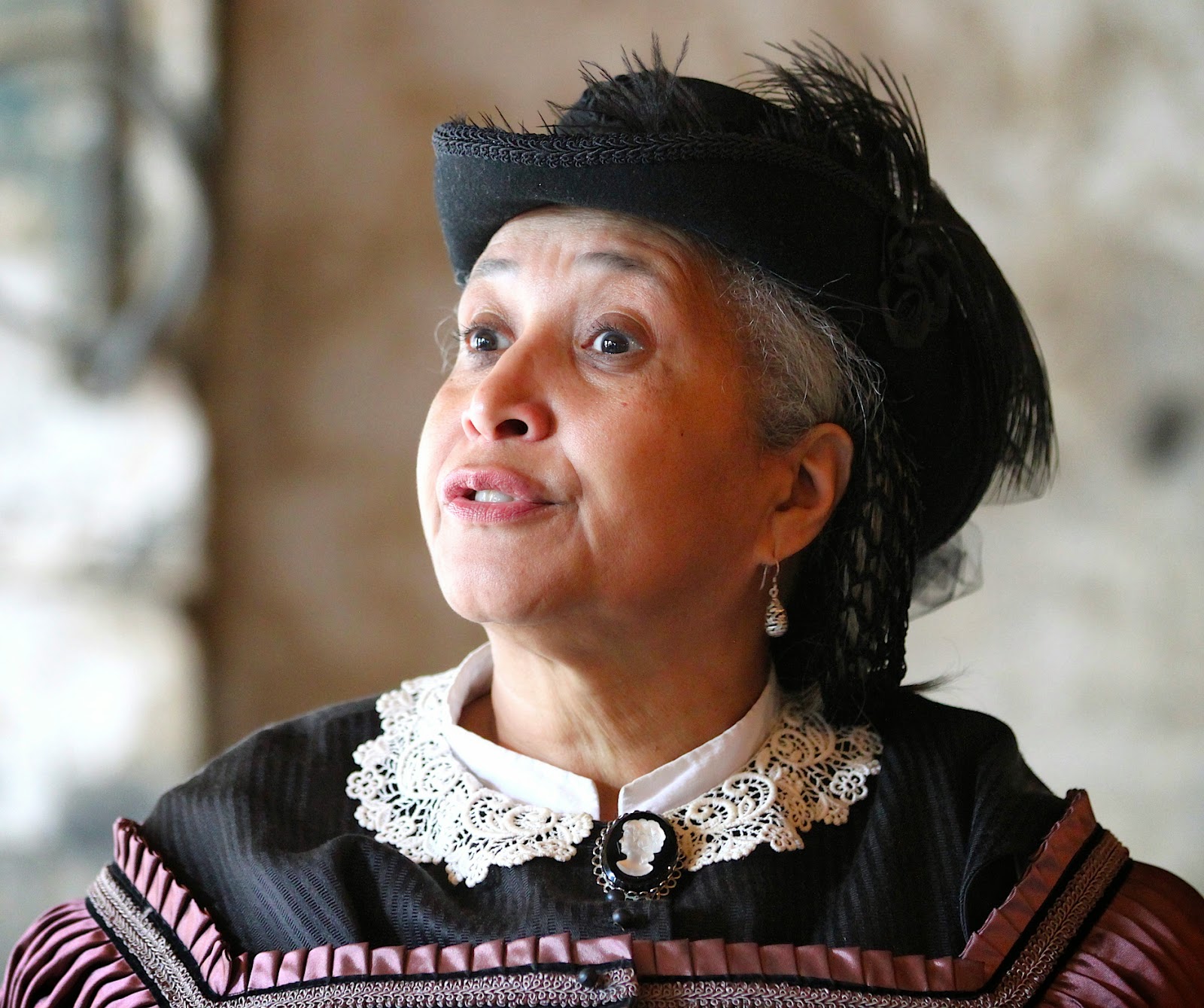
At the Lancaster County Convention Center, Darlene Colon, president of the Christiana Historical Society, portrayed Lydia Hamilton Smith, housekeeper and confidante to U.S. Congressman Thaddeus Stevens.  The site encompasses Stevens’s former office and residence, which became a station on the Underground Railroad. Smith lived in a separate house in the rear but later moved into the main residence with her children. 

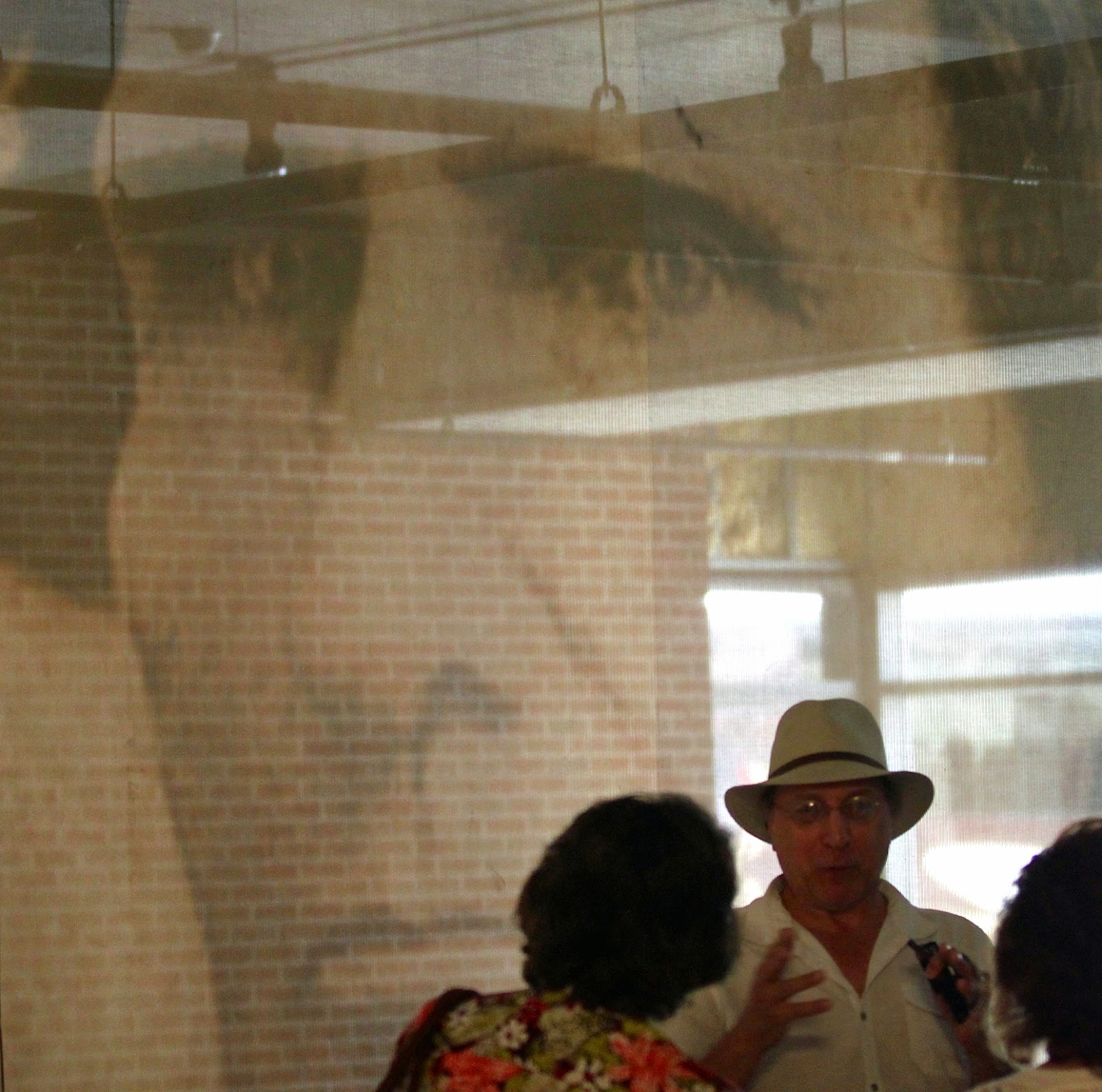
Standing before the spirit of Thaddeus Stevens (actually a large hanging), historian and tour guide Randolph Harris explained details of the site.
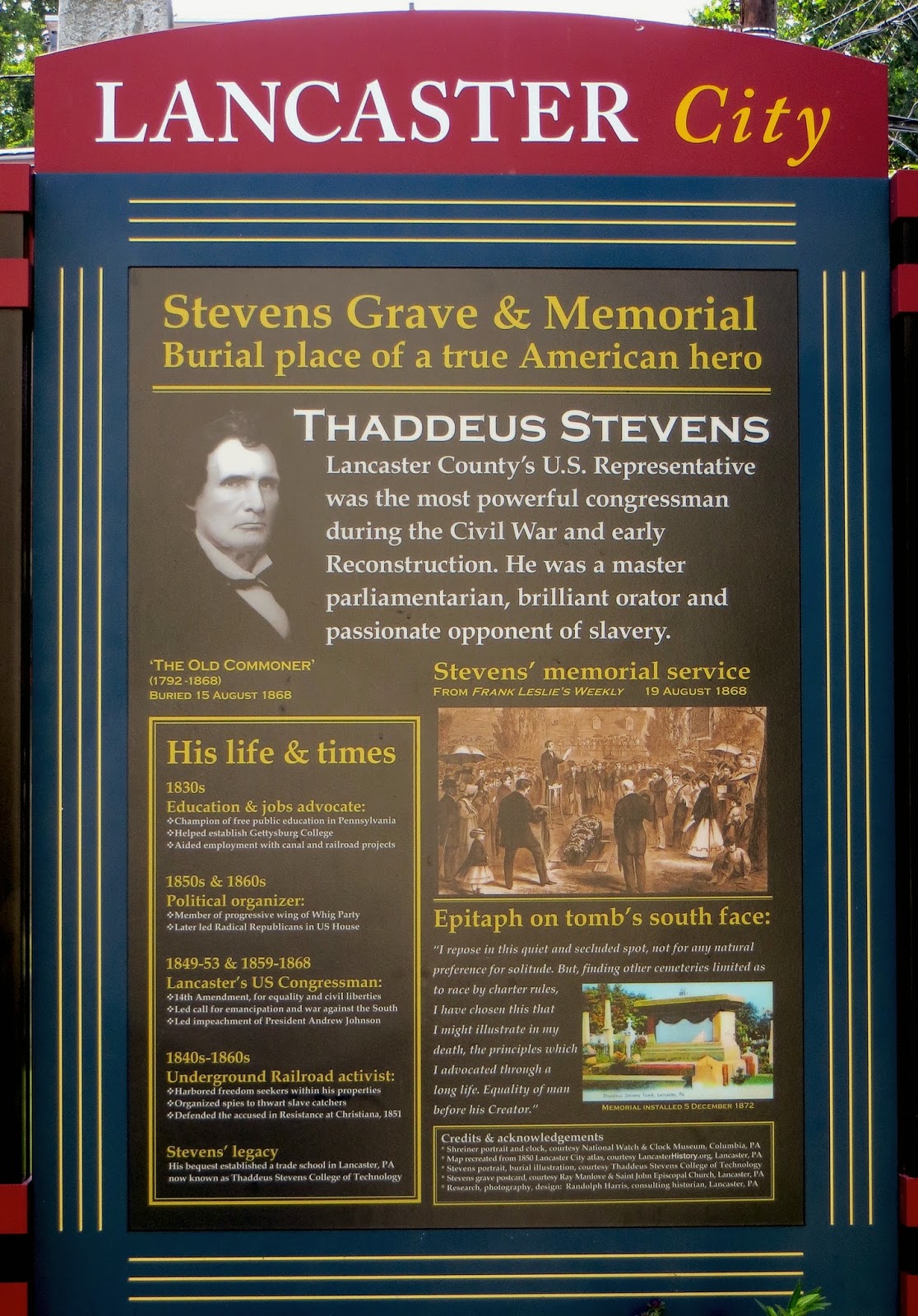
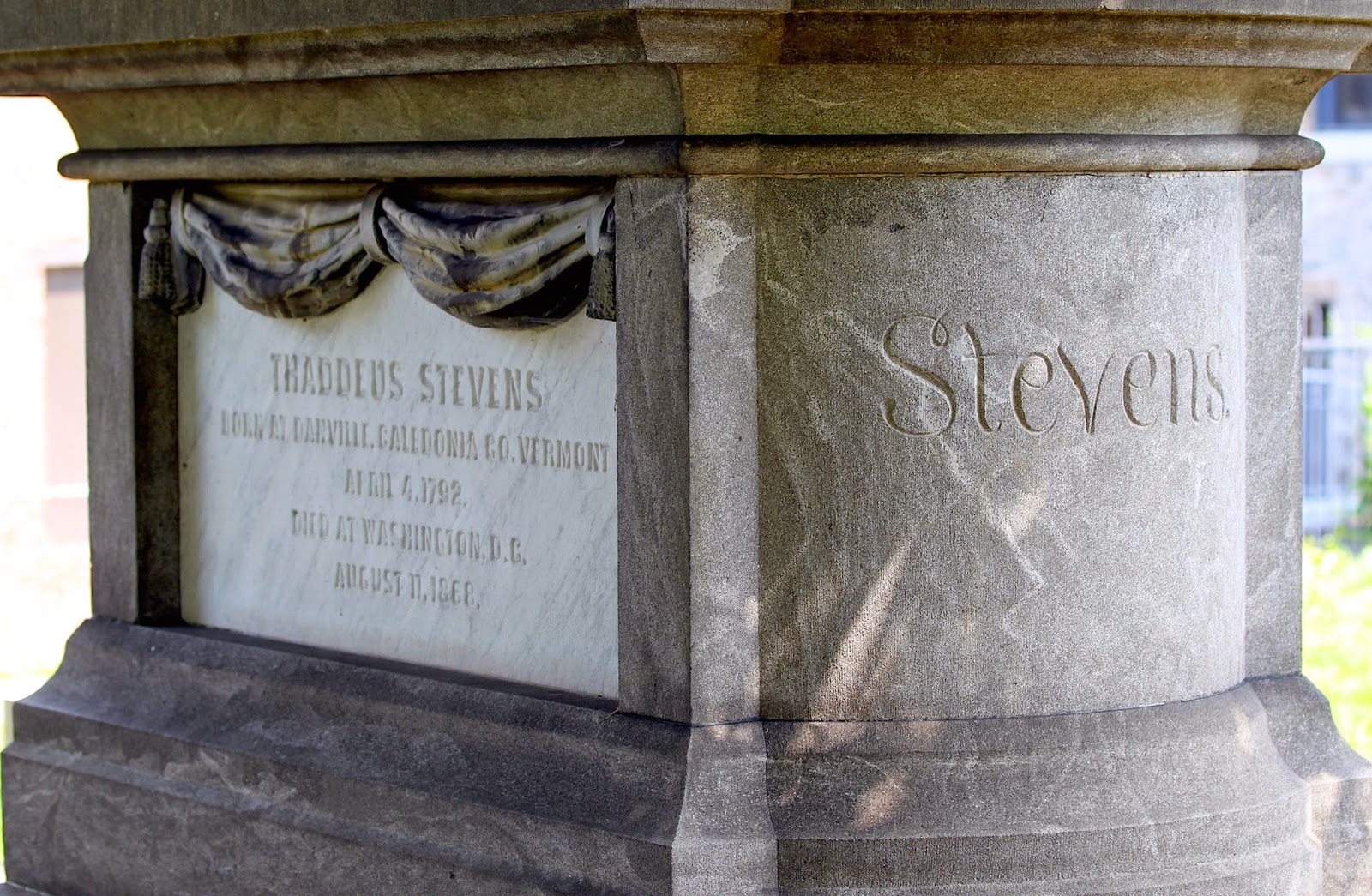
Lancaster’s Shreiner-Concord Cemetery holds Stevens’s grave and memorial.

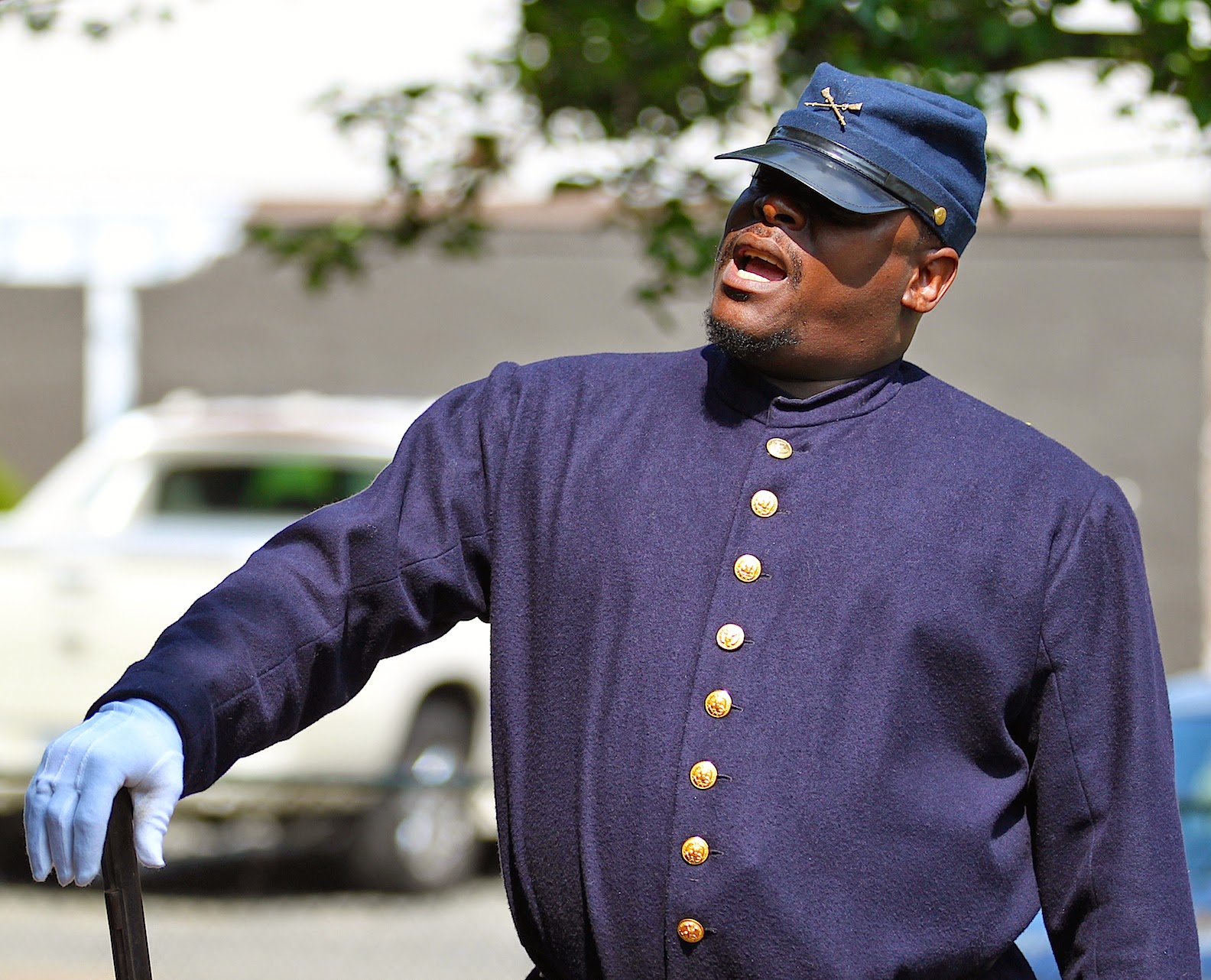
A. Lee Brinson portrayed Civil War soldier Sergeant Jonathan Sweeney, who “materialized” at the cemetery to visit his and his wife’s graves, and to give his regards to Stevens.

The tomb of Thaddeus Stevens

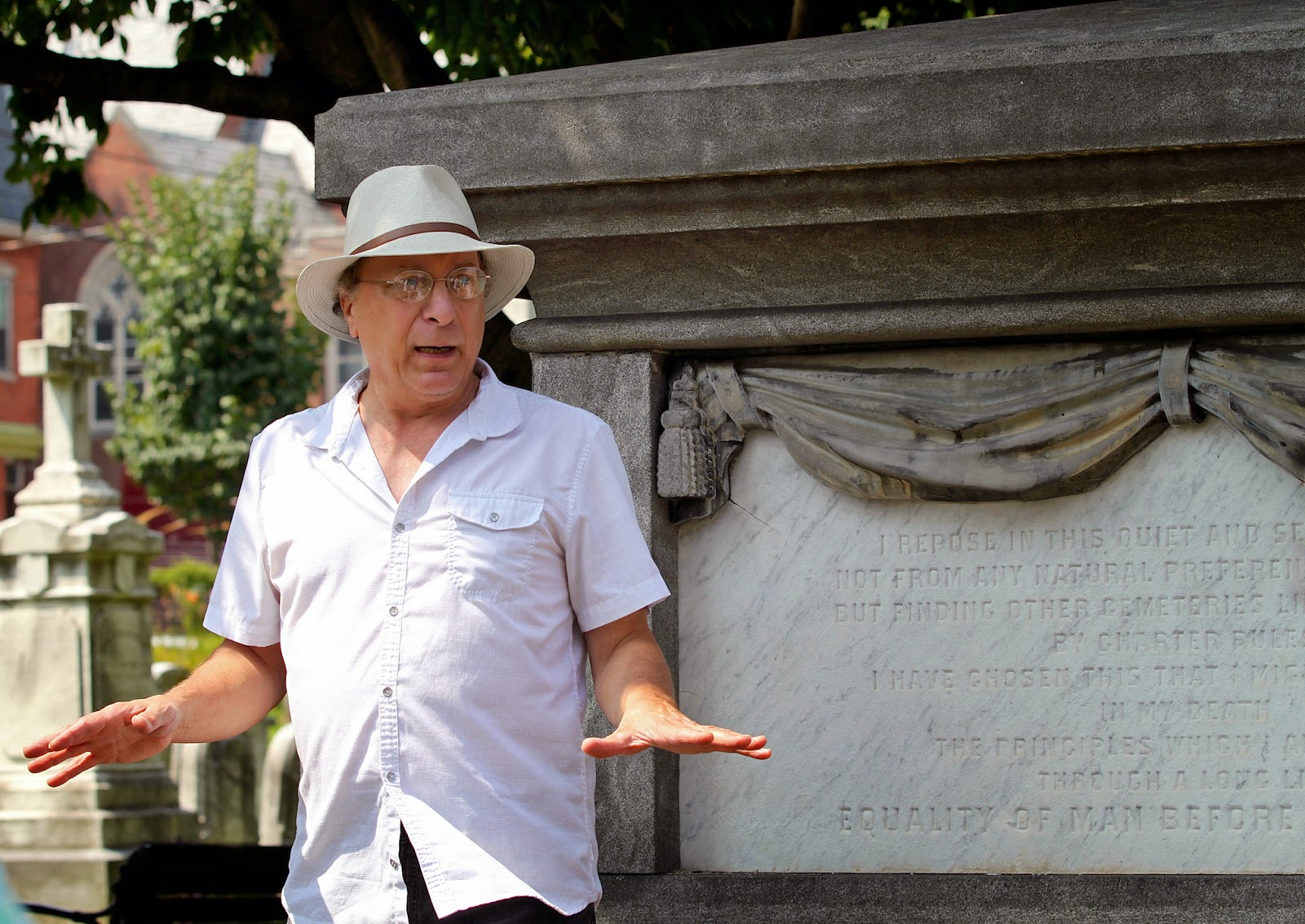
 Historian Randolph Harris explained aspects of Stevens’s life.

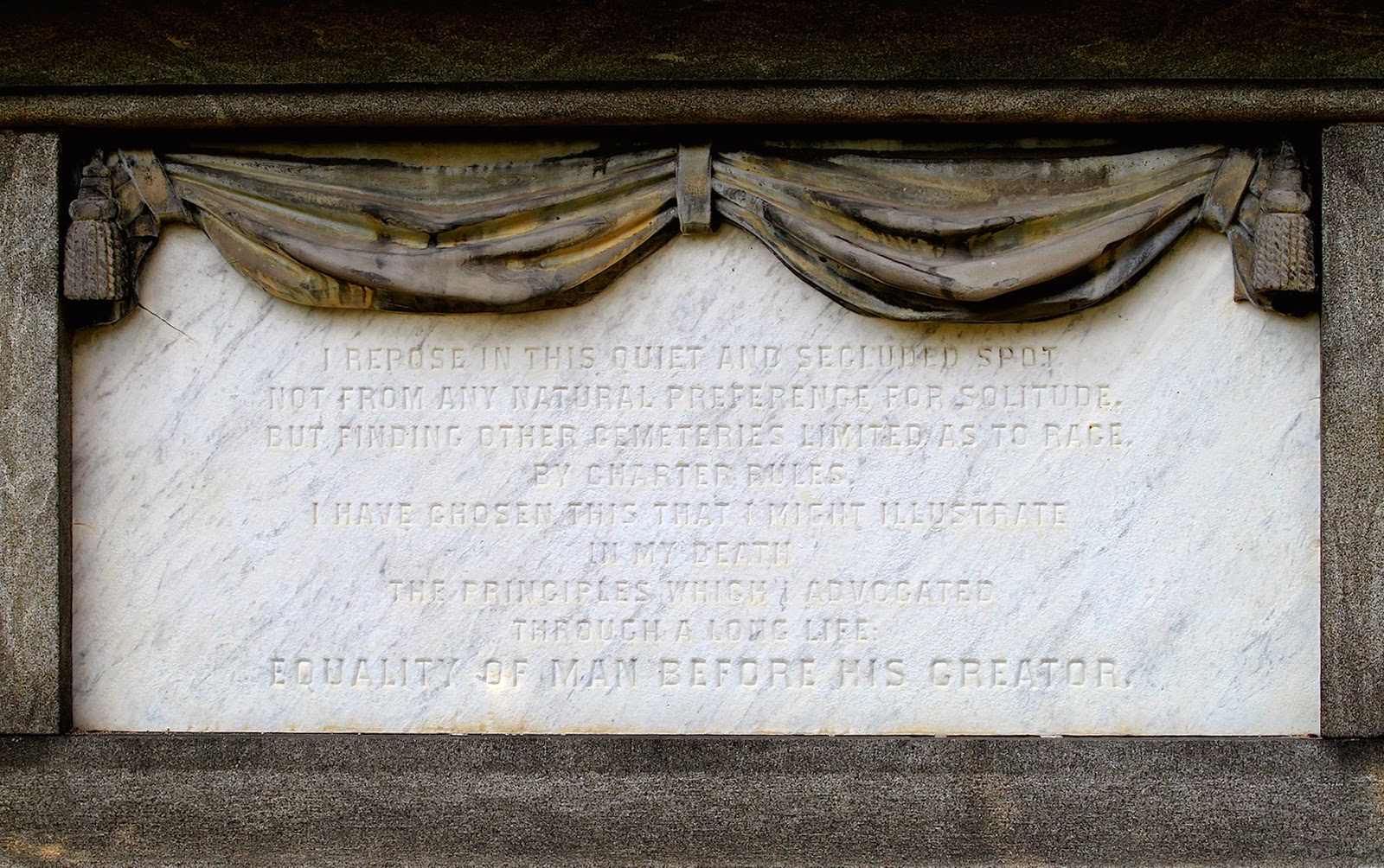
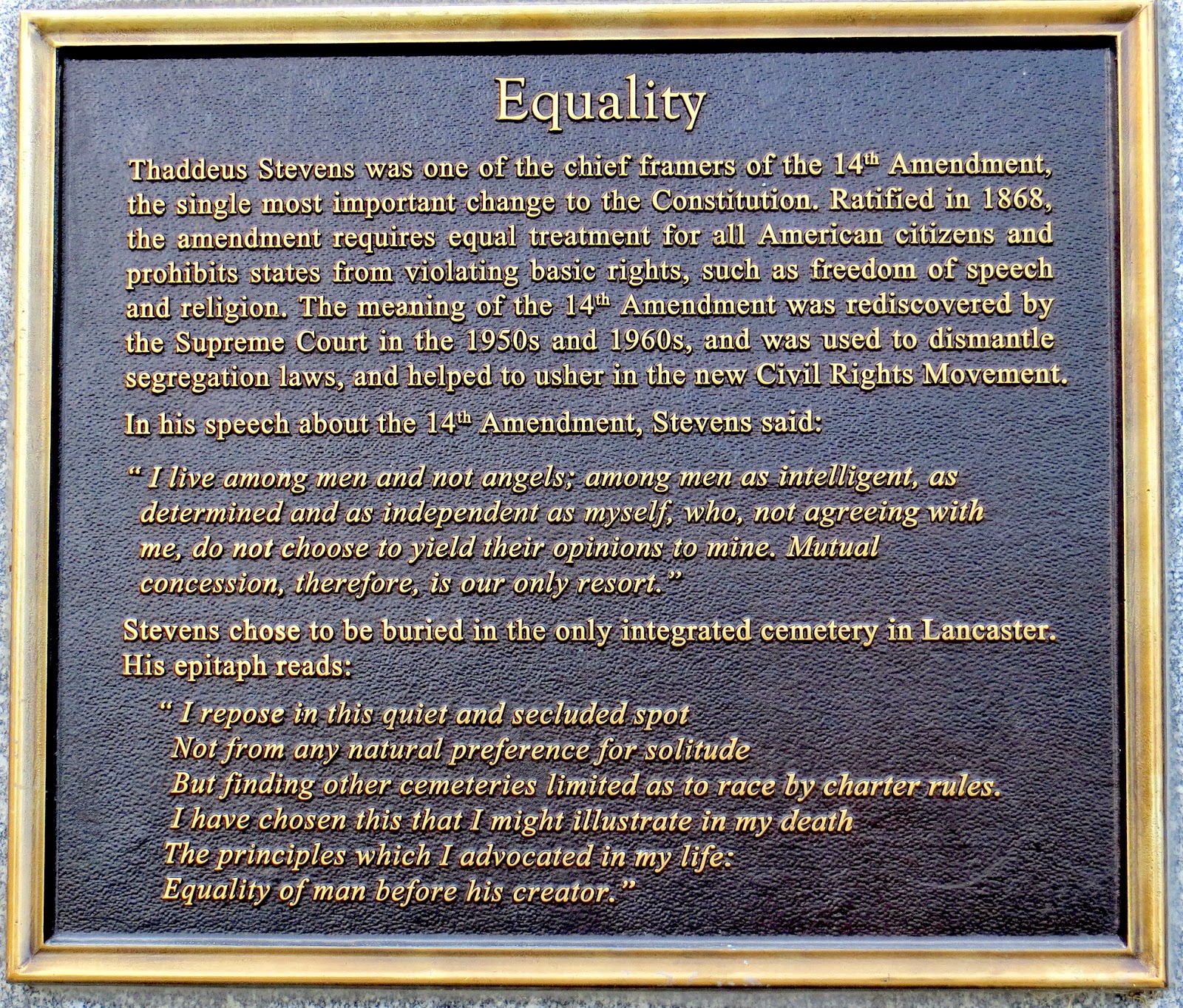
“I repose in this quiet and secluded spot, not from any natural preference for solitude; but finding other cemeteries limited as to race, by charter rules, I have chosen this that I might illustrate in my death the principles which I advocated through a long life, equality of man before the Creator.
-Epitaph on Thaddeus Stevens’ tomb, written by himself
The epitaph faces south as a symbolic message to Southern slaveholders.
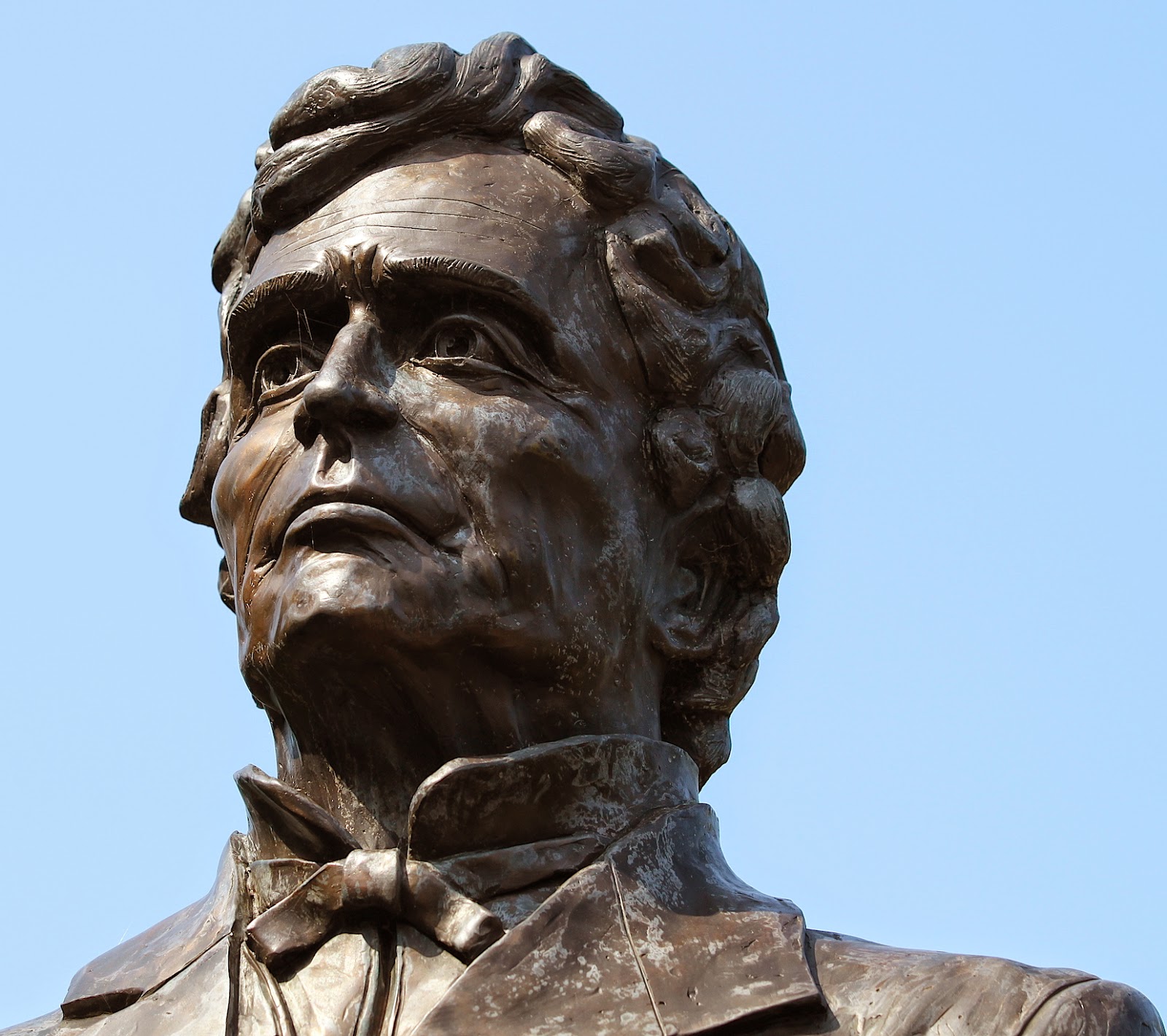
Statue of Stevens at Thaddeus Stevens College of Technology.

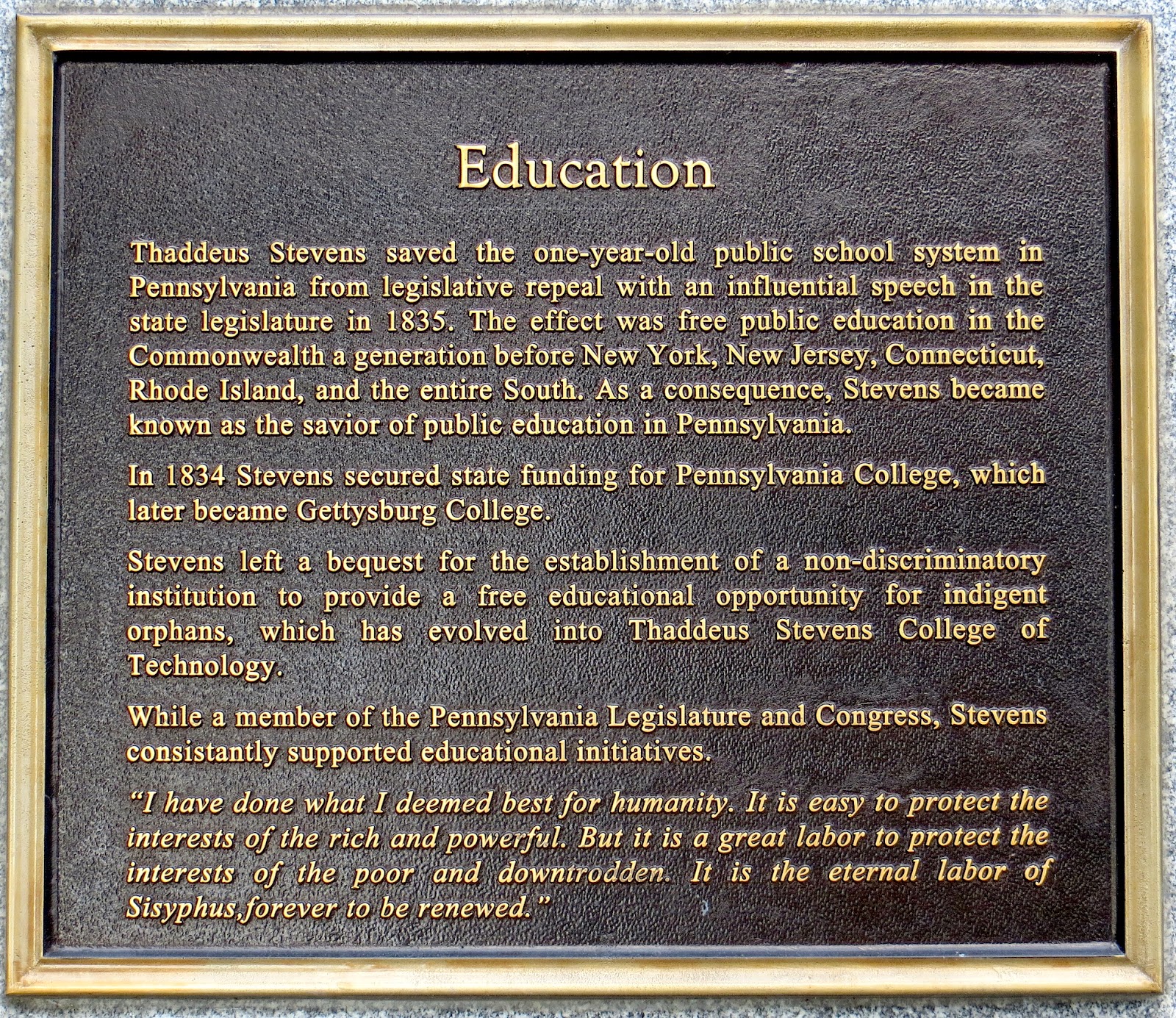
Plaques surrounding the base of the statue elucidate Stevens’s accomplishments and convictions:

If he were alive today, Stevens would probably be branded a “liberal” – or more likely a “socialist” – by right-wing bloviators, for promoting such virtuous principles.

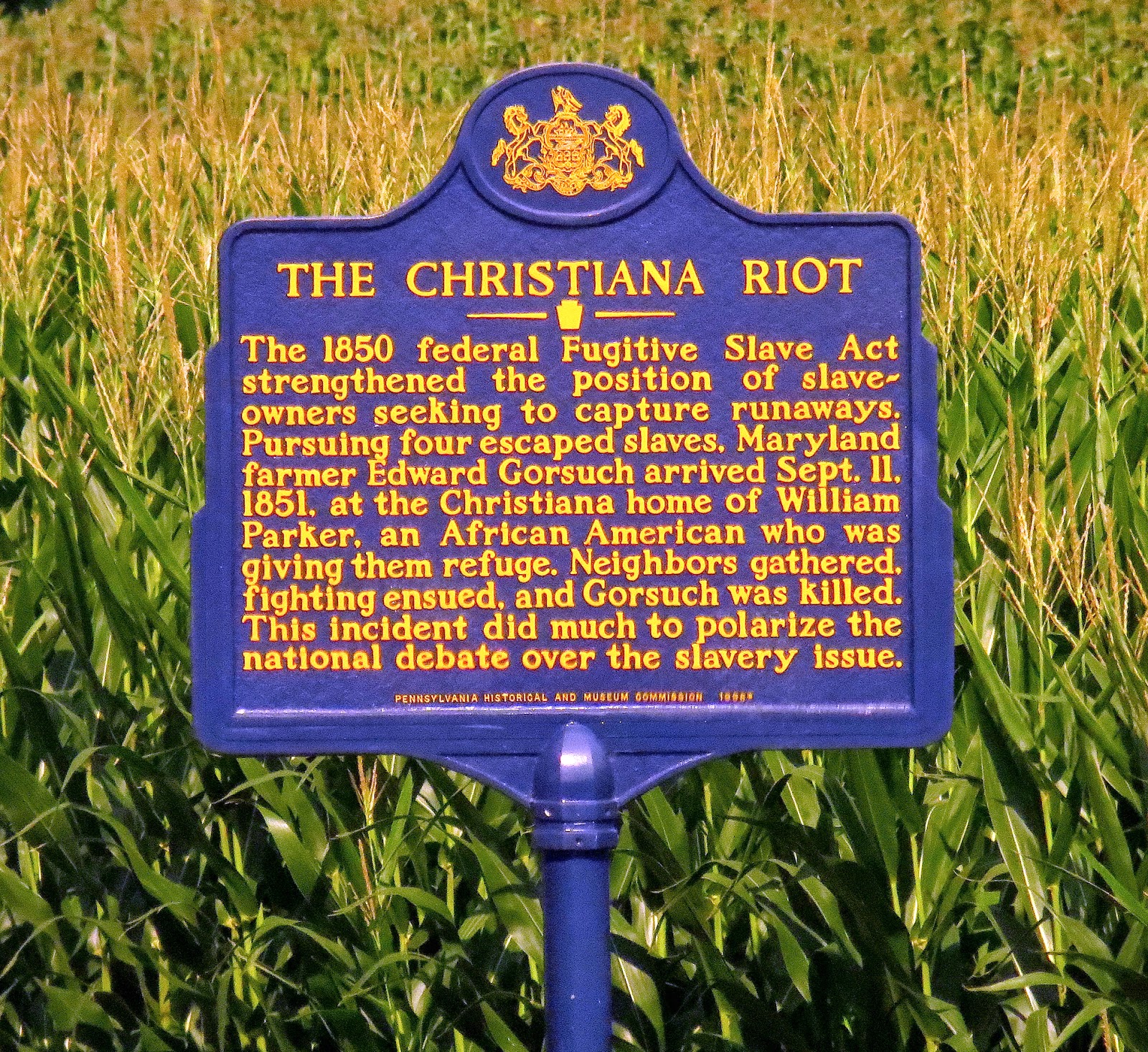
The final stop on the tour was Christiana, site of the Christiana Riot, also known as the Christina Resistance.
On Sept. 11, 1851, Maryland slave owner Edward Gorsuch entered Christiana with a posse to demand the return of his slaves.
William Parker, a former slave who had been giving them refuge, told Gorsuch he was in the North and there were no slaves. In the ensuing fighting, Gorsuch was killed. Later, U.S. Marines arrived to restore order. Subsequently, 38 men were arrested and charged with treason under the federal Fugitive Slave Law.
Thaddeus Stevens defended them, and after the first defendant was acquitted, charges against the others were not pursued.

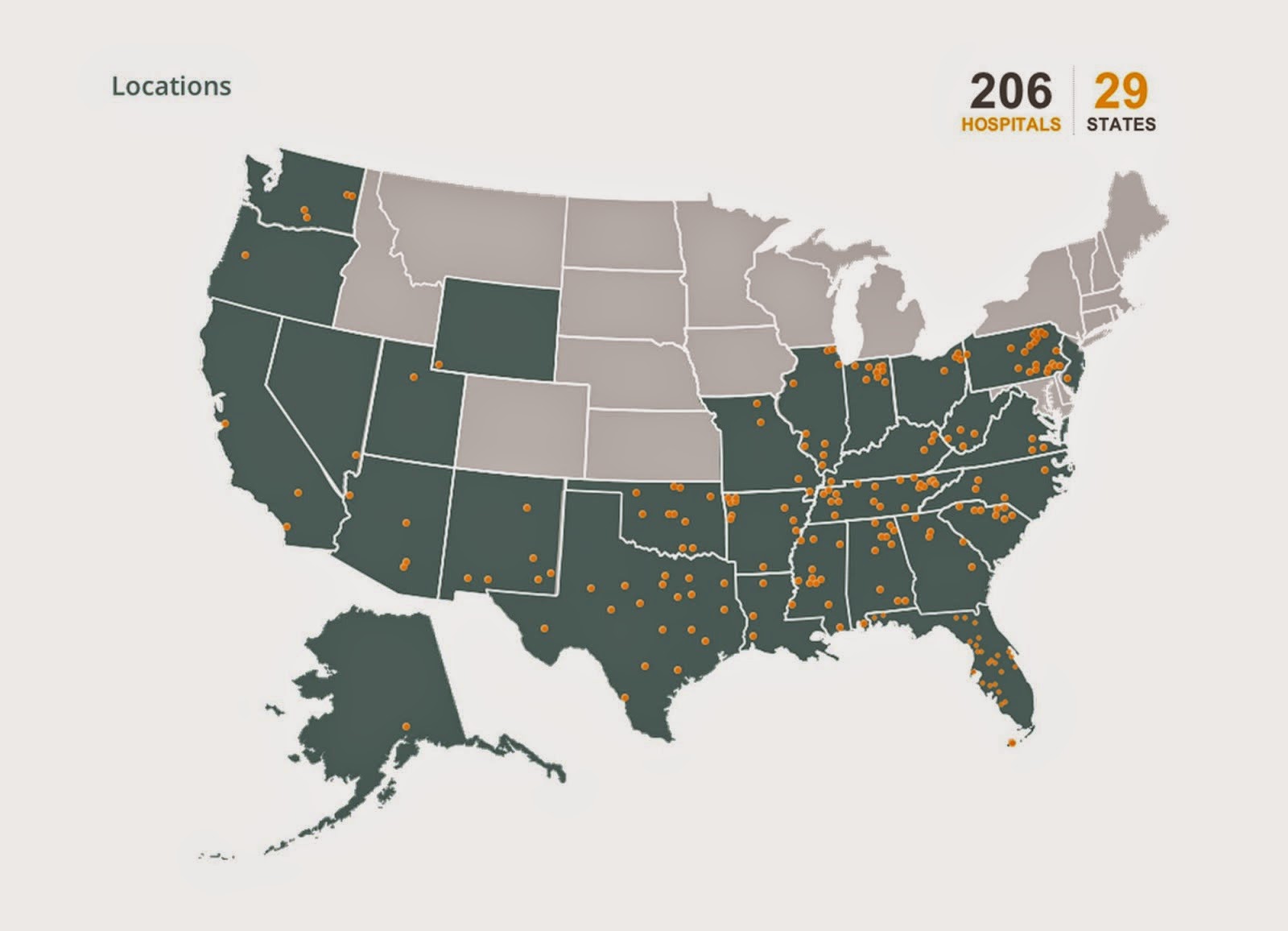
Hospital network hacked, 4.5 million records stolen – PA Included

LOCATIONS IN PENNSYLVANIA
Berwick Hospital Center – Berwick, Pennsylvania
Brandywine Hospital – Coatesville, Pennsylvania
Carlisle Regional Medical Center – Carlisle, Pennsylvania
Chestnut Hill Hospital – Philadelphia, Pennsylvania
Easton Hospital – Easton, Pennsylvania
First Hospital Wyoming Valley – Kingston, Pennsylvania
Heart of Lancaster Regional Medical Center – Lititz, Pennsylvania
Jennersville Regional Hospital – West Grove, Pennsylvania
Lancaster Regional Medical Center – Lancaster, Pennsylvania
Lock Haven Hospital – Lock Haven, Pennsylvania
Memorial Hospital – York, Pennsylvania
Moses Taylor Hospital – Scranton, Pennsylvania
Phoenixville Hospital – Phoenixville, Pennsylvania
Pottstown Memorial Medical Center – Pottstown, Pennsylvania
Regional Hospital of Scranton – Scranton, Pennsylvania
Sharon Regional Health System – Sharon, Pennsylvania
Special Care Hospital – Nanticoke, Pennsylvania
Sunbury Community Hospital – Sunbury, Pennsylvania
Tyler Memorial Hospital – Tunkhannock, Pennsylvania
Wilkes-Barre General Hospital – Wilkes-Barre, Pennsylvania

Weeds, weeds, weeds!

A resident of Perry Street who spoke at the recent borough council meeting said she had been cited (and fined $400) for weeds and trash in her yard, because a neighbor complained.
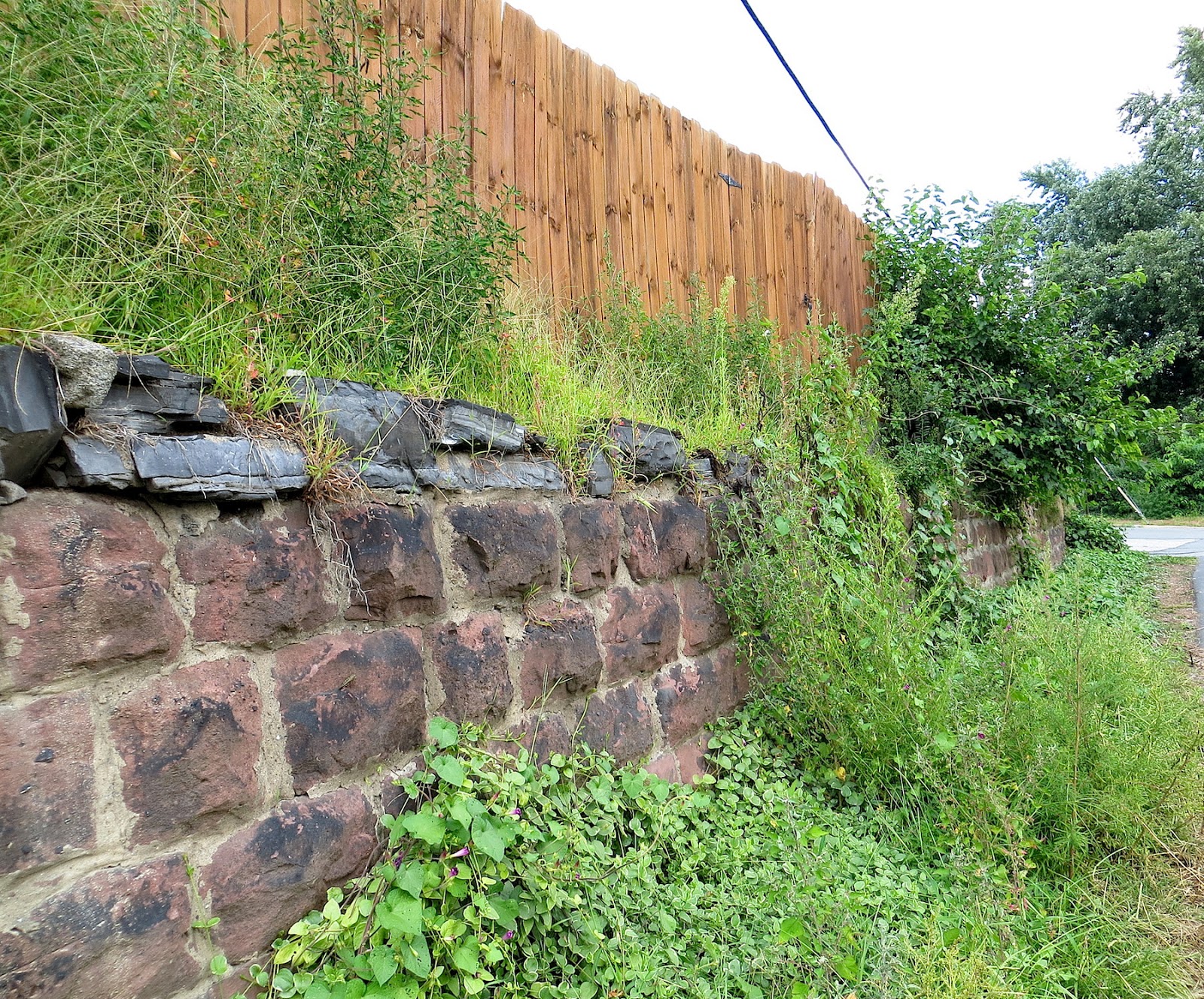
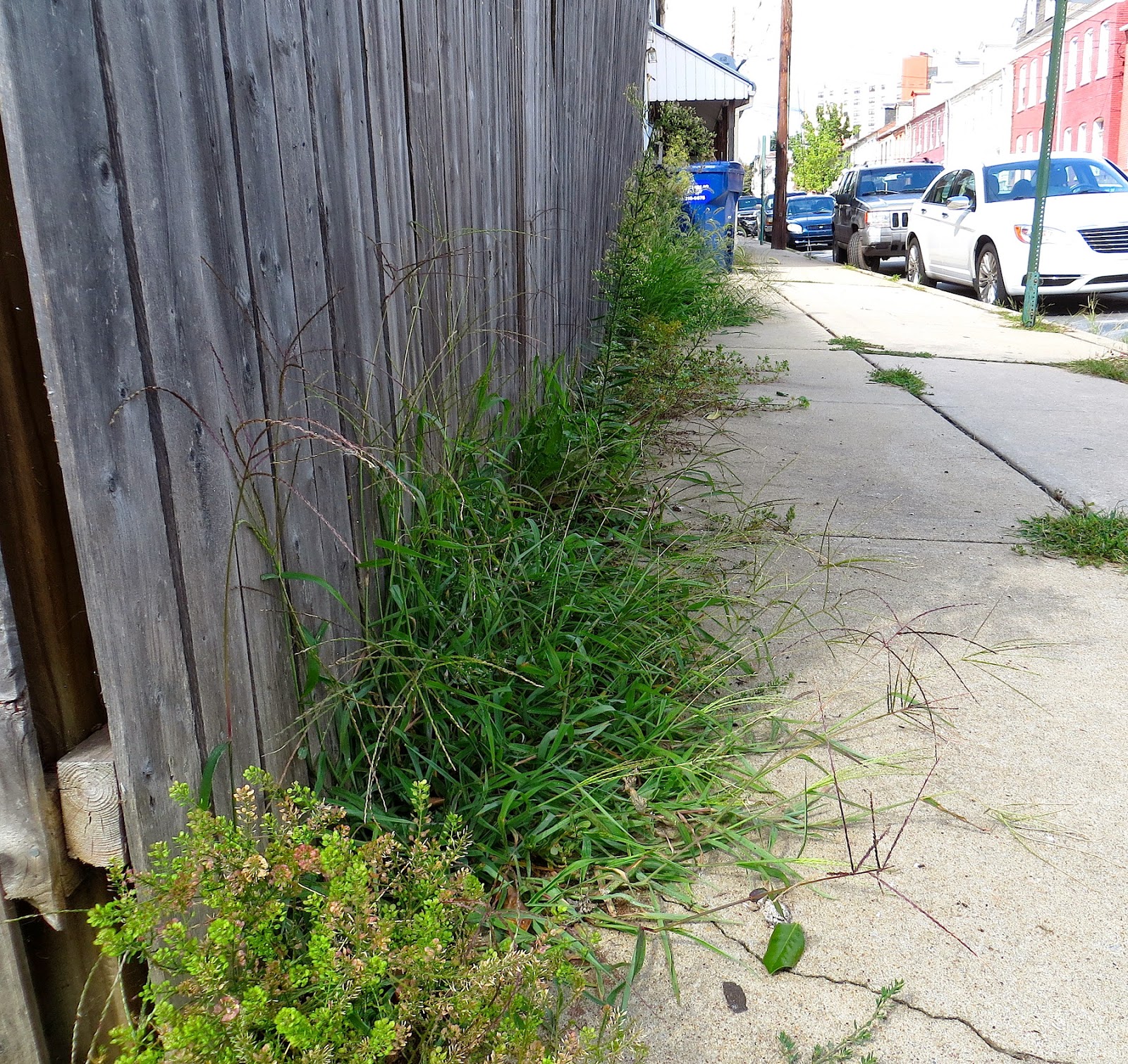
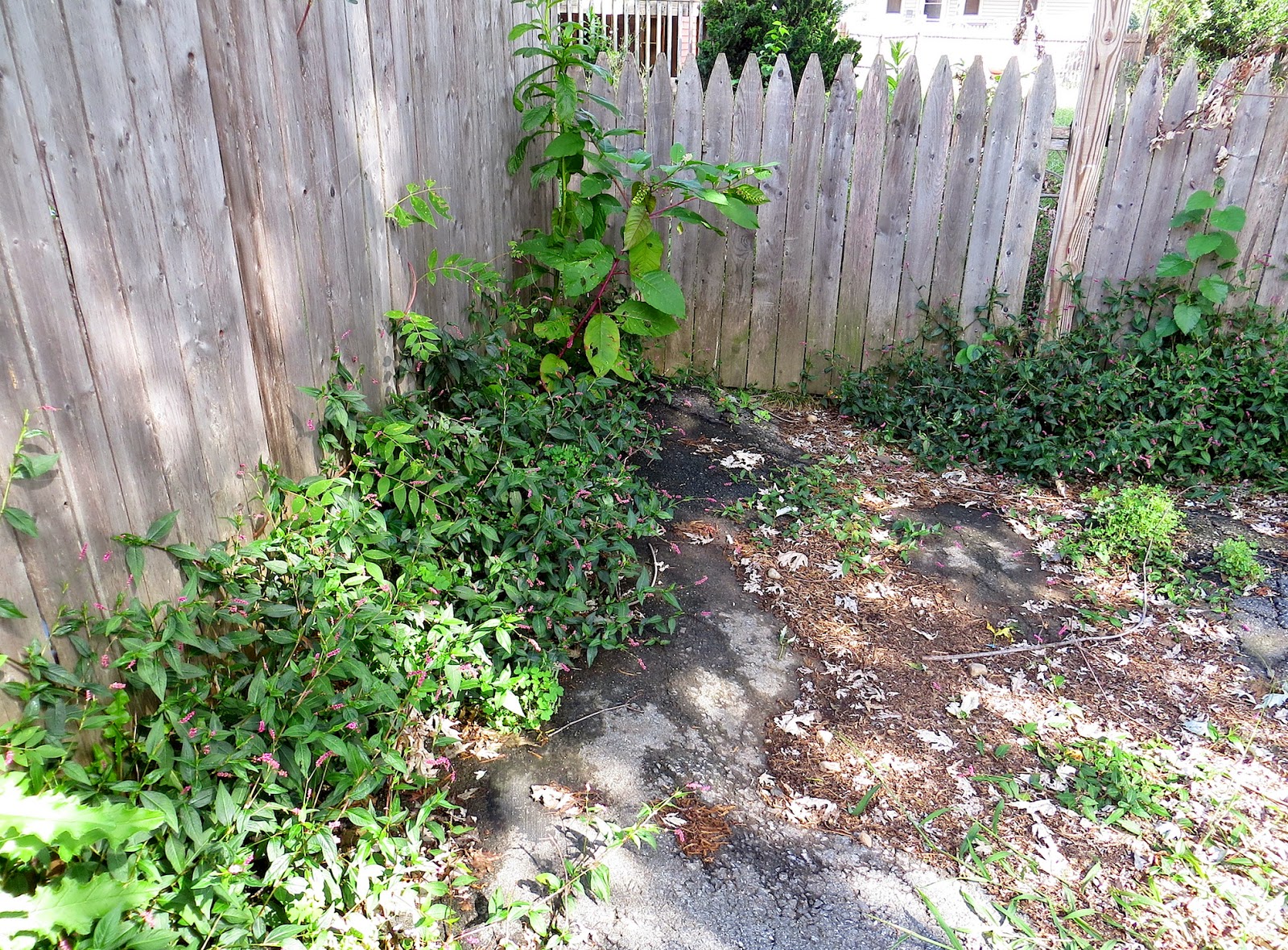
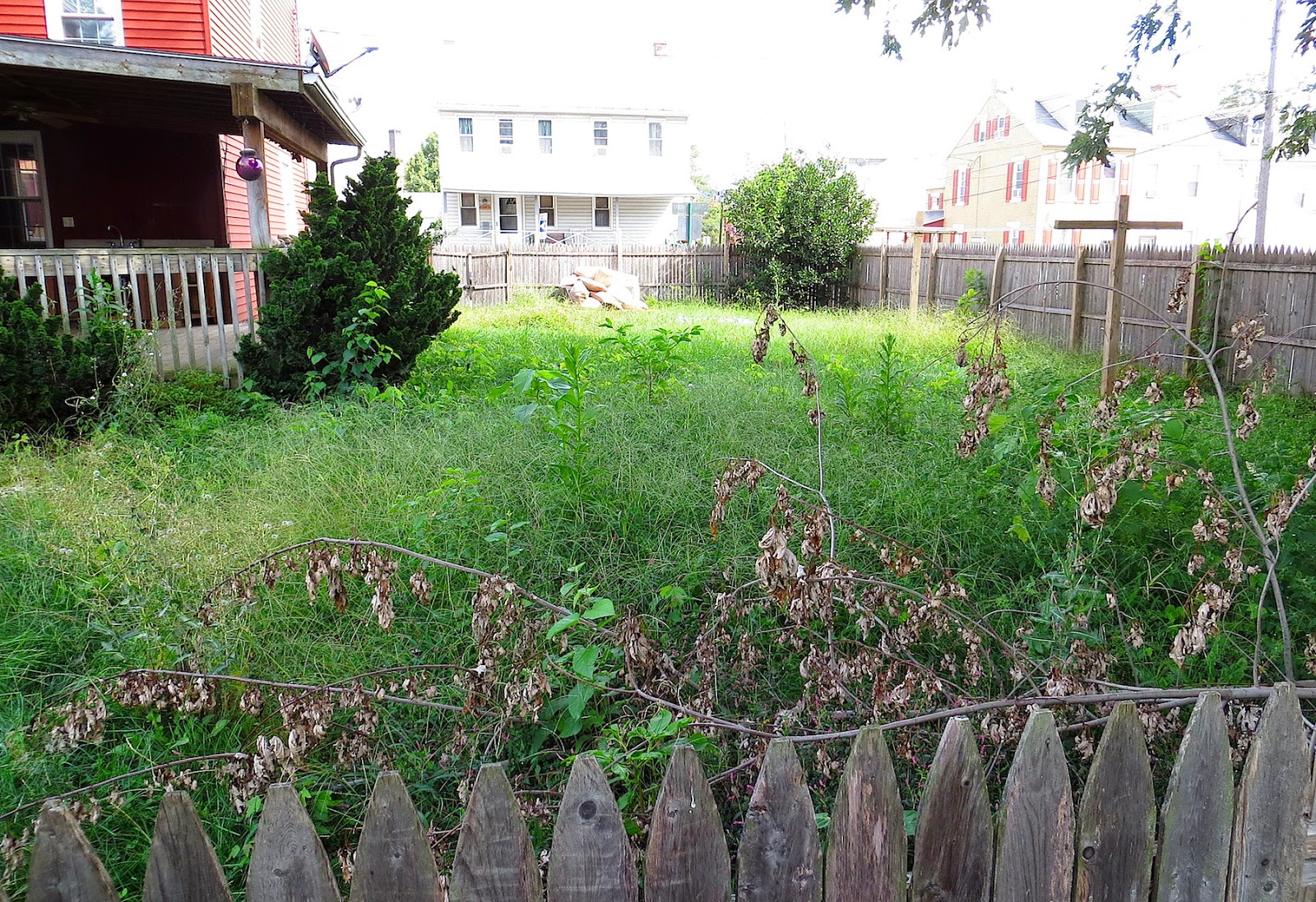
I wonder if anyone complained about these weeds (and trash) seen today on and around the property at 205 Perry Street:

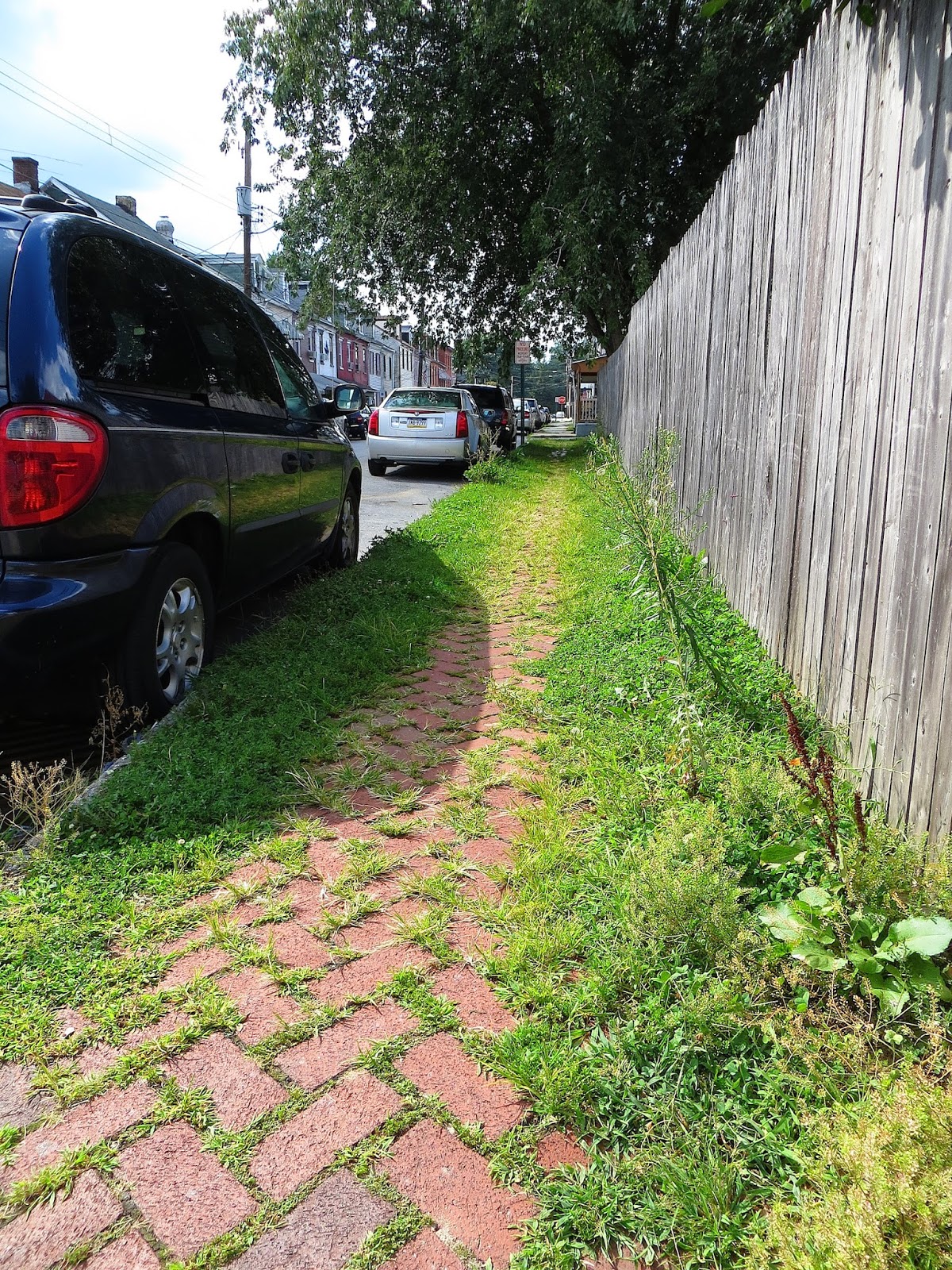
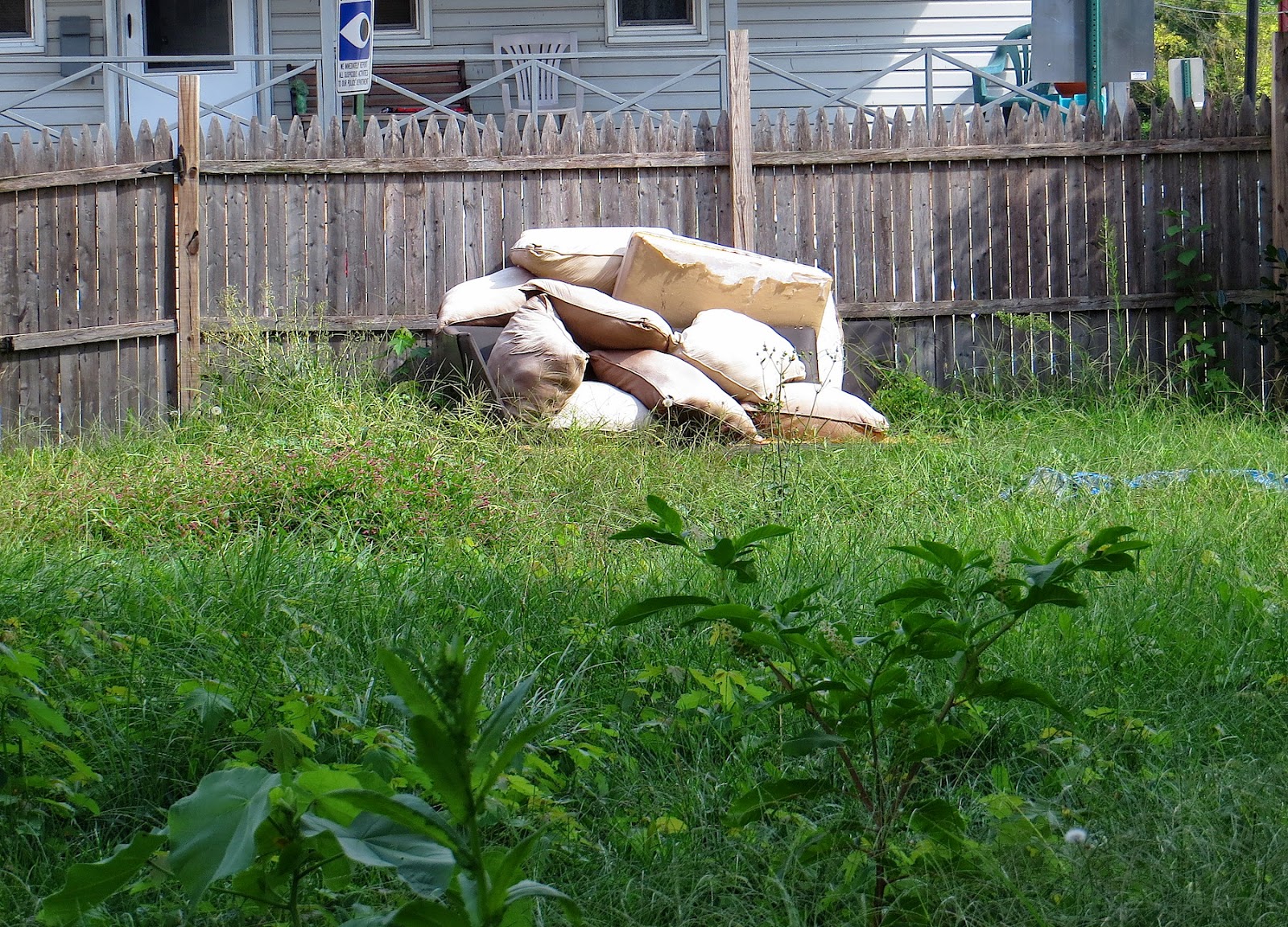
Did anyone cite these properties at 156 South Second Street?

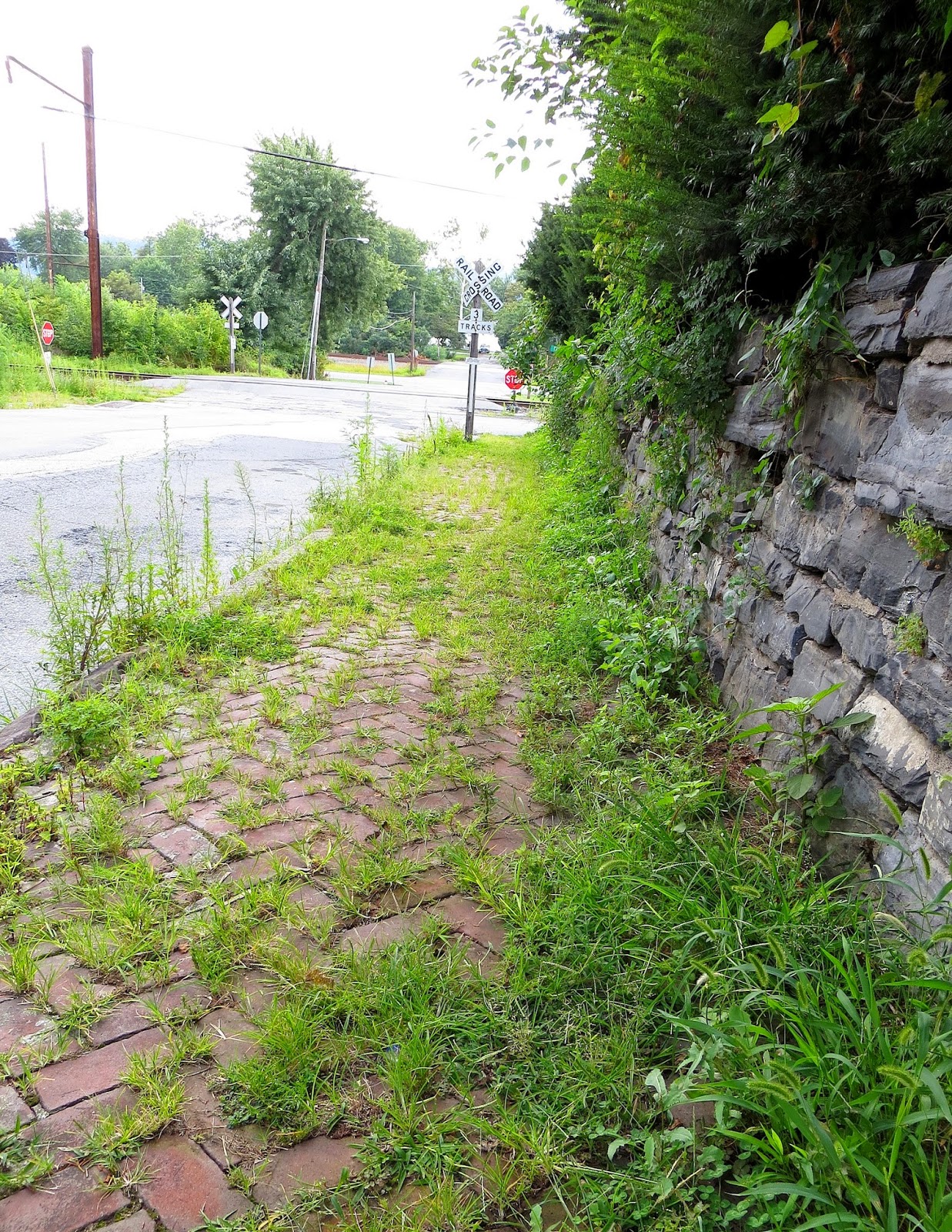
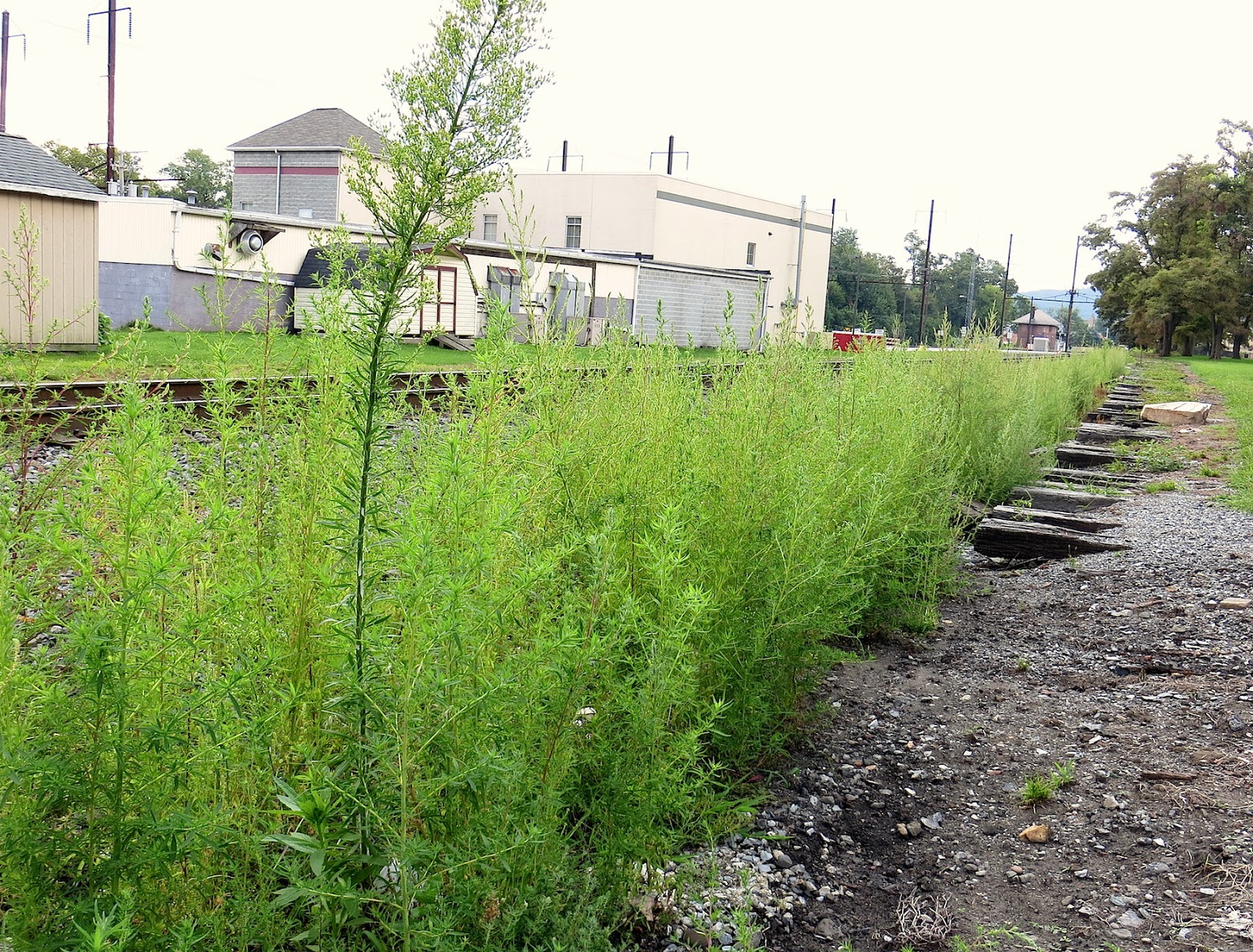
Even our friends at Norfolk Southern could do a little better:

Citizen Comments – Columbia Borough Council Meeting – August 11, 2014


Shawn Reed of Perry Street told council she received two quick tickets totaling $400 after a neighbor called the codes department to report weeds around her vegetable garden and trash alongside her house.   She subsequently called the codes department several times to discuss the tickets but allegedly got no response. Reed informed council that she did not pay the fines and is past the deadline to do so.  She said she received no warning, just an “instant citation.” Reed asked, “In the rush to correct some of the problems, is it too much of a quick fix?”
Borough Manager Sam Sulkosky told her she did not receive a quick ticket, as details are still being worked out.  He said quick ticket fines will be $25.  Sulkosky requested her telephone number and assured her he would investigate the matter in the morning.   

Ron Fritz of Franklin Street told council he was pleased about the amount of money saved by contracting a York company to do the milling for $320 an hour on the recent Manor Street paving project. 
“This is a substantial savings that this borough is going to see in the borough budget for the highway department,” he said. He added that the company has the proper equipment and is therefore able to complete the job faster.   He said he hoped to see, by next meeting, how much was realized in savings through contracting out the milling. 

“You might find a lot of savings in their budget for doing more streets,” he said.

Frank Doutrich of Ironville Pike asked what factors are involved in picking which streets are to be paved. Councillor Kelly Murphy said Public Works Director Ron Miller did an assessment of the conditions of all the borough streets a few years ago. Doutrich stated he believes the streets are paved and repaired based on who lives there rather than what streets have the greatest need.  
“There were some that were done that sure didn’t need it,”  Doutrich said. 
When Mayor Leo Lutz asked for an example, Doutrich said, “You travel the streets. You see what I see.”
Lutz said he knows the evaluation process and how the criteria were set up. He said there may be some deviations to the plan, because some streets require a complete rebuild due to having asphalt on top of clay.  He added there are basically three factors involved: money available, planned projects for a given year, and conditions of the streets.
Sulkosky stated that there is a rolling list in which streets are prioritized. The list is updated for extraordinary or unexpected events. 
“I’ve never, never, ever in the 13 years that I’ve been here seen any street paved in this borough for personal reasons,”  Lutz said. 
Councillor Jim Smith said he has never seen any favoritism. Doutrich asked for a list of the streets to be done and was told there was one posted on the window.  Doutrich said he would check it out. 
Doutrich then cited a street that was paved but not allowed to cure. He said it was open the same day. 
“I know why, and I’m sure some of you know why,” he said. When several concillors asked why, Doutrich replied, “I’d rather not bring that up. There’s people that know. You can fool some of us some [of the] time, but not all of us all the time.”
Doutrich said that on Union Street, three-quarters of the curb was taken when milling was done for the recent paving project. He said only a fourth of the reveal remains on the curb.  He said a citizen who lives there called him and was irate.  Doutrich added that it was a waste of blacktop and said he does not know where snow and water will go. 
He also said there is a section of Union Street with a lot of trash. 
“Why are we even picking it up?” he asked.
Mayor Lutz said he has talked to people about throwing trash in the gutter.  He said the reply was,”That is what the gutter is for.” 
“It’s a culture thing that we have to break,” Lutz said.

Darrell from the Boys and Girls Club then interjected that a group from his organization does a monthly trash pickup, and Union Street is one of the routes.