Truckers concerned about Route 441 bypass

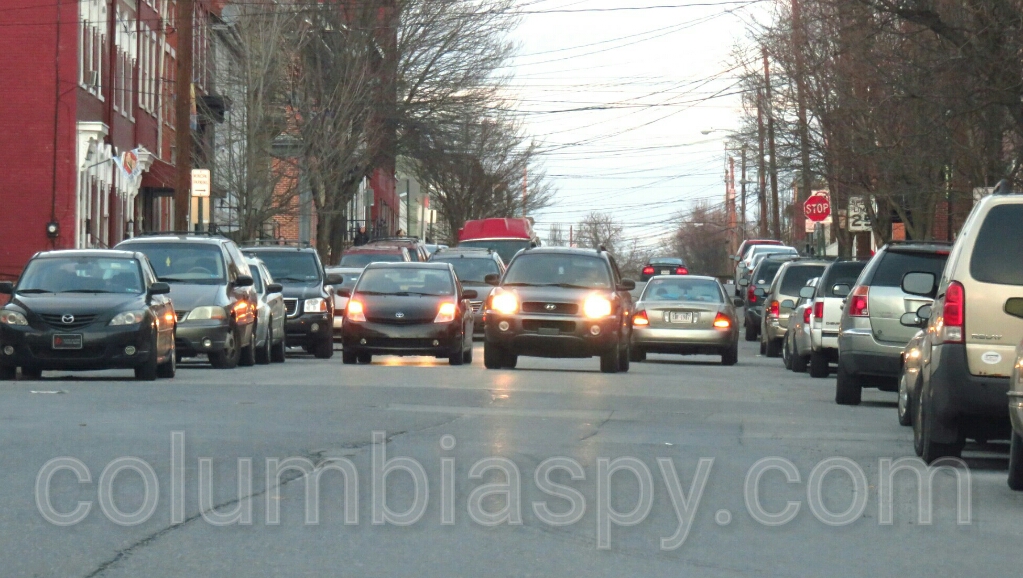
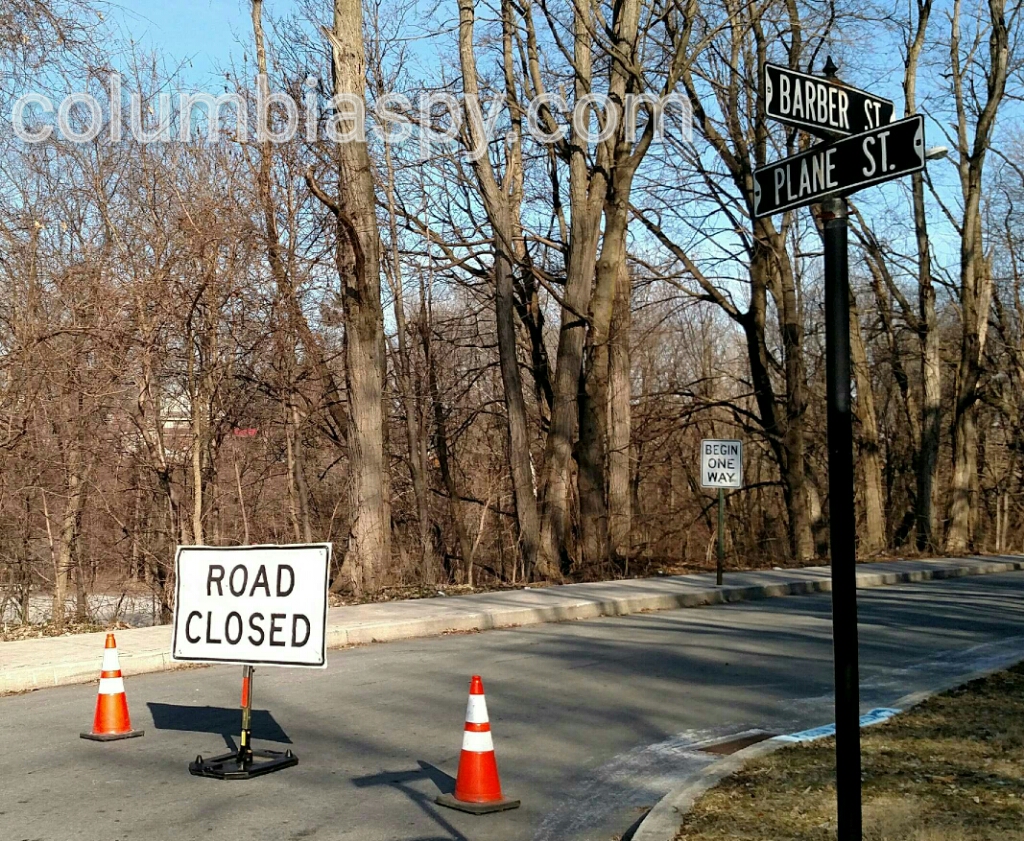
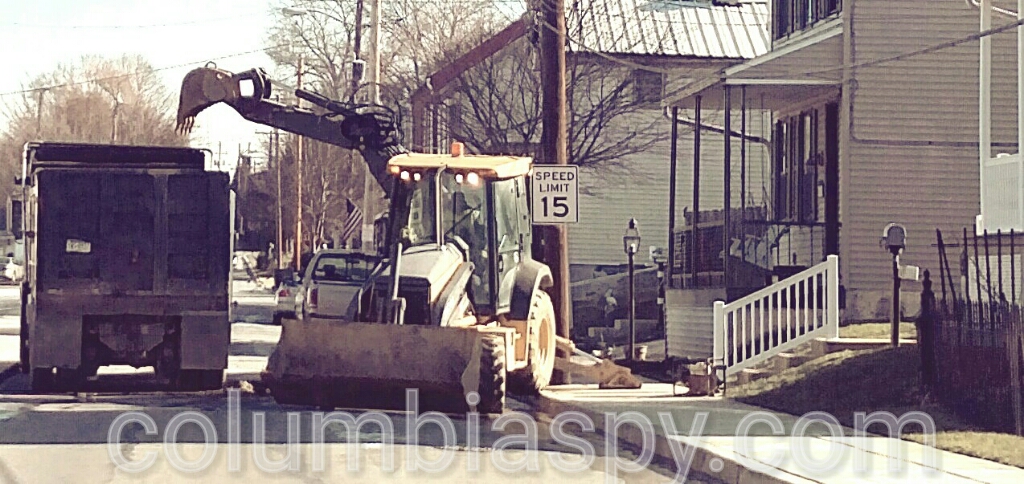
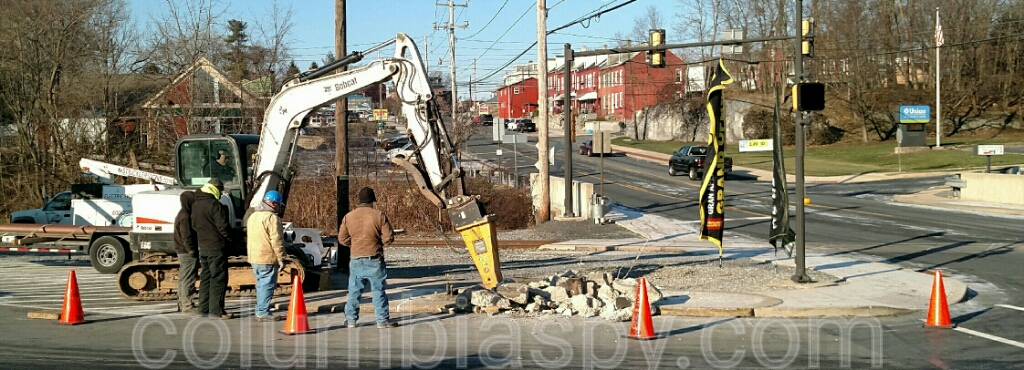
COLUMBIA, Pa. (WHTM) – Michael Venker, a trucker who dropped off a load of copper in Columbia on Tuesday, told ABC 27 News the ramp for the Route 441 bypass looks “daunting.”

The ramp, set to open later this month, is part of a $12 million project designed to keep truck traffic out of the downtown. However, the appearance of a steep ramp may be steep enough to cause concerns.

MORE:
http://abc27.com/2015/10/06/truckers-concerned-about-route-441-bypass/

Columbia Company helps restore Hudson Hornet for disabled drivers

Driving Aids Development Corporation, manufacturer for more than 30 years of hand-controlled driving equipment for those with disabilities, will be at the AACA Eastern Regional Fall Meet, scheduled for October 7-10 in Hershey, Pennsylvania, to promote its Hudson Hornet Mobility Adventure and to raise money for the cause.
Restoration is underway at Jon Schuchart Customs in Columbia, Pennsylvania, where the Hornet will be re-furbished, re-assembled and painted
an original glossy black.

This Friday: Legislative Breakfast with Sen. Ryan Aument and Rep. Dave Hickernell

Do you have a concern that you wish to share with our local legislators?  Do you have questions about recent or pending legislation? Are you concerned about the impasse on the PA budget? Join SVCC on

Friday, October 9, 2015

for a

Legislative Breakfast with Sen. Ryan Aument and Rep. Dave Hickernell.

This session will be held in the Fellowship Hall of Columbia United Methodist Church (5th & Walnut Streets, Columbia).  The breakfast will begin at 8 am with a continental breakfast buffet and will be followed by a short time for the legislators to update us on recent actions at the state level.  A question and answer session will follow.  We hope to wrap up all discussion by 9 am.  Please contact SVCC with the names of those who will be attending.  Bring your questions and comments!

Q&A: The Market House Trust – In their own words


Columbia Spy recently met with several members of the Columbia Historic Market House Trust for a question-and-answer session.  The Trust has sometimes been the target of criticism since its inception in 2011/2012, and in the interest of accuracy, the Spy asked Trust members to explain the organization’s purpose and to correct public misperceptions. Due to its length, this Q&A will be presented in three parts over the next few days and will also include legal documents as supplemental material.

The current members of the Trust are as follows:

VOTING MEMBERS

Chair – Cleon Berntheizel
Vice Chair – Don Haines
Secretary – Jodie Eck
Treasurer – Elaine Beckley
Director – Jeanne Cooper
Director – Roche Fitzgerald
Director – Kellan Kernisky
(All of the above members are directors.)

NONVOTING MEMBERS
Standholder Representative – Teresa Allen
Market Manager – Beth Troxell
Member at large – Bill Collister

For Part 1 of the Q&A, follow THIS LINK.

Part 2 will appear tomorrow.

Q&A: Market House Trust – Part 1

The following Trust members were present at this meeting:

Chair – Cleon Berntheizel
Vice Chair – Don Haines
Treasurer – Elaine Beckley
Director – Jeanne Cooper
Director – Kellan Kernisky
Member at large – Bill Collister


SPY: What is the Trust’s motivation in keeping the market house open? In other words, what is the Trust’s personal interest?
COOPER: We all became members of the board because we wanted to be a part of something that we believed in. We all wanted to continue the tradition of having a market house in Columbia, a central location where people could meet, a place that was vital to the town, especially the downtown. The market house building is such a gem of a building. It is a beautiful building, and it should be viewed as such. Continuing the market should help the downtown thrive, from a historic perspective, as an incubator of small business, and as a retail establishment. We had a stakeholders meeting as a result of the charrette [consultant meeting in April].
BECKLEY: That’s what came out of the charrette meeting.  The market house – it was such a hot topic, and they recommended that we have a meeting with some of the local stakeholders. We did that in June.
COOPER: By stakeholders, we mean some of the businesses in town, some of the borough council members, the mayor. As a result of that, we came up with two things, two mandates from that meeting. One was that the market house should be income-generating for the borough. And it’s obviously not. Secondly, that we might want to look at doing an RFP [Request for Proposal] or an RFQ [Request for Qualification].
BECKLEY: The other thing is actually that it was being under-utilized. The building is that significant that it should be operating five, six, seven days a week, not three.
COOPER: It’s really our personal interest, and we all really care about it. We care about Columbia. We care about the downtown. We think the market house is the centerpiece and should be treated as such. We’re trying desperately to keep it a market house, and we have to see how that falls out.

SPY: How do you respond to criticism that the market is losing vendors?
BECKLEY: That’s a historic issue. It has always had ups and downs under everyone’s management, whether that was the borough, or the borough hiring market managers, or the Trust, or the Trust hiring market managers. It’s constantly been an up and, up and down, up and down. Vendors leave for various reasons. They leave for personal reasons, health issues, family issues. They leave because of the economy. Some stands are more affected by the economy than others. They leave because of logistics. We had one stand holder that left because she could no longer afford to pay. She was Amish. She could no longer afford to pay her driver $300 a week to get to the market house. And the general lack of infrastructure at the market house. It’s just not there. Some of the businesses left us because their business grew.
COOPER: They started their little business in the market house and as time went on they did better and better and were able to go out and start their own business on Locust Street in a brick-and-mortar rental. It’s tough when they leave.
BECKLEY: It’s a double-edged sword for us. “Why don’t they stay” as opposed to “why are they leaving?” The reason they don’t stay in our market is a little different. It’s a foot traffic and vendor issue. It seems like it’s a constant catch-22, when we start getting a good base of vendors, then there’s not the foot traffic there to support them to stay. So then the vendors leave – then more foot traffic leaves.
COOPER: We just never get past that 50 to 60 percent point where we’ve got enough of both to keep everything going.
BECKLEY: I think that’s where we actually drew the conclusion that we need to revamp the inside.  Close it down, revamp the inside, go out and find those vendors. That’s when we started talking to a market house expert – Ken Kauffman. He said if you close it down, and redo the infrastructure, and I go get you 10, 12 stand holders for your staples . . .
COOPER: Like Hummer’s Meats, S. Clyde Weaver.
HAINES: The market house was built in 1869, and a lot has not been updated, so we have 19th-century infrastructure, and it’s very hard to attract a vendor to come in, particularly if they need refrigeration, freezers, sinks, and issues such as that. It’s very difficult to find somebody to do that, because it’s a very large setup cost to do that.  Plus the fact that we have no air conditioning in the summer. With that going on, vendors are less likely to come in. We couldn’t get a seafood vendor at this point. It would be impossible because of the heat, refrigeration.
BECKLEY: There’s one common sink area that the vendors share, and we have two other stands that have their own sinks. It’s actually three three-bay sinks – because of the standards from the state – a wash, a rinse and a sanitize. People don’t want to bring coolers in there either. If you don’t have some sort of a cooling system – because that makes that deli case have to work that much harder – because not only is it fighting to stay cool inside, but it’s fighting that external temperature all the time.

SPY: What happens if you do not succeed in obtaining grant money?
KERNISKY: Last year, we put out a grant for $500,000, but it’s a matching grant so it could be up to a million dollars. We would have to match that. We’d have to fund raise. So that was in the process. It got stalled. We’re not quite sure when we’ll find out about it, but if that doesn’t happen, we are going to try to continue to work on a capital campaign that we started a little while back. We put that on the back burner for now, because we took on this RFQ proposal as was suggested at the charrette and the session we had with business leaders. We’re definitely going to see where this RFQ takes us, if anywhere, while simultaneously thinking about this capital campaign, because grant or no grant I think it’s good to think about fundraising opportunities – how we can as a trust continue to support the trust financially.
BECKLEY: The grant – last year when we applied for it – it went through the house with approval and then when it went to the senate they decided to go out for session and so [it went into limbo]. This year we can’t even apply until a budget’s passed, and no budget has been passed. So now we probably won’t even get an opportunity this year to apply for that. This is the same grant that the borough did for the Turkey Hill Experience.