
A dissenting view – Columbia Market House Project: Next financial boondoggle or economic engine?

Columbia Spy previously published this article on December 9, 2019, before the Market House renovation began. We are publishing it again, because it sheds light on some the recent issues with the project. The author is a taxpaying Columbia Borough resident, whose name is being withheld by request.

The question at hand is whether a 2.0-2.5 million dollar investment in the oldest market house in Lancaster County, with its original detail still intact from the day it was built in 1869, will bring about the economic outcome the current borough council envisions. Through a partnership with a local charity, they propose to create a restaurant, new bathrooms, and 20 market stands along with all new mechanical systems including a massive heating and air conditioning system. In the end, will this project simply be another huge expense of borrowed taxpayer money that will ultimately fail to generate enough money to pay for the operation and maintenance of the facility long term, let alone ever provide enough cashflow to pay back any of the millions in borrowed money. There are arguments on both sides of this question which we will attempt to provide the facts here for readers to make their own judgement.

Background:

First, it is important to understand how we got to the point of being ready to pull the trigger on spending all this money on the market house. In 2016 Columbia engaged a financial services company to raise 10 million dollars in long term bonds to be invested in a variety of projects and paid back over the next 20 years. One of the projects identified for some of this money was the Market House. The Borough solicited proposals in mid-2018 from parties outside the Borough, interested in reopening and operating the market house. The Borough received a total of two proposals and chose to move forward with the one from Catholic Health Initiative (CHI).

CHI Vision and agreement:

CHI proposed to manage the Market House and reopen it with a mix of market stands and a restaurant. CHI and the Borough entered into an agreement where CHI would manage the operations of the Market House for 5 years and contribute up to a maximum of $60,000.00 per year for the 5 years. [Editor’s note: The amount is $65,000, according to the Professional Services Agreement between the Borough of Columbia and CHI-SJCH.]  The $60,000.00 would cover electric, gas, janitorial services, and other operating expenses including hiring of an event coordinator. If the operational expenses exceed the $60,000.00 contribution from CHI, the Borough is responsible to cover anything over the $60,000.00. CHÍ also pledged to provide a one time contribution of $100,000.00 towards new market stands, tables and chairs, and other fixtures for the restaurant. The Borough would pay for water, sewer, trash, snow removal, general maintenance of systems, and for all the construction activities including HVAC, electrical, plumbing, fire protection, exterior restoration, general construction and project management. CHI was given the authority in the agreement to manage the entire construction process.

Even though there is an advisory committee with representatives from the Borough (don’t know who they are and not aware of any advertisement to fill these positions?) that is to meet quarterly and provide input to the operation of the market house, CHI has ultimate decision making power. Interesting that the taxpayers don’t ultimately have any say in the improvements to a building they own, and are to invest 2 million plus in, and pay for over the next 20 years!

In the current management agreement there is no discussion or fee schedule for rentals other than to say the rates will be based on comparable rental rates in the area and nothing about any rental income from the restaurant other than CHI will work with the restaurant operator to come up with a business plan in the first year of operation. Who enters into a contract with someone without some basic projections for revenue and expenses before considering signing a contract, let alone spending millions of dollars? This is ok, if it is between two private parties, but this is taxpayer money being spent on a taxpayer owned property! Time to wake up taxpayers!

Current Status as of 12/4/19

The Borough has received bids for the project from 5 separate trades including General Contractor, Electrical, Plumbing, Fire, Mechanical which including all alternates add up to $xx for the lowest total bid. If you drop the alternates, which you should, the bid comes down to $xx. On two of the trades there was only one bidder which means there was no competitive process so we really don’t know if we are getting the best value for our money. Seems like it might not be a bad idea to at least consider rebidding those trades?

Borough Council discussed the bids with the project architect at the Council work session on 12/3 and appears ready to approve all the bids, even though they would not have to, at the next Council meeting on 12/10. At this work session no one on Council asked any questions about the pricing or brought up possibility of make some changes or rethinking some of the systems and design to minimize the impact on the historic building and save some money. The fact that no elected person even expressed concern about the amount of money shows that this project must be put on hold until the new council people can review the project and decide how they want to move forward. The new council may want to review the agreement between the Borough and CHI and update it to include clearly defined financial goals and allow for greater involvement of the borough and its taxpayers in decision making.

Funding:

So how are we paying for all of these improvements?

The Borough already has a commitment of $200,000.00 for Lancaster Counties Block Grant Program. The balance of the funds would come from the Borough matching a grant from the State. If the project is 2.2 million then the Borough would put in 1.0 million which would come from the bond issue as discussed above. This is borrowed money, not money we have in the bank! The Borough currently owes about $400,000.00 annually on this bond issue and the payments will continue to rise until paid back in 2027.

Financial considerations:

What happens once CHI no longer contributes the $60,000.00 per year and the Borough is responsible for the entire cost of operating and maintaining the market? At a minimum would the Borough be prepared today to commit $60,000.00 a year minimum to the market as a line item in the budget? If we are not prepared now to make this contribution, what would change in a few years once CHI is no longer involved, that we could make this commitment? The market house has been closed at least two times in the last 20 years because the Borough said it could not generate enough revenue to offset the amount of money the Borough was spending to keep it open even though it was bringing in some revenue. This amount was far less than 60,000.00 to keep it open in the past.

Again, there has been no discussion by our elected officials how this enterprise will ever come close to break even without a substantial annual contribution from the taxpayers. We are not saying it is wrong for the taxpayers to support the market house, but it certainly deserves adequate review and consideration along with factual financial projections, not just wishful thinking, as to the taxpayer contribution that will be necessary in the next 5 years, 10 years, to sustain the market as conceived in the plans. This would be a normal step taken by any responsible local government!

If for a moment, we assume the annual operating expenses are near the 60,000.00 figure, you would have to collect at least that amount from rental income from the Market House to cover the expenses that CIA plans to cover with this amount. Keep in mind the Borough is still paying for water, sewer, trash, snow removal, maintenance of systems from the beginning so even if you did collect rents to cover the 60,000.00 the Borough would still have additional expenses on top of that number, so the actual total cost of operation could be higher than the $60,000.00. This begs the question, can we collect enough rental income to cover the costs of operation on an annual basis and if not, how much money is the Borough willing to dedicate out of the budget to keep the Market House open. When you apply some simple math to this question you come up with a resounding NO!

Impact of Proposed Changes on Historic Structure:

The impacts of this project are not just about the positive or negative effect on the budget but more importantly the impact on a one of kind, historically significant structure, in original condition that with the proposed improvements will look more like a gymnasium than a historic market house. With these proposed changes costing millions of dollars, it will still be an old building but the structure will be forever altered and its historic integrity will be gone!

Unfortunately, these changes have been conceived and put into the construction drawings by people with all good intentions, but not the training and experience in working with historic structures like the market house, so they simply design systems that you would find in any other new building where historic considerations are not an issue. Many professionals today say they are involved in historic preservation but few have the actual skills to do it properly.

Examples of proposed changes:

The view of the original wooden ceiling trusses will be blocked by huge 34″ ductwork wrapping around 3 sides of the building. These wooden trusses and barrel vaulted ceiling are one of the most significant original features in this structure, and should not be blocked from view with ductwork that looks like an octopus hanging from the ceiling. There are better and more efficient ways to heat and cool this structure.

Holes drilled into the wooden trusses for hanging ductwork, pipes, conduits.

Taking up the original brick floor and replacing most of it with concrete. The decision to remove the brick floor is based making it easier to install some mechanical systems but is not based on maintaining the original features of the building and finding a different way to make the improvements.

These are just a few examples of areas that need to be reviewed and given careful thought before proceeding with improvements as they are very costly and therefore cannot be changed after the fact. Another reason to take a breath and allow the new council to review all documents and plans before signing contracts that they may have to cancel!

Value Engineering:

In most construction projects, there is a process called value engineering, which many times occurs after the project bids come in but before final contracts are signed. It is not uncommon for individual bids, or the collective total of the individual bids, to be higher than expected.

Most clients include everything in the proposed project they would like to have, while realizing the price for everything, may be more than they want to spend and this is where the value engineering process comes in. There is no reason not to engage the new Council and anyone else from the community that may have input on ways to reduce the overall cost of the project and reduce long term operation and maintenance costs. We only get one chance to do this project right! There is no question that this process would produce results.

One area you can definitely save money on is the HVAC system. It will not only alter the historic character of the building; it is not necessary as currently designed to make the operation successful and in fact will be a major financial drain on ongoing operating costs. See comment below on Lancaster Central Market.

Food for thought

Was the Council’s decision to move forward on this project based on sound financial analysis or was it driven by inflated egos that were eager to spend the millions of dollars raised through the bond funds on projects from A-Z whether they made sense or not? By signing the contract with CHI the Council took the easy road of passing all responsibility to an organization outside of the Borough so they could grab headlines and say big things were happening in Columbia. Not that this is a bad thing on the surface but at the same time they short changed the taxpayers on due diligence and proper input into the design process.

There is a reason history repeats itself. History keeps repeating because instead of learning from the past we keep repeating the same mistakes over and over. When the Market House was reopened 20 year ago, instead of following the plan that had been developed with input from people who were running successful markets, we continued to go further and further away from what all parties had advised until it was closed again. Now, we somehow think this time it will be different because we are going to spend even more money, so it will have to be successful. The experiment we are about to engage in with the market house has been done before in other communities and did not prosper.

What happens if within a year or two the restaurant operator decides to leave because they are not making enough money to pay rent and earn a living? We now have a market house with a commercial kitchen and all the other million-dollar improvements that is empty and n income from operations. True, you could find another person to run the restaurant but if the first operation did not do well what are the odds the second, third, fourth will do any better?

It was stated by a representative from CHl at the December 3 council work session that they are now planning to start with 4 market stands and let the rest of the stands grow organically including having the vendors pay for their own stand. This will never work. The market stands will never be able to pay enough rent to even remotely cover the cost of keeping the doors open!

CHI is a charity. It is great they are willing to partner with the borough to try and bring life to the market house but we have to be careful as CHI is a charity and so they are in the business of donating money and providing services that assist underprivileged people and communities like Columbia. The Borough, on the other hand, is not a charity, it is a municipality that has an obligation to carefully manage the money they receive from taxpayers.

Will the newly elected borough council people, who promised during the campaign to rein in all the debt driven spending that has been going on over the last few years, take a stand on the market house project, and as a public official uphold the top priority of fiscal responsibility?

Lancaster central market considered installing A/C and did not do it-

Why did they not do it?

Arguments for why not to take a pause and carefully consider the potential outcome of spending 2.0 million on the Market? If we delay awarding the bids by a couple of weeks or even a month it will delay the opening of the restaurant. -Since it is only a couple of weeks until the Christmas and New Year’s Holiday no major construction would occur anyway so this argument is no good.

Is Columbia accountable to the operator of the restaurant or the taxpayer?

Why is the restaurant operator the top priority here?

Making sure that taxpayer money is spent wisely on something that can benefit the community long term is way more important than a tenant that according to the agreement, has no commitment to invest any money in the project. You would think Mr. Diller would have no problem with the newly elected Council taking a look at the plans and CHI agreement and making sure they are in agreement with everything before proceeding since they will be the ones to sign the checks to pay for it and they will be the ones who will have to answer to the taxpayers who they told that they would get the crazy spending spree under control.

It was reported in the LNP news on December 1st that the market house is part of a project that is adding downtown parking at a cost of at least 3.5 million. Interesting that you have to read the paper to find out that the town you live in plans to spend 3.5 million? Also interesting that we just started a parking study on December 6th but somehow without even getting started with that study we are already planning to spend more millions? Anybody see a problem here with how these projects are moving forward?

Mr. Diller commented in the article that he was closing his current location in Lancaster by the end of the year, and would be preparing meals for office workers in the meantime until the Columbia Market House renovations are finished later this year. Doesn’t sound like Mr. Diller would object if the new council wanted to take a look at the details of the project.

About Town 3/8/20

This week’s photos of Columbia

 Free Food!
(There was a food box giveaway at Glatfelter’s on Saturday morning.)

Window shopping
Hangin’ out

 The found object artist is at it again.

 Friends

 Solving the borough’s problems
This tundra swan won’t be seeing Middle Creek anymore.
[UPDATE: It’s probably a trumpeter swan.]
 Someone fished him out of the water the next day and laid him on the bank.

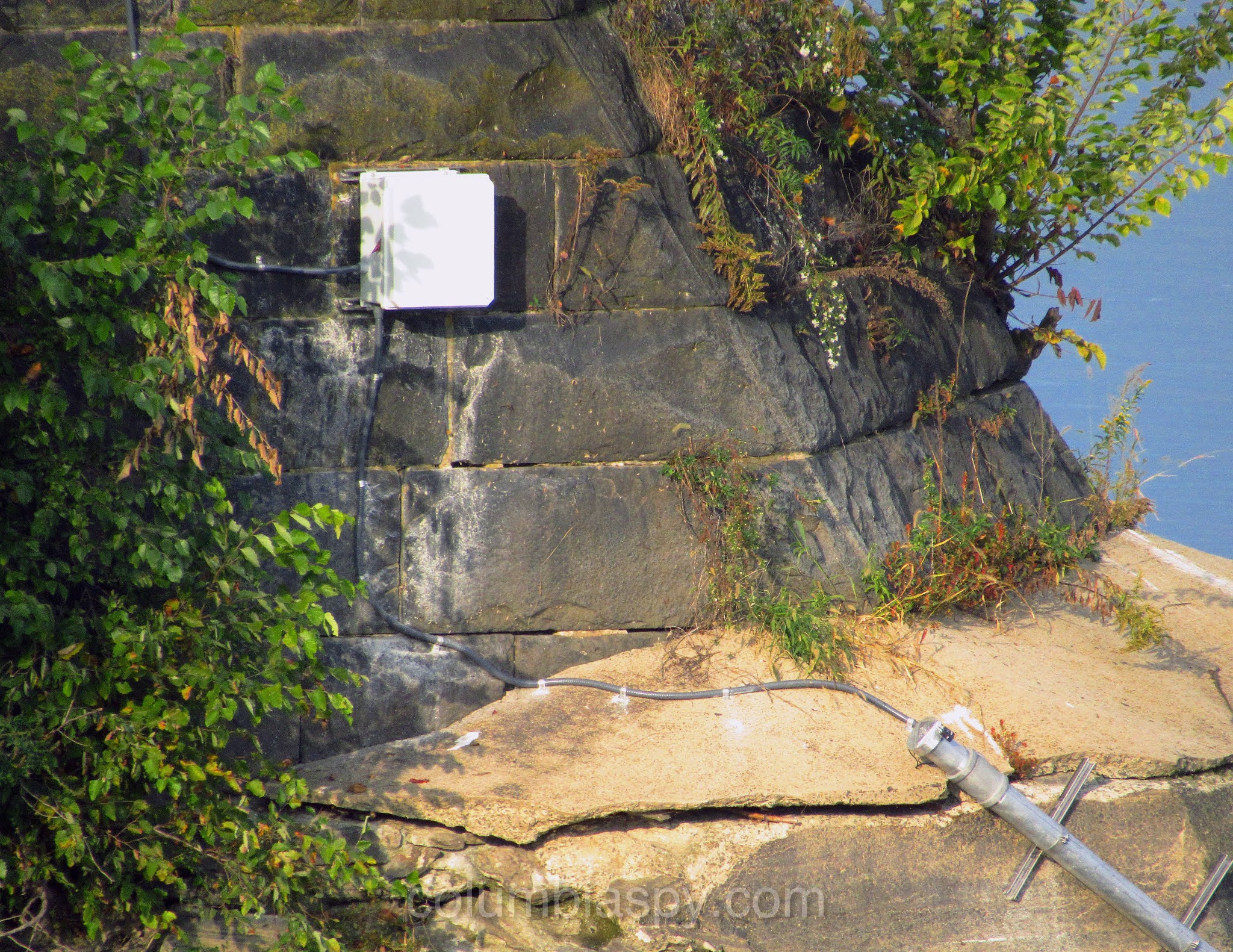
Atop this Civil War bridge pier is one of the braziers placed there by Albert Storm of Rivertownes PA USA. The Chiques Rock Outfitters crew stocked the braziers in 2013 for the 150th Anniversary of Bridge Burning, as Columbia Spy reported HERE.

 Here’s a closer look.

 Canada goose coming in for a landing

 Suddenly, a parting of the ways

 A step up at the Von Hess building
 Scraping off the old decals
 Debris field from last Sunday night’s vehicle accident on Ironville Pike (here and below)

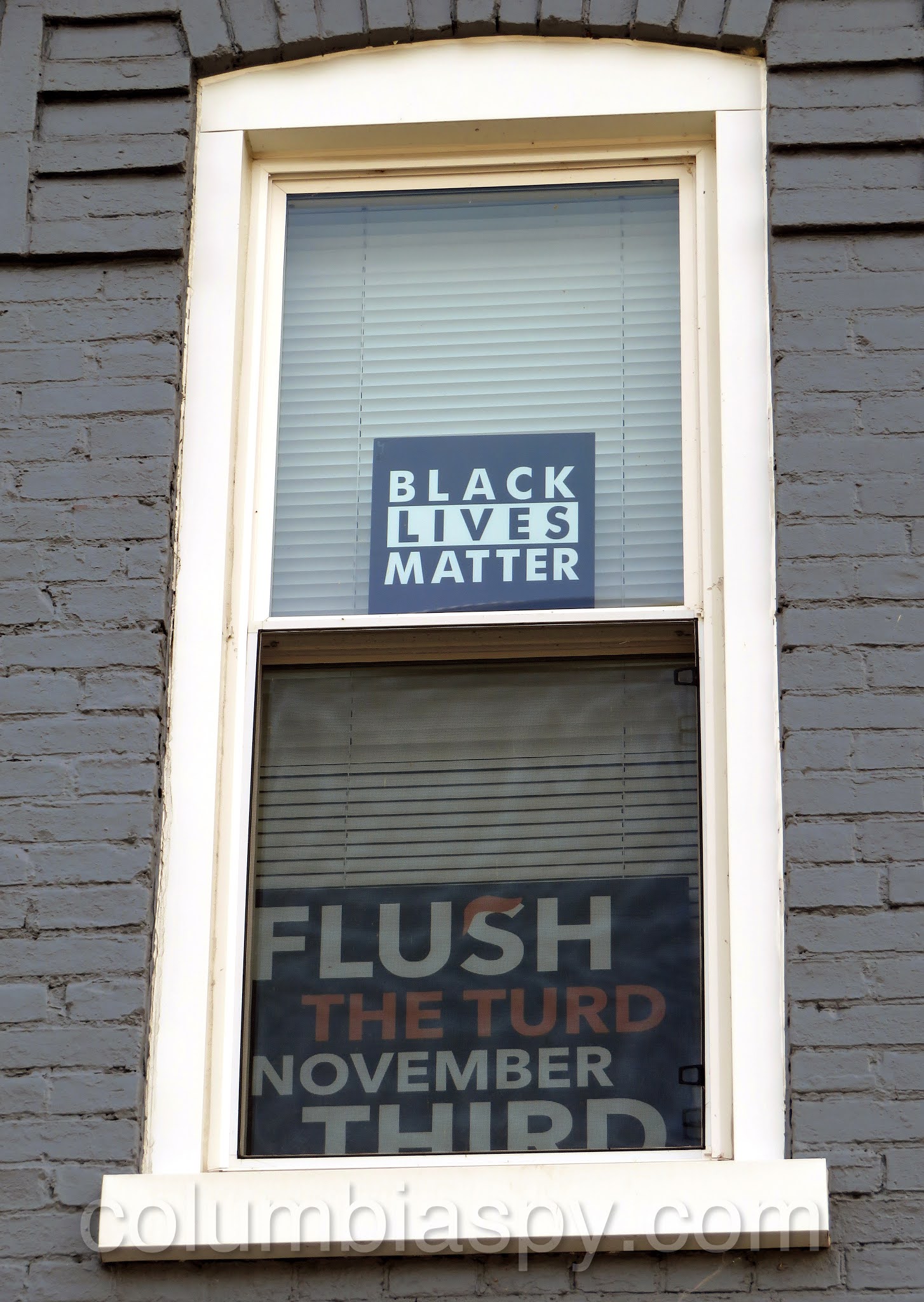
 Campaign sign

 STOP WORK
(No Permit)

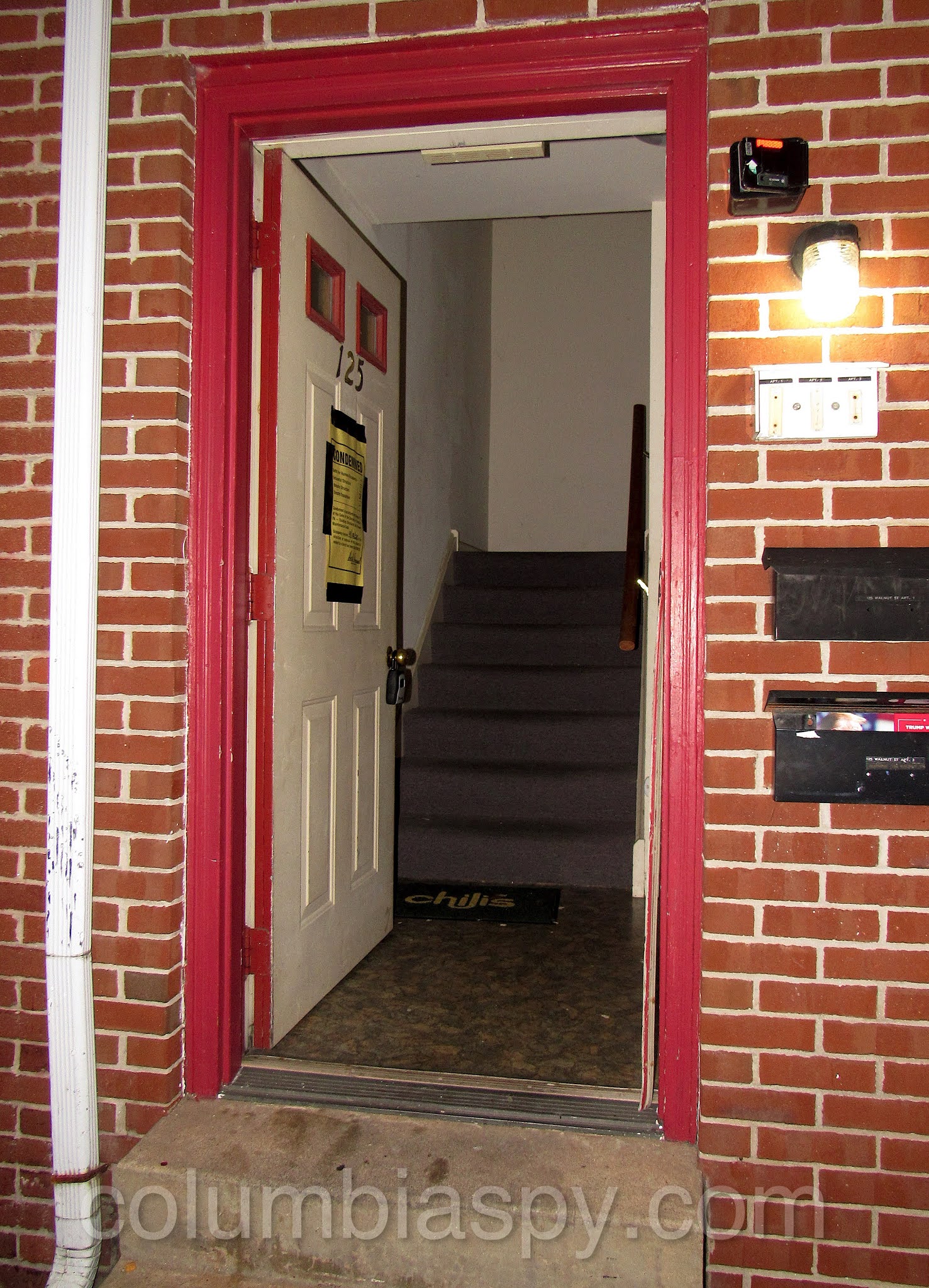
 Speaking of permits, none are posted for the work here at 601 Chestnut.

 The favorite holiday of poet Angus O’Riley O’Patrick McGinty, author of “Broadmoor”

 Who’s Murry?

 Bins of firewood

 Yes, do that.

 St. Patrick’s Day wardrobe at Align Pregnancy Services

Bags of fibers (?) at Floyd’s of Leadville

 More and more

 Down by the riverbank

 Down at the River Park
That pipe at the bottom right is where storm sewers (and other sources) empty out.

 Onward to the trail!

 BOOTLEG
OPEN

 Wikipedia tells us:
The Clabber Girl name brand comes from the word “clabber”, a type of sour milk. In the early 1800s, people mixed clabber with pearl ash, soda, cream of tartar, and a few other ingredients to make what we know today as baking powder. The first baking powder brand by Hulman and company was the “Milk Brand”.

 Any nuts in town?

 Keagy’s is leaving us March 28.

 When you want to take your gazebo for a drive

 It just is.

“Down by the riverside
It’s bound to be a better ride
Than what you’ve got planned
Carry a cup in your hand”
(A Hazy Shade of Winter
— Paul Simon)
 Meditation

 Moon-topped finial 

 Who hurt our sign?

 The historical marker is lying at the bridge plaza.

About that newly painted horse at 4th & Chestnut:
Universal-Techs has adopted it as their logo (and mascot). 

 There’s the critter now.

 He’s saying something, but no one in town speaks vulture – except other vultures.

 He’s standing proud and beautiful anyway.

 There’s that Bank Avenue mushroom again.

 But finally we have some mushroom guides over at Mullen Books.

 Steps down at the tracks

 The top step is tied together with an iron connector, as was often the practice back in those days.

Another practice must have been using humongous old blocks of stone to build walls.
 Entering the arch at 401 Locust

 Checkin’ ‘er out

Time for a smoke break
And of course, we can’t forget the Market House project:
 Cement truck in Avenue I

 A peek inside

 Supports for the awning

 Grinding

 Oops, there’s a split.

 Drilling into the historic brick?

 That’s a no-no and is against HARB regulations.
Who’s overseeing this project anyway?

 This must be where the new slab goes.

 Fixing the bricks

 A few more peeks to see what $2.1 million can buy…

Staging area out back

Costs of the Market House project – Who pays for what?


[NOTE: CHI-SJCH referred to below stands for Catholic Health Initiative-Saint Joseph Catholic Health, a Pennsylvania non-profit organization.]


The current Columbia Market House project is estimated to cost $2.1 million. There is a Professional Services Agreement between Columbia Borough and CHI-SJCH for costs of the project, but who pays for what? 


Let’s break it down. Of the $2.1 million allocated for the building renovation, half comes from the borough’s municipal bond (basically a loan) and half from a RACP grant. RACP stands for Redevelopment Assistance Capital Program,” and is a state grant requiring dollar-for-dollar matching funds. Columbia Borough was awarded the $1.75 million grant funds last August, approximately $750,000 of which will go towards parking projects. The remaining $1 million (approximately) will go towards the Market House. Since the RACP is a matching grant, Columbia Borough (We, the Taxpayers), will need to pony up a total of $1.75 million, which, again, comes from the bond.


Once the renovation is complete and the Market House operation is underway, “CHI-SJCH agrees to provide up to $65,000 annually in funding beyond revenue generated by activities and programs at the Market House for costs associated with the maintenance of the Columbia Market House,” according to the agreement. CHI-SJCH will also provide up to $100,000 to equip the Market House. More information on costs (and responsibilities) are detailed in the excerpts of the Professional Services Agreement, shown further down in this article.

The Market House project was put into motion by the previous borough council, which accepted CHI’s proposal in November 2018. The previous borough manager, Rebecca Denlinger, was largely responsible for obtaining the RACP grant. Denlinger left Columbia in January of this year to take a position as Elizabethtown’s borough manager. The Professional Services Agreement was signed by Denlinger and Philip Goropoulus, president of CHI St. Joseph Children’s Health, in March 2019.

Here a few excerpts from the agreement pertaining to project costs:


3. SCOPE OF SERVICES & RESPONSIBILITIES

A. Renovations – CHI-SJCH and the Borough shall mutually agree upon renovations, construction, and updates to the Columbia Market House pursuant to this agreement.

B. Equipping the Market House – CHI-SJCH shall equip the Market House with appropriate furnishings to support market activities including stands for vendors and seating for patrons.

a. The style of furnishings will be mutually agreed upon by the Borough and CHI-SJCH.

b. CHI-SJCH will provide up to $100,000 in funding from the organization’s Healthy Columbia Project to support the equipping of the Market House. This includes but is not limited to:

i. Vendor Stands

ii. Tables and Seating for patrons and community members

c. At the time of installation into the Market House, all furnishing purchased for use in and to support the operations of the Market House are assets of the Borough.

d. CHI-SJCH is responsible for the maintenance of all furnishings as a part of the professional services agreement.


C. Building Maintenance and Utilities

The responsibilities of CHI-SJCH:

  • Provide year-round, regularly scheduled interior custodial services to maintain the interior of the building in a clean and presentable condition for staff, visitors and other users. The Borough authorizes CHI-SJCH to enter into service agreements for such services as needed.
  • Shall be responsible for the maintenance and repair of any equipment provided by CHI-SJCH for the use of staff, partners or the general public in the Market House.
  • Oversee renovation and construction projects related to the revitalization of the Colombia [sic] Market House.
  • Maintain electric, heat utilities.
  • Secure pest control for the Market House (interior and exterior)
The responsibilities of the Borough:

  • Maintain water, sewer and trash for the building.
  • Provide non-custodial building and window cleaning, and snow removal from roadways, parking areas, sidewalks, steps, and ramps and decks that provide public access to the facility.
  • Conduct regularly scheduled preventive maintenance on building systems, such as adjusting. lubricating, inspecting, and testing procedures designed to prevent equipment failure, equipment downtime, and to verify good operating condition of the building and its equipment, including public rest rooms.
  • All such maintenance shall be done and performed in the Borough’s sole discretion provided, however, that the Borough shall maintain the building in a workmanlike and operable condition at all reasonable times.
  • The Borough shall maintain proper building and liability insurance coverage at all times in satisfaction of Section K.1, as set forth hereinafter.

The Borough shall also provide building keys to CHI-SJCH for the facility.


E. Staffing Structure and Management Costs – CHI-SJCH shall be responsible for recruiting, selecting, training, scheduling, supervising and compensating full and part-time employees assigned to the ongoing management and operations of the Columbia Market House as necessary for CHI-SJCH to satisfy its responsibilities according to the terms of this Agreement. CHI-SJCH shall also provide administrative support capabilities for those employees and associated services, including budgeting, accounting, payroll, benefits, and personnel management.

All such employees shall be employees of CHI-SJCH and not employees of the Borough. CHI-SJCH shall maintain all applicable workers compensation insurance as set forth hereinafter. CHI-SJCH shall not charge an annual management fee to the Borough as a part of this agreement.

F. Funding Sources – CHI-SJCH agrees to provide up to $65,000 annually in funding beyond revenue generated by activities and programs at the Market House for costs associated with the maintenance of the Columbia Market House. The Borough is responsible tor identifying supplemental funds necessary beyond the maximum funding allocated by CHI-SJCH for Market House operations.

If overruns are anticipated or occur, a financial plan is to be approved by both the Borough and CHI-SJCH. An overrun occurs if the cost of operations and maintenance of the Columbia Market House exceed the combined revenue generated by activities and programs at the Market House and the $65,000 in annual funding. At that time, CHI-SJCH shall invoice the Borough for the remaining balance on a monthly basis until the overruns are eliminated. During period of overruns, financial reports shall be provided on a monthly basis.

L. Insurance and Liability – Insurance and liability coverage related to management and operation of The Columbia Market House shall be provided by each party to this Agreement as follows:

1. Borough: Covenants and agrees that from and after the date of this Agreement, and during the entire term hereof, it shall, at its sole cost and expense, carry and maintain: (i) property insurance with respect to the Columbia Market House building and the Borough’s furnishings, fixtures and equipment within the building; and (ii) commercial general liability insurance, with contractual liability coverage, with respect to the use and occupation of the Columbia Market House in the minimal amounts of one million dollars ($1,000,000.00) each “occurrence” limit and two million dollars ($2,000,000.00) general aggregate limit. The Borough may maintain any of its required insurance under blanket policies of insurance covering the Columbia Market House and any other premises of the Borough, or companies affiliated with CHI-SJCH, provided that the coverage afforded will not be reduced or diminished by reasons by the use of such blanket policies of insurance and that such blanket policies meet the other requirements set forth herein. The foregoing minimal limits of insurance coverage to be maintained by the Borough shall in no way limit or diminish the Borough’s liability hereunder. All such policies of insurance hall name CHI-SJCH as an additional insured and/or loss payee.

2. CHI-SJCH: Covenants and agrees that from and after the date of this Agreement, and during the entire term hereof, it shall, at its sole cost and expense, carry and maintain: (i) commercial general liability insurance with contractual liability coverage with respect to the use and occupation of the Columbia Market House in the minimal amounts of one million dollars ($1,000,000.00) each  “occurrence” limit and two million dollars ($2,000,000.00) general aggregate limit; (ii) al risk, property insurance, vandalism and mischief, for the full replacement value, of any and all of CHI-SJCH’s property, including, but not limited to trade fixtures and equipment; and (iii) workers compensation or similar insurance to the extent required by law. CHI-SJCH may maintain any of its required insurance under blanket policies of insurance covering the Columbia Market House and any other premises of CHI-SJCH, or companies affiliated with CHI-SJCH, provided that the coverage afforded will not be reduced or diminished by reasons by the use of such blanket policies of insurance and that such blanket policies meet the other requirements set forth herein. The foregoing minimal limits of insurance coverage to be maintained by CHI-SJCH shall in no way limit or diminish CHI-SJCH’s liability hereunder. All such policies of insurance shall name the Borough as an additional insured and/or loss payee.


[The complete Professional Services Agreement can be downloaded HERE.]

Columbia Market House project runs into problems, repairs and upgrades needed

The Columbia Historic Market House, 15 South 3rd Street

The Columbia Market House project has run into some unpleasant surprises on its journey forward. A leaky roof, leaky windows, a cistern, and upgrades for the dungeon are some of the issues that cropped up recently and were not part of the original renovation plan. Council now has to resolve those issues to keep the project on track.

The roof, which is a little over 10 years old, is leaking and needs urgent attention. Officials don’t think it is under warranty. The roof was replaced in 2009 as part of an $873,928 market house repair project that included repointing of exterior mortar joints and installation of an infrared gas heating system, according to a former borough official.

Council is looking at several options including a rubber roof and spray-on coating. The entire roof could be replaced or just parts of it. No cost was given for any of the options. Although roof replacement was not in the plans, the leaks have been known about for several years, at least since “the market was still kind of operating,” according to Mayor Leo Lutz at this week’s borough council work session. [NOTE: The market house closed at the end of 2017, as Columbia Spy reported HERE.] Lutz recalled that trashcans had to be placed under leaks during a heavy rain. Council President Heather Zink asked, “If we knew it was leaking, why wasn’t it put into the original plans?” Lutz replied, “That I can’t tell you.” The roof project might also entail installation of new gutters and downspouts. Windows, too, are leaking and need to have caulking removed and replaced.

Fran FitzGerald, the lead councillor of the Public Works and Property Committee, said the dungeon will need upgrades to bring it up to code, including an exhaust fan for better ventilation, a new circuit for lights and convenience outlets, new fire extinguishers, an inside door requiring a crash bar, and exit and occupancy signs.

FitzGerald also said that an existing concrete slab near the bathroom needs to be removed. Although installation of a new slab was accounted for in the plans, the removal was not. The cost for removal was initially estimated at $27,000 but was reduced through negotiation to $8,421.18. Councillor Eric Kauffman said that since the architect was paid to develop the contract, the borough should not be responsible for the oversight. “Why are we paying for it?” he asked.

Borough Solicitor Evan Gabel replied, “In situations like this, you’ve got to think long-term about some of this stuff, as far as you’re going to have to work with this architect for the remainder of this project.” [NOTE: The opposite is also true.] Gabel continued, “If an $8,000 change order is the worst thing that happens on a $2.3 million dollar project, then you’re doing pretty good.”

The borough currently has an “owners allowance” of $25,000, which is a contingency fund for unforeseen issues, often involving change orders. Gabel said $250,000 would be more appropriate for a project of this scale, however, noting that $25,000 seemed small. After discussion, council voted unanimously to approve the change order for East Coast Contracting to remove the slab. Finally, a cistern located near stairs to the dungeon must be filled in. The cistern is five feet wide and nine feet deep. The highway department will provide fill.

On the advice of the borough engineer, council discussed forming an ad hoc committee to examine peripheral projects such as improvements to adjoining streets, parking lots, and sidewalks, and gutters and downspouts for Borough Hall. The committee will consist of representatives from the borough and CHI.

Costs of the changes and improvements were not discussed, except for that of slab removal. The projected cost of the market house project is about $2.1 million, with half coming from a state grant (RACP) and half from borough funds (bond proceeds). Columbia Borough was approved for the $1.75 million grant in August 2019. About $750,000 of that amount will be used for parking projects (including a study). According to the Lancaster County Tax Assessment Office, the market house building is currently assessed at $301,400.

Driver who hit several cars at AAG Auto Sales charged with DUI and Reckless Driving

On 2/18/20 at approximately 10:11pm Stephen Michael Horner, age 66, of Columbia, PA was driving a white Oldsmobile sedan that left the roadway in the 1200 block of Lancaster Avenue and struck two trees, a street sign, a stop sign and numerous parked vehicles that were in the AAG Auto Sale lot in the 1300 block of Lancaster Avenue.  While trying to remove Horner from the wrecked vehicle, first responders noticed a strong scent of alcohol coming from both Horner and the vehicle.  An Officer with the Columbia Borough Police Department filed charges for driving under the influence (Highest Rate) and reckless driving.  Horner is considered innocent until proven guilty in a court of law.