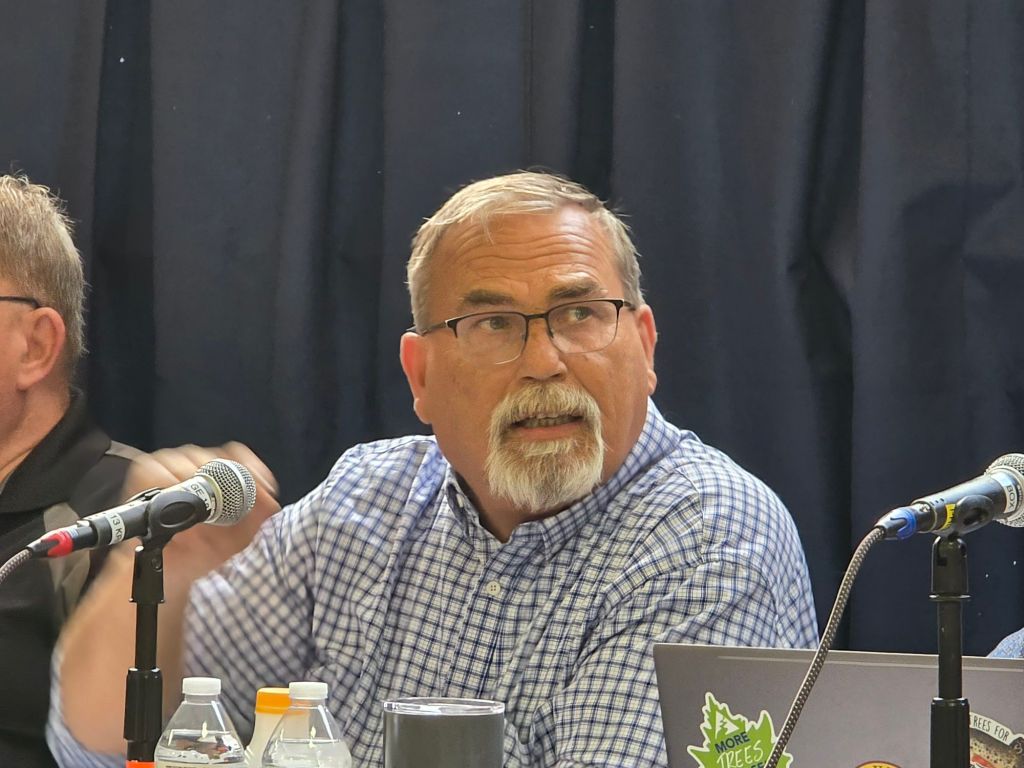
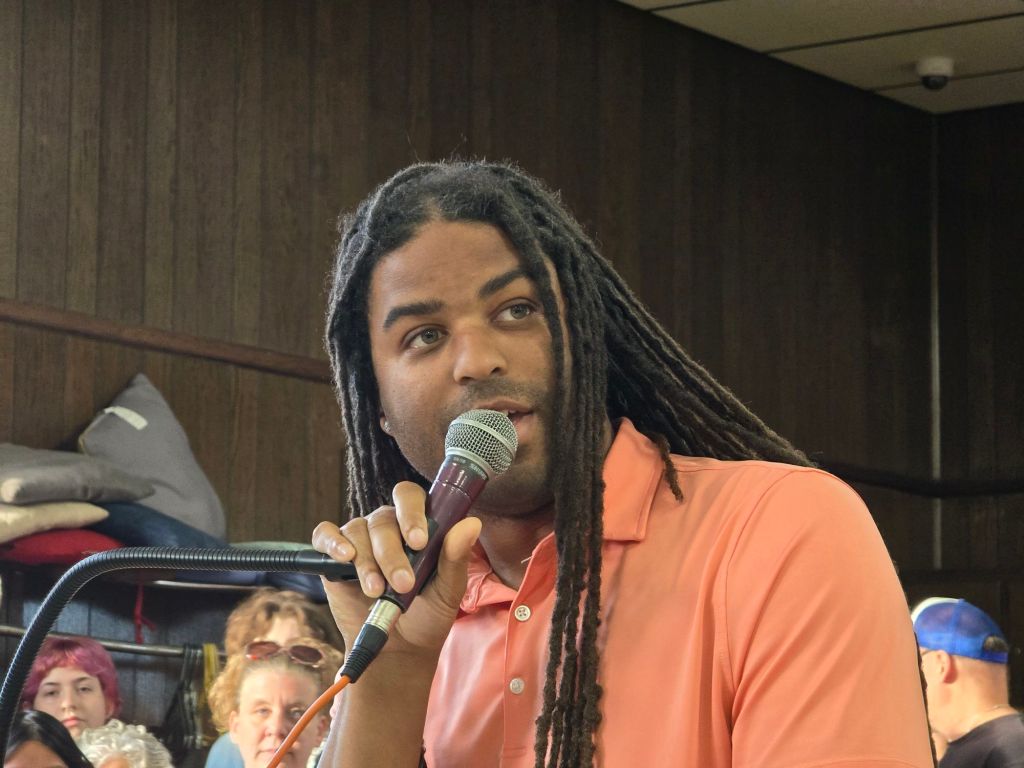
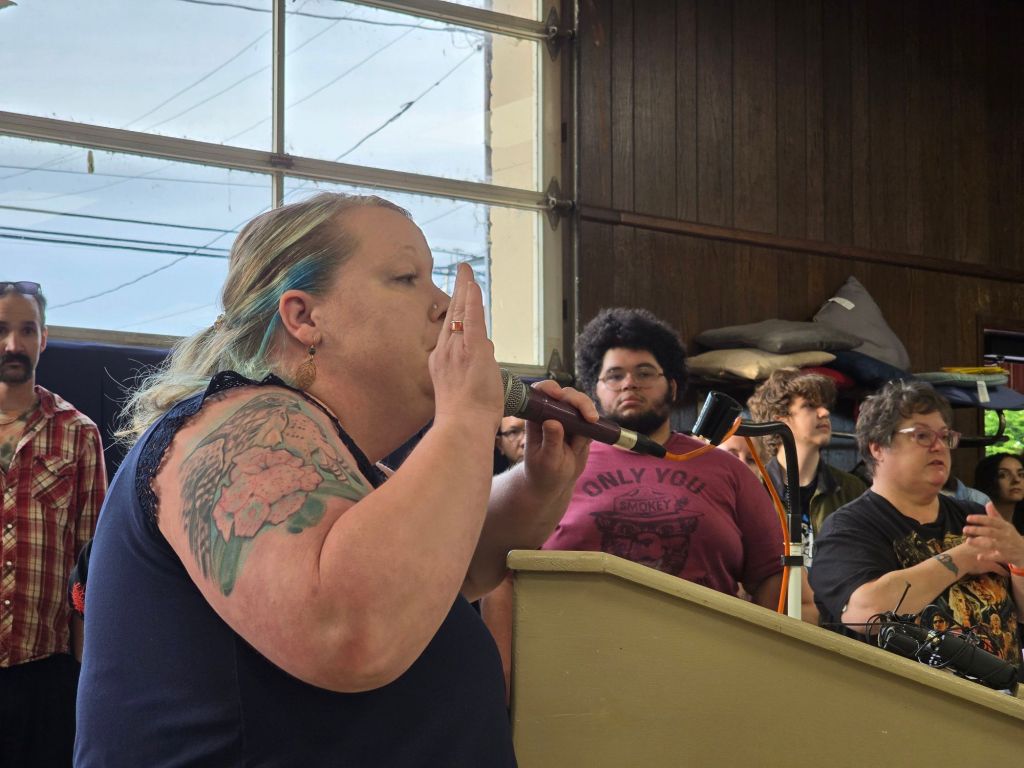
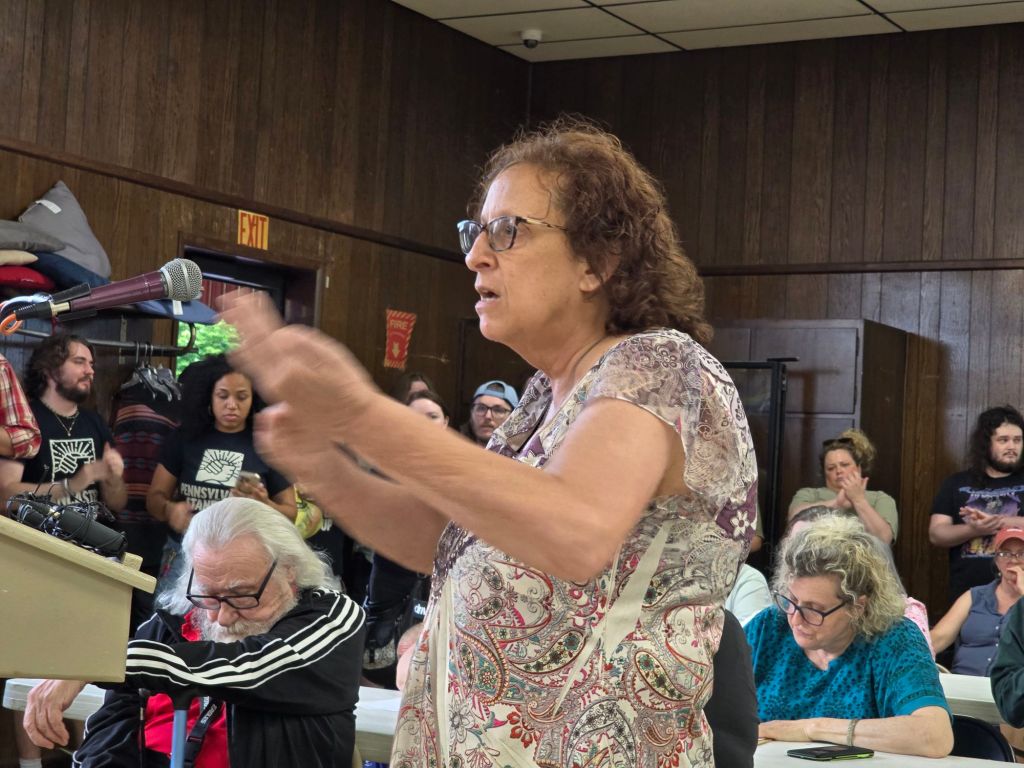
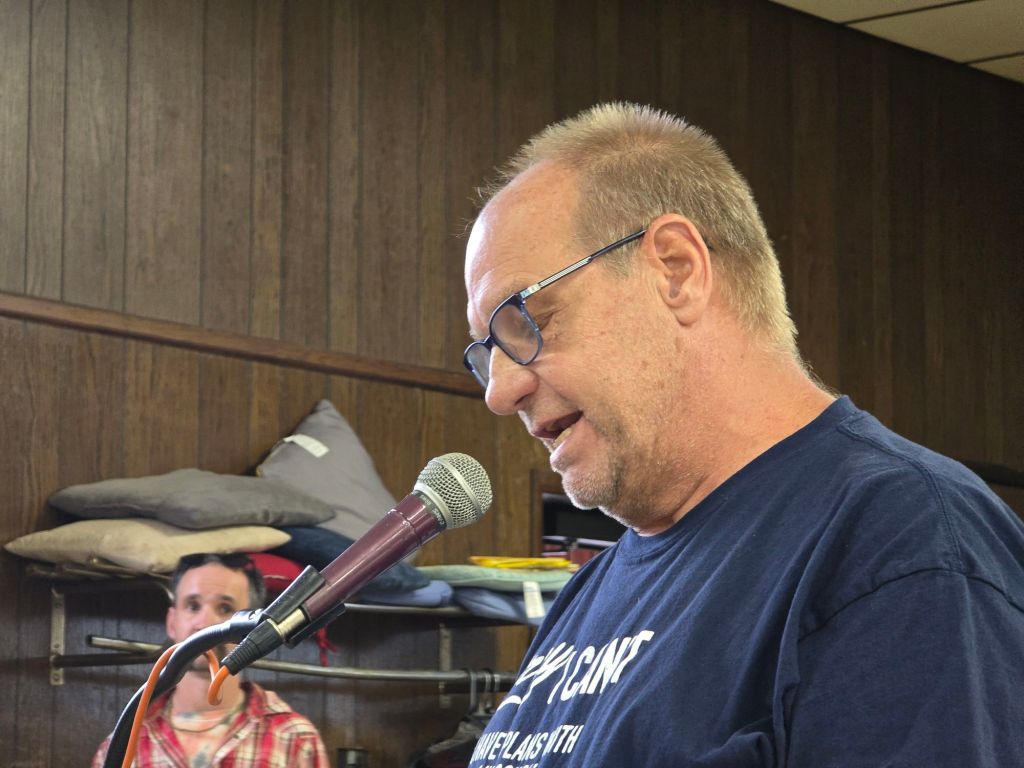
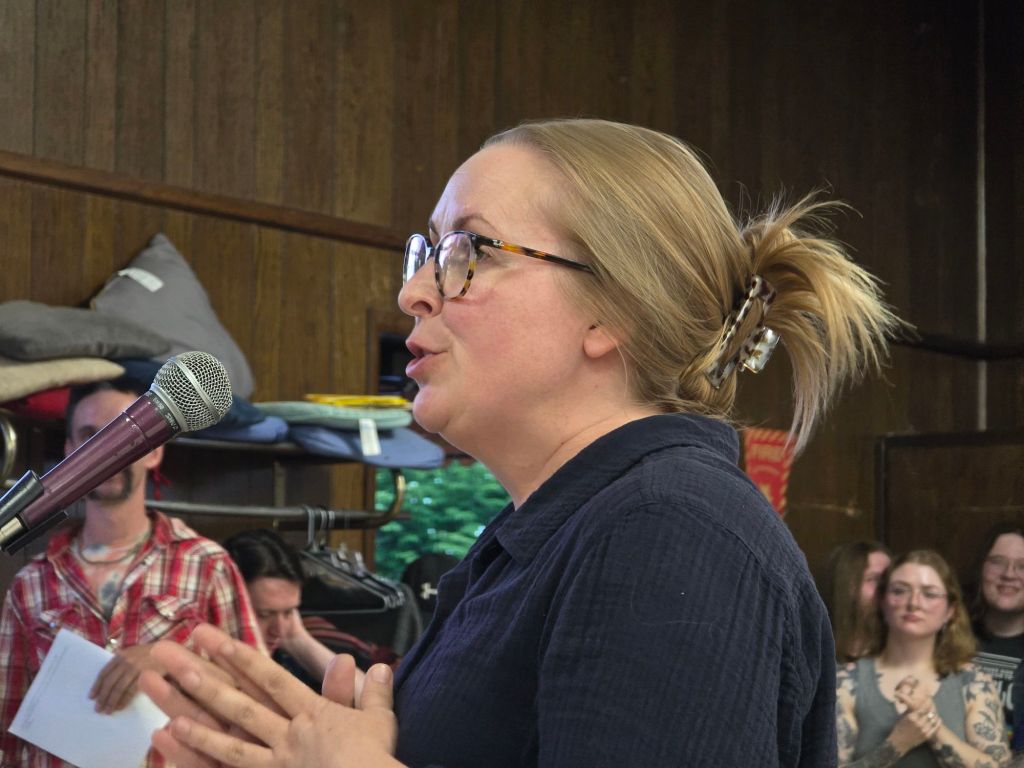
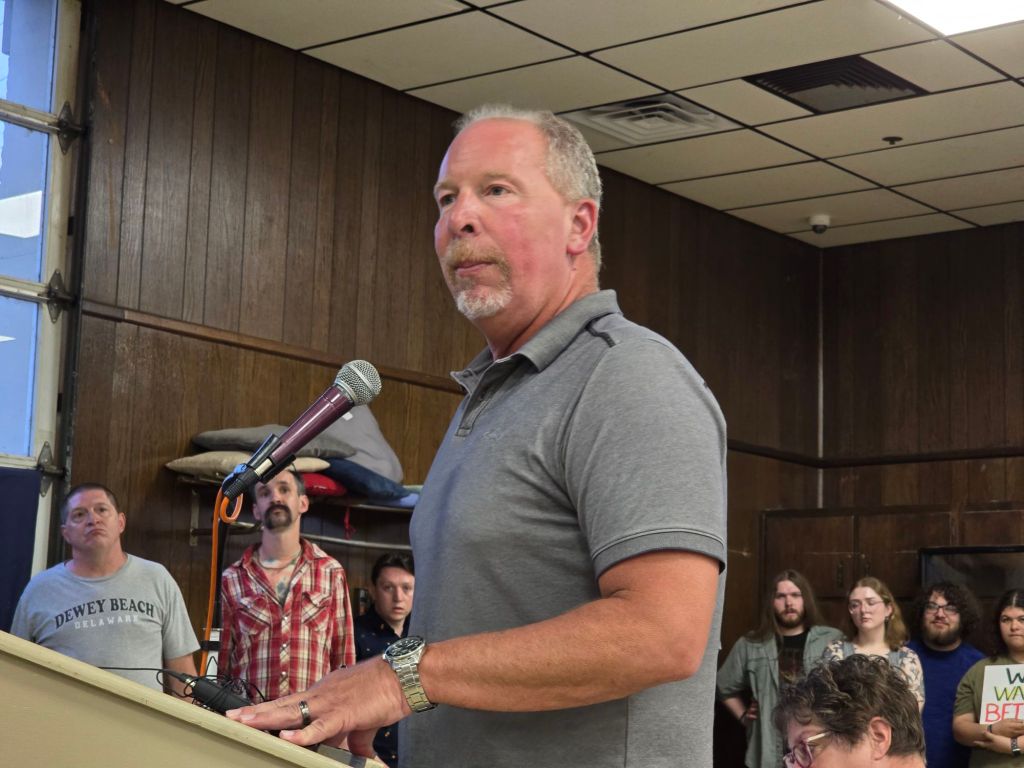
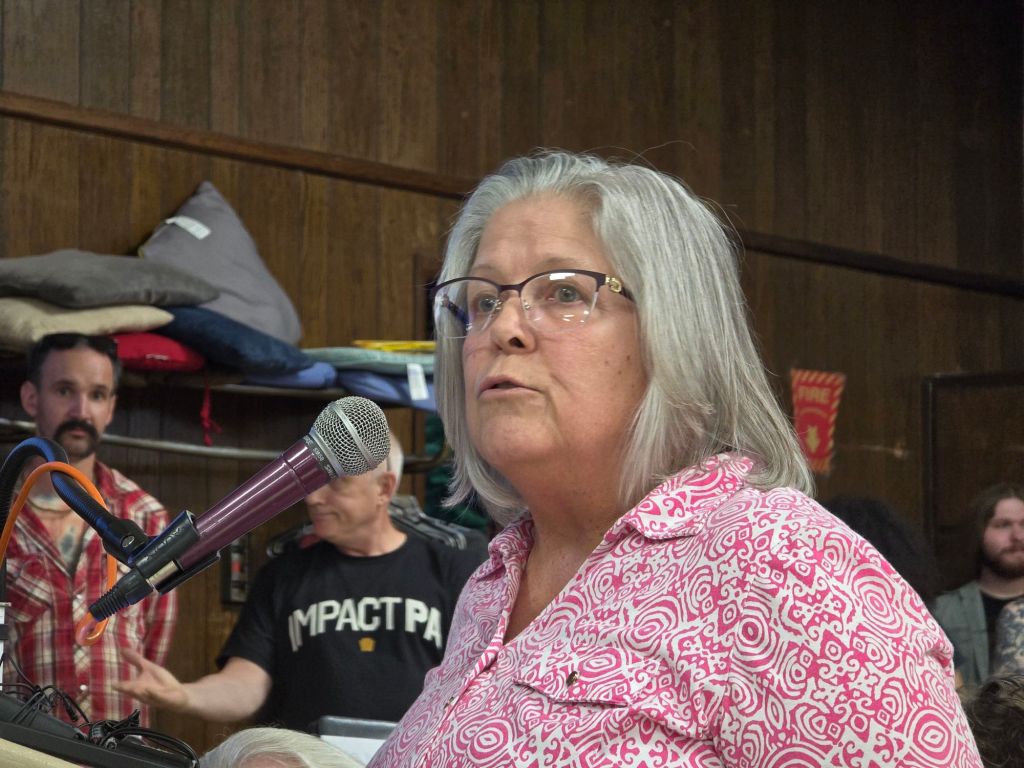
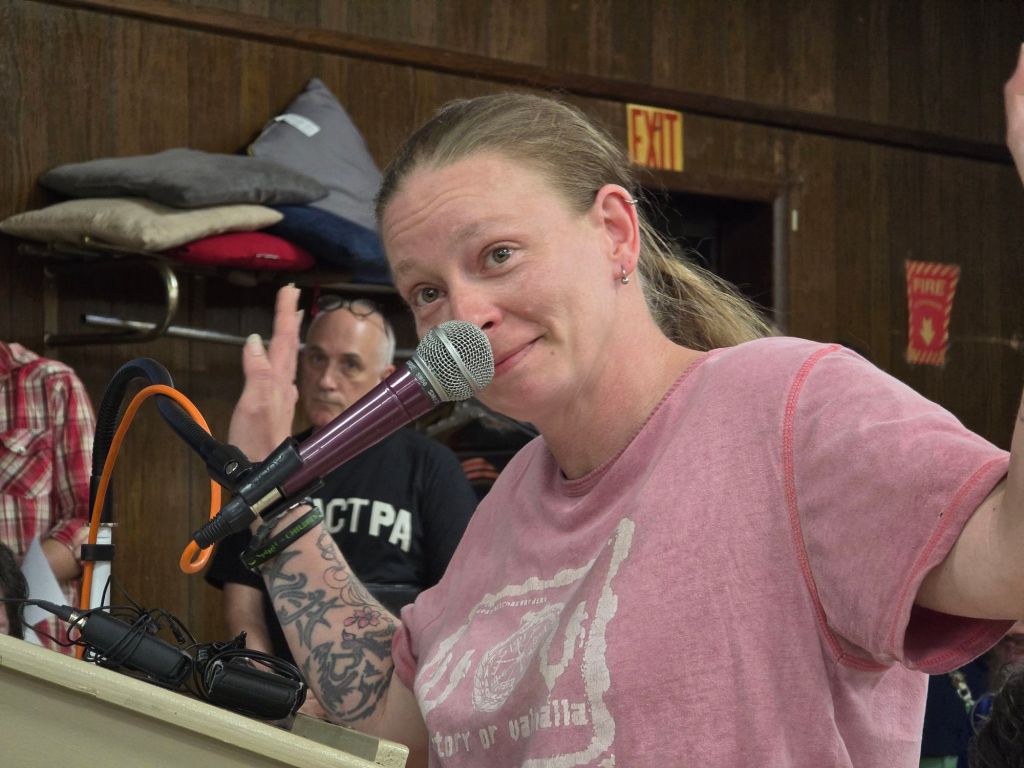
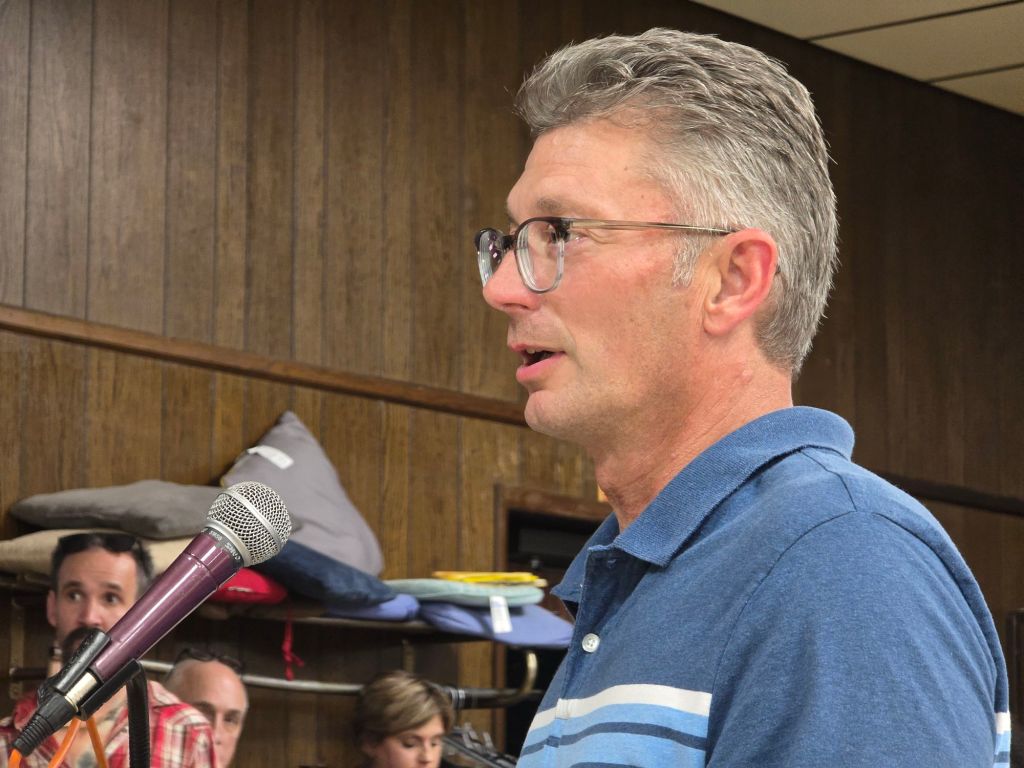
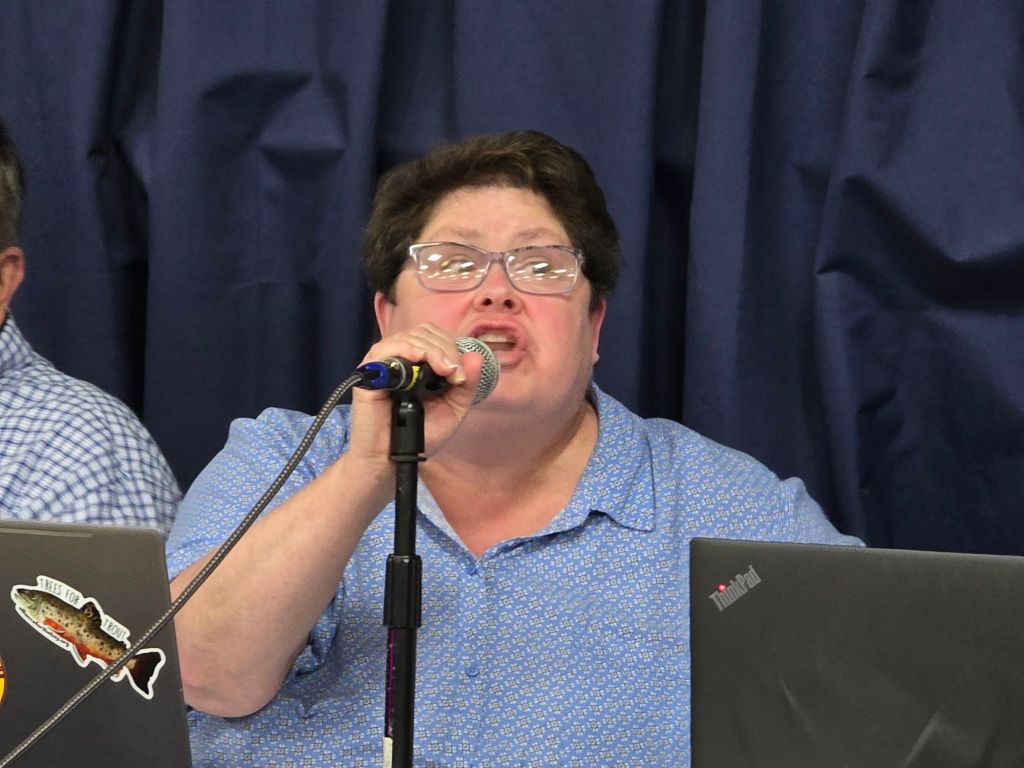
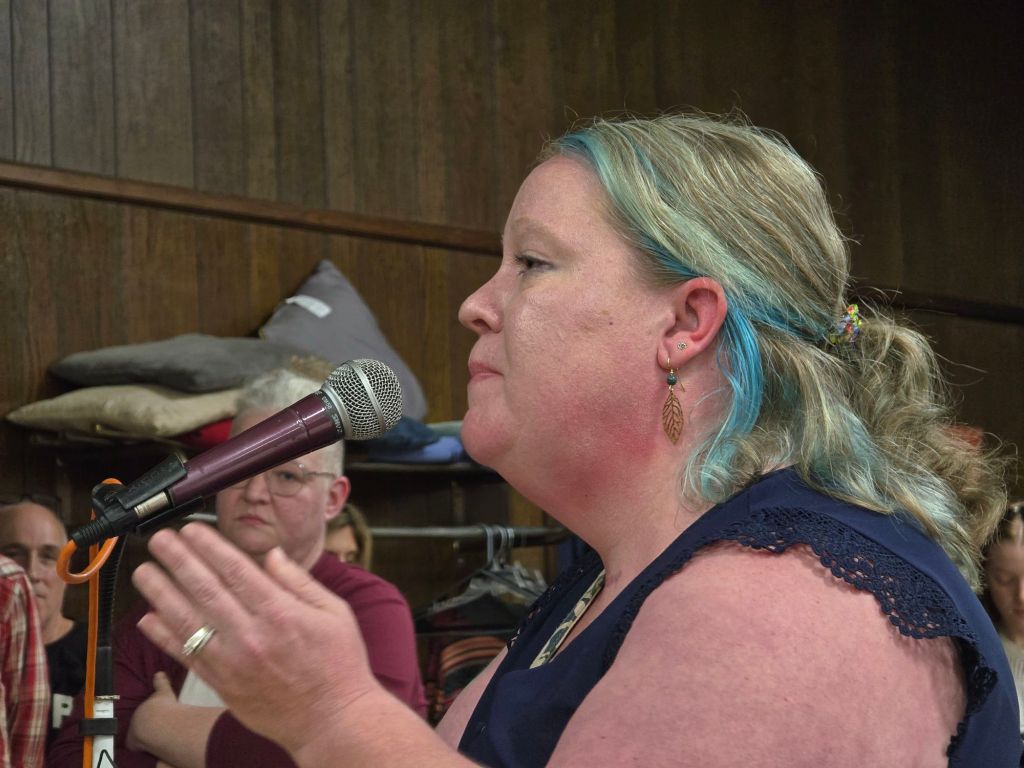
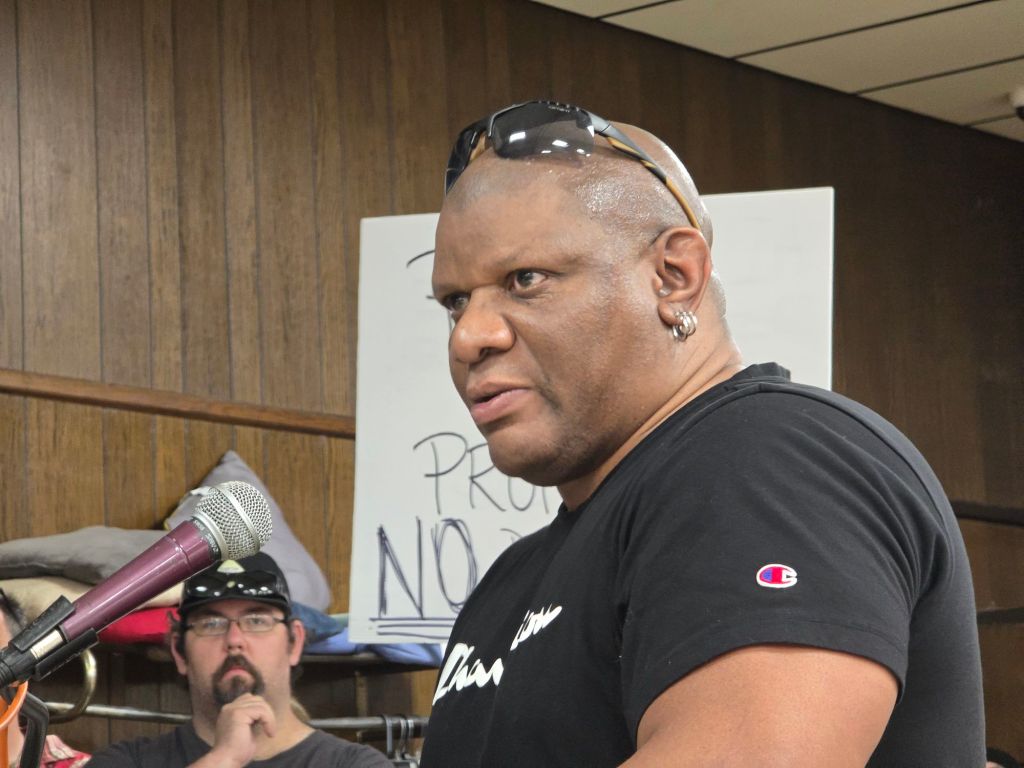
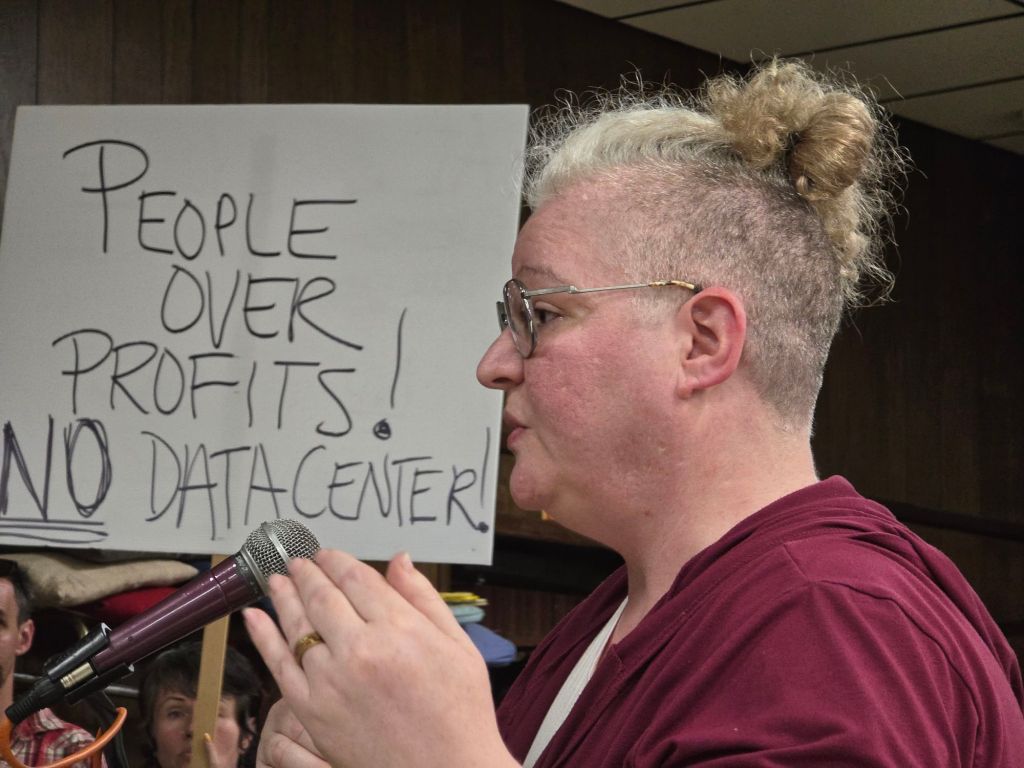
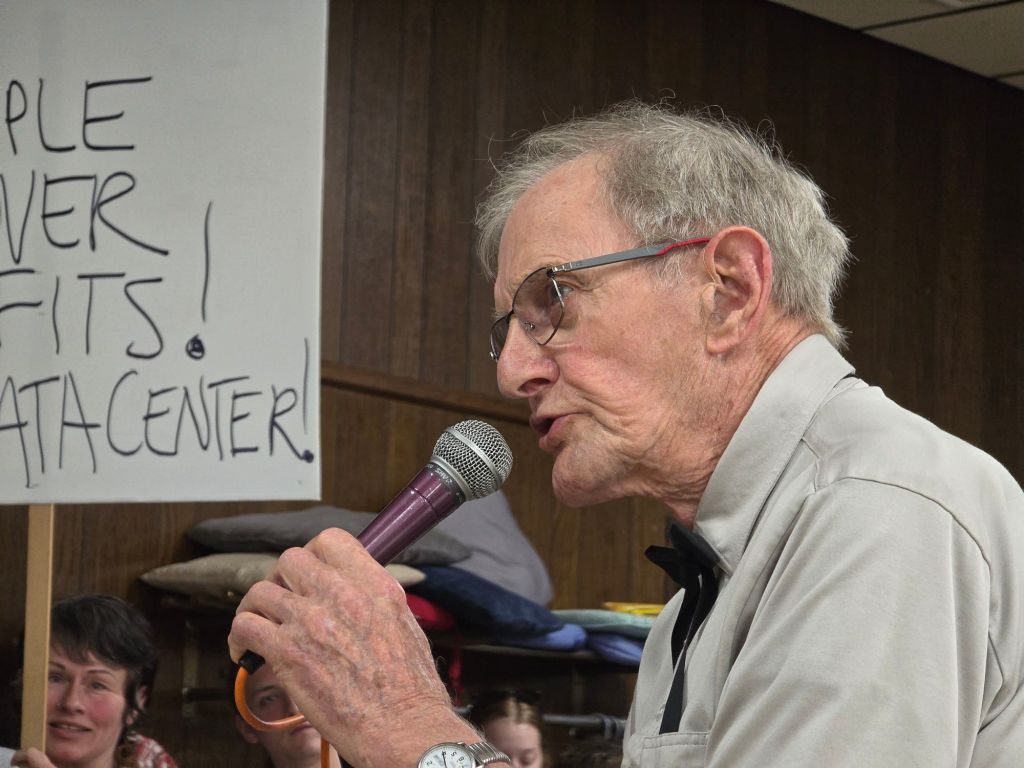
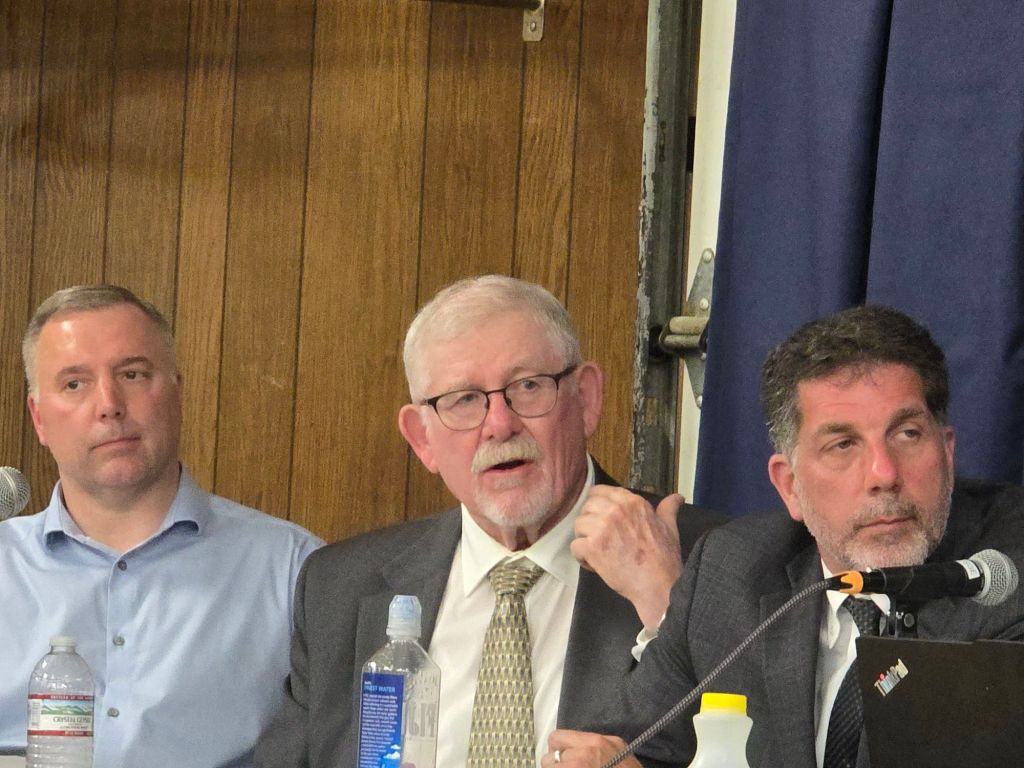
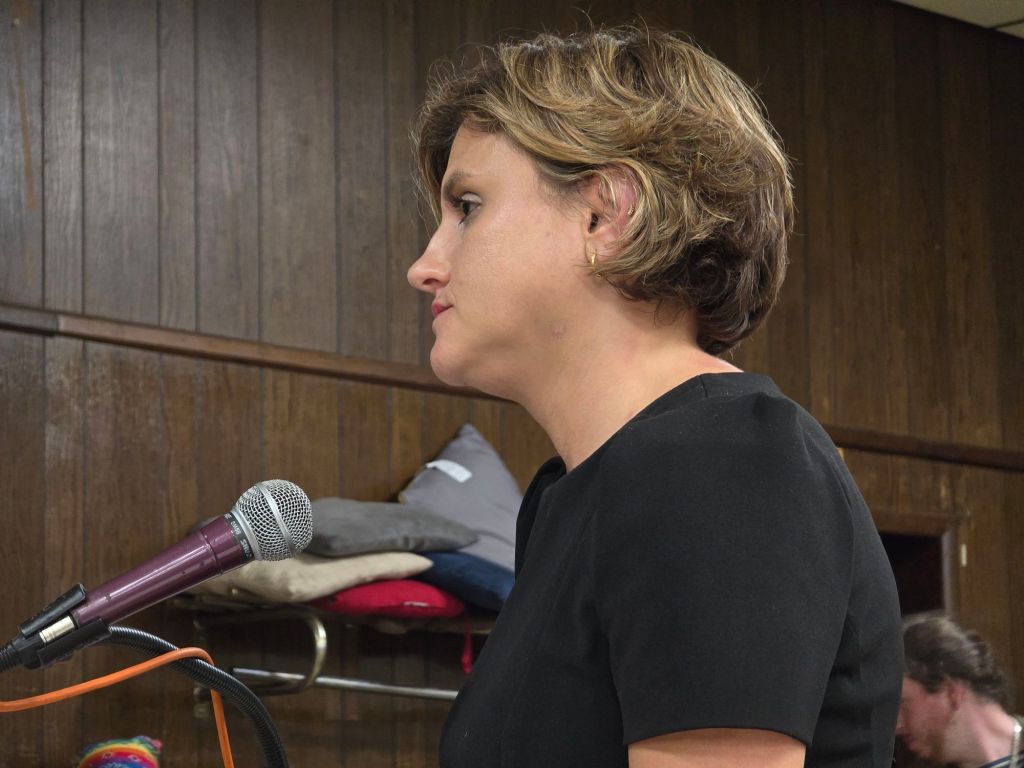
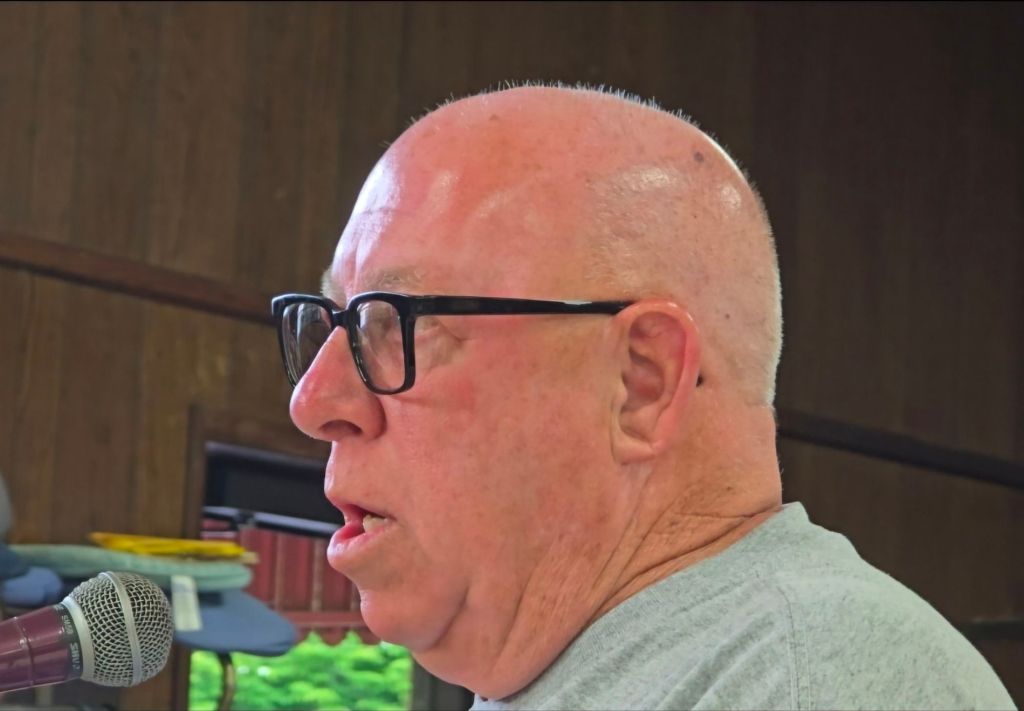
Lauren VonStetten opposed awarding a bid proposal to Saadia Holdings LLC for a potential data center at the May 26 Columbia Borough Council meeting. Todd Burgard spoke in favor, saying it would help the borough’s budget.[Photos: Columbia Spy]
THE LNP | LANCASTERONLINE EDITORIAL BOARD
THE ISSUE:
Residents packed the Columbia Borough Fire Department building May 26 to express concerns over a $6.35 million bid from New York-based developer Saadia to buy McGinness Innovation Park, a 41-acre borough-owned property. The focus of their objections: A Columbia Borough Council member said the developer was likely to propose building a data center on the property.
The free expression of public opinion that is essential to democracy was on full display May 26 in Columbia.
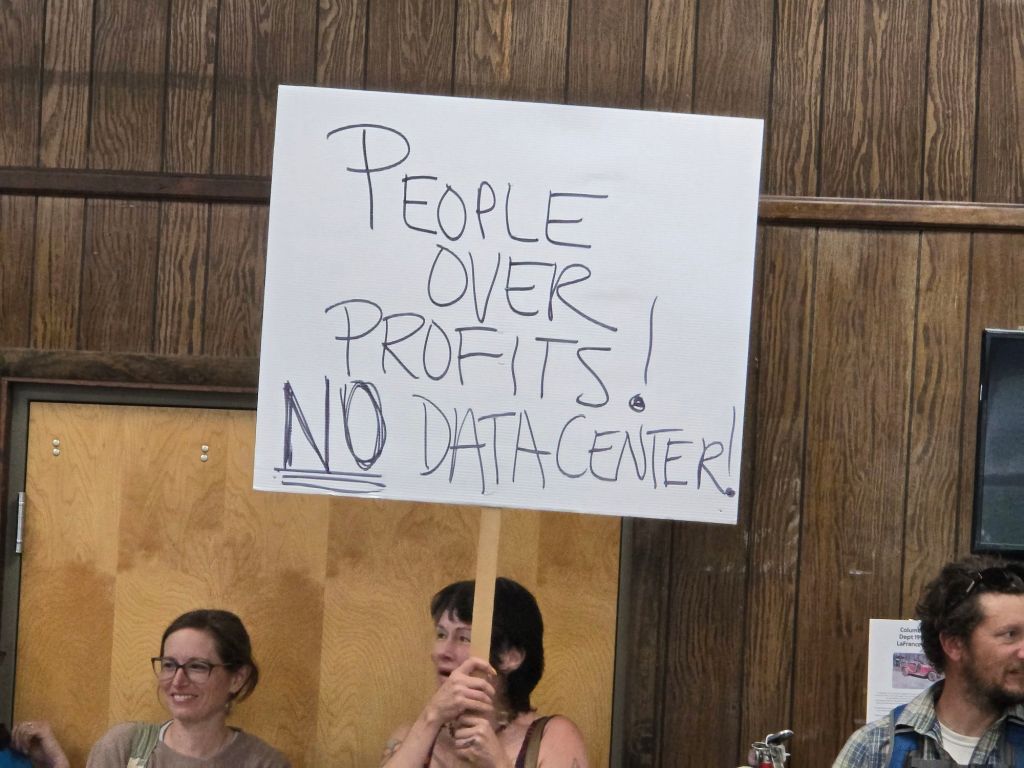
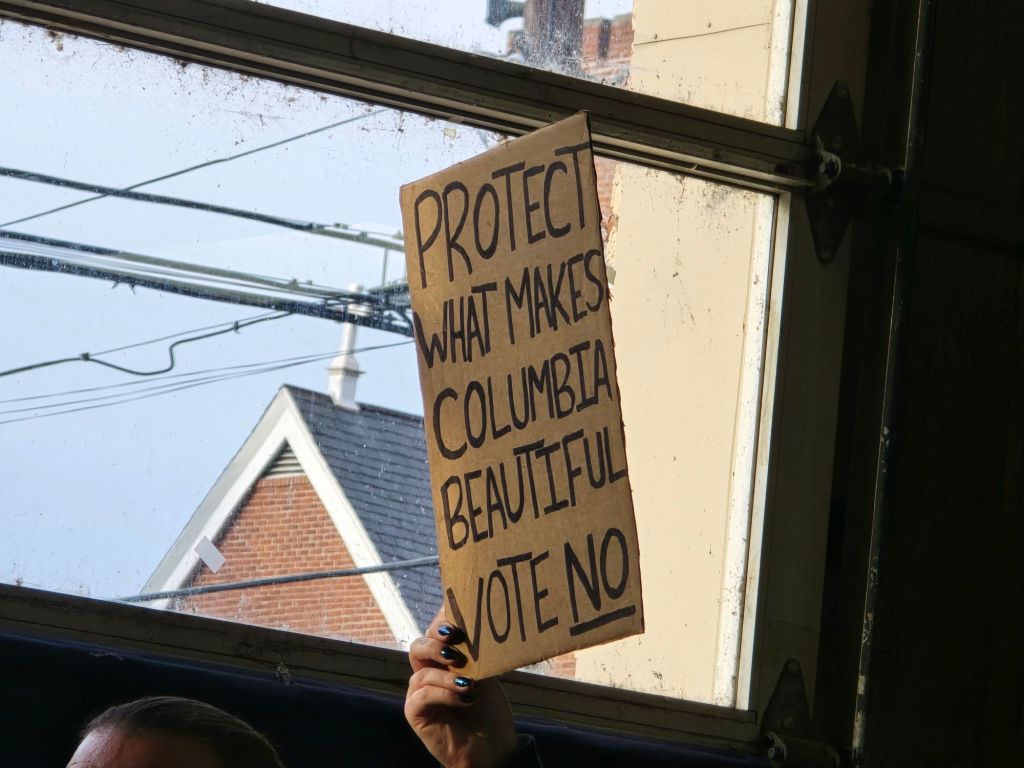
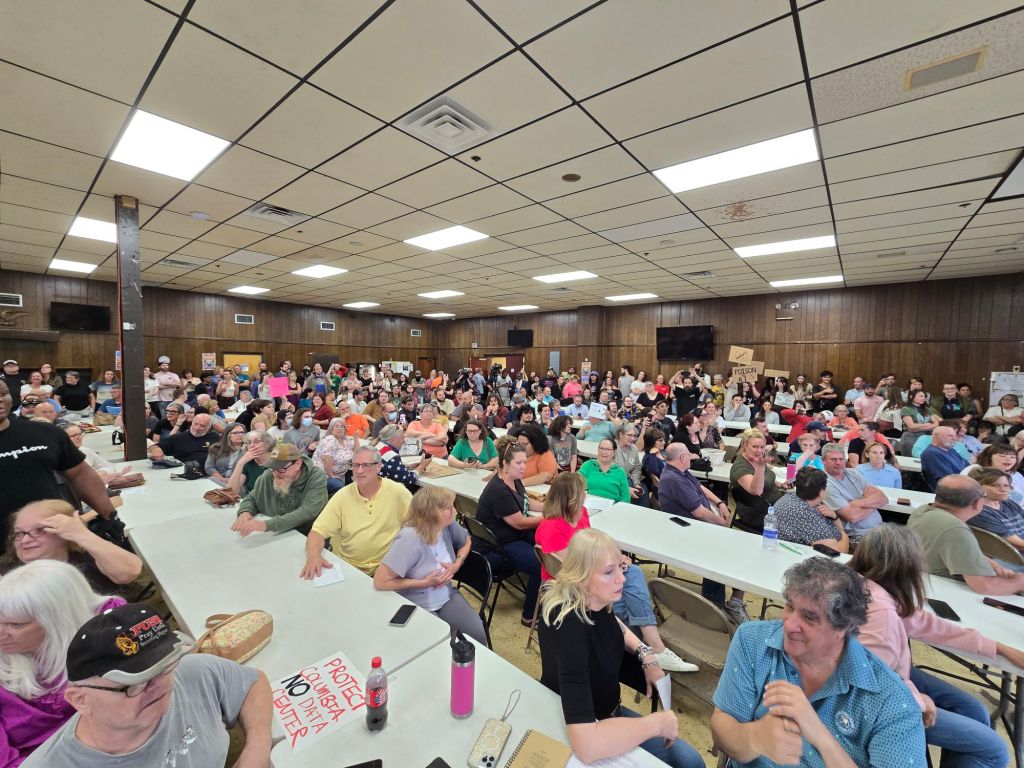
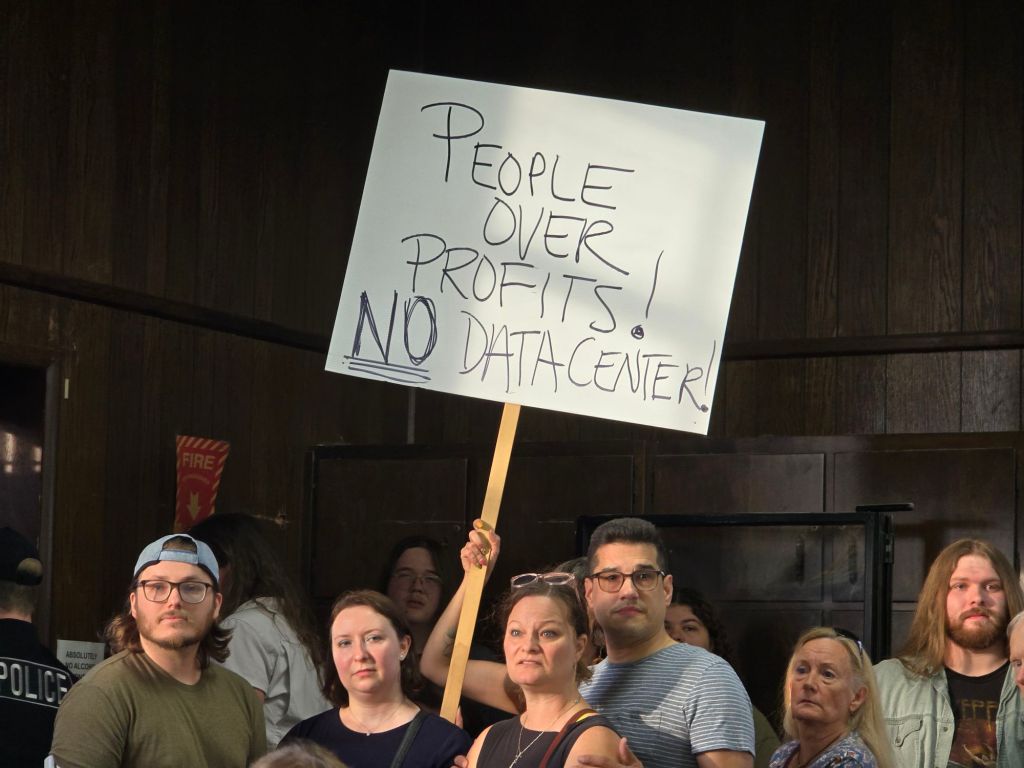
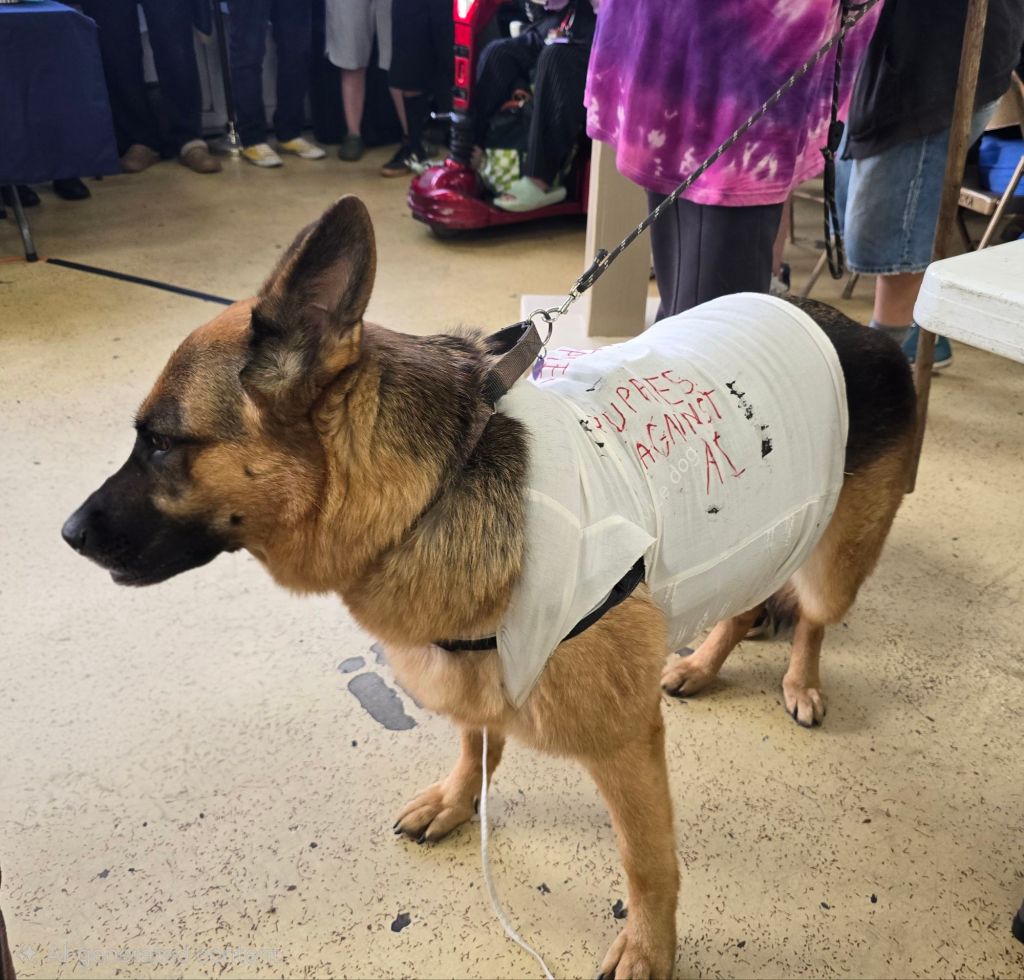
Folks turned out in good number to express their views to local elected officials about the possibility of a data center being built in their midst. The meeting lasted for nearly four hours. Some 40 residents spoke, nearly all in opposition to a potential data center.
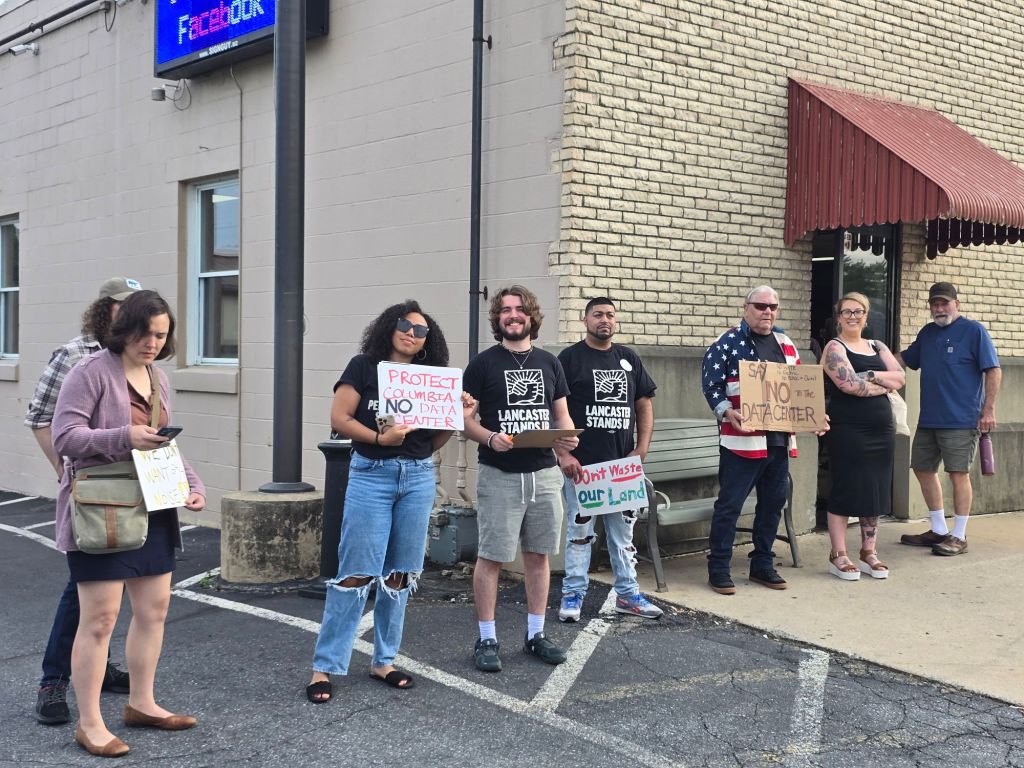
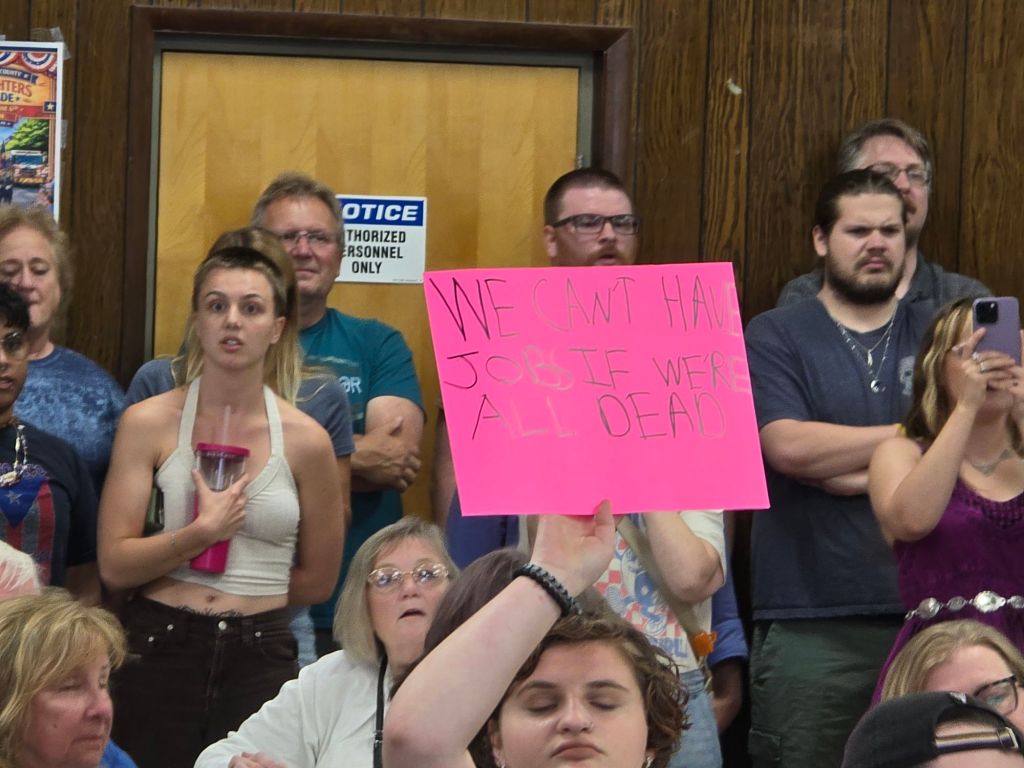
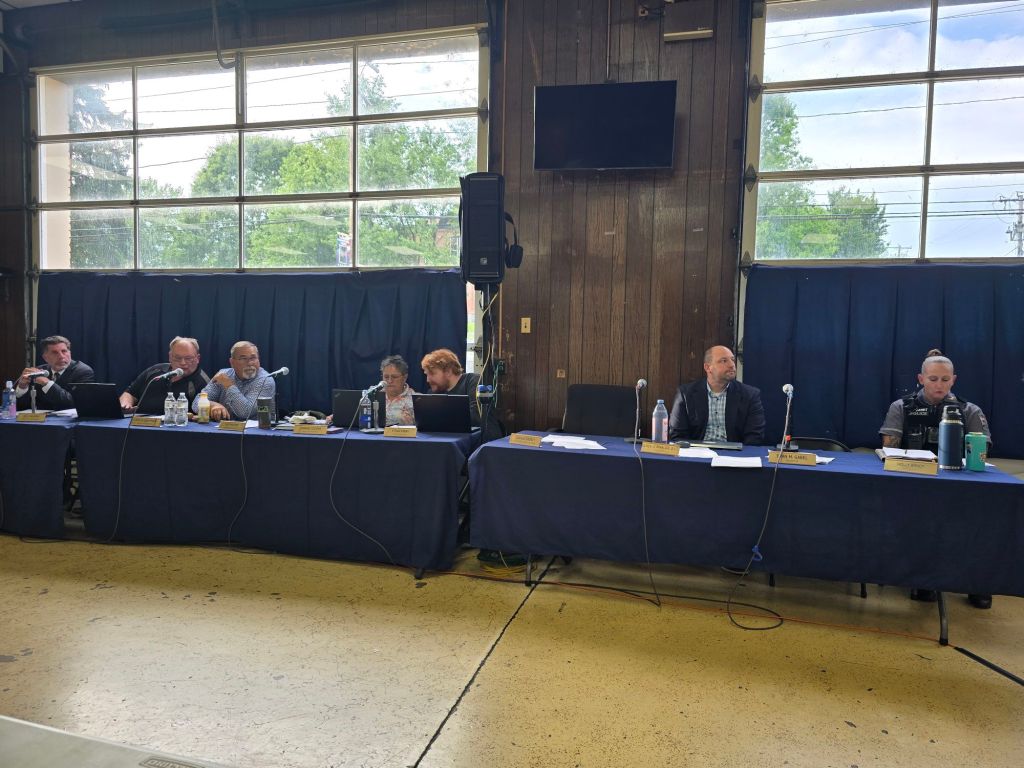
So many people attended the borough council meeting that they exceeded the fire department building’s 300-person capacity. So — in an act of civic generosity — dozens of people chose to stand outside so the meeting could proceed.
“You were elected by the people, and the people are telling you what they want,” Columbia resident Juno Rigard told council members during the public comment period.
In the end, council members — bound to heed a technicality in state law — voted 7-0 against accepting the bid for McGinness Innovation Park.
Council Vice President Heather Zink said a motion to accept the Saadia bid couldn’t be approved as presented, because it didn’t meet a state law provision that requires the borough to receive payment within 60 days of council awarding the bid. An attorney representing Saadia at the meeting said she wasn’t able to change the bid, which promised payment after sketch plans for the project won borough approval.
Resident Lauren VonStetten — who was among those who warned about the increased utility costs and the drain on local water that often come with data centers — told LNP | LancasterOnline that she thought council would have approved the bid if not for the technicality.
Columbia Borough Council should know, without a sliver of doubt now, that local sentiment is running hot against data centers.
Montgomery Patrick W., Montgomery Tonya Renee, Montgomery Tonya R. conveyed 832 Houston St. to Sanchez Ada G. Nieves, Matos Angel L. Pinero for $190,000.
Greggs Anderson Michael, Anderson Michael Greggs, Anderson George J. Jr., Anderson Lori L. conveyed 235 S. Eighth St. to Greggs Anderson Michael, Anderson Michael Greggs for $1.
Mengisteab Naeb, Tan Pham Ashleigh Suzanne, Pham Ashleigh Suzanne Tan conveyed 525 Walnut St. to Reyes Anibal Rosario, Gonzalez Torres Orlando Y., Torres Orlando Y. Gonzalez for $217,000.
The Columbia Courier: Dispatches from Your Most Devoted Observer
Dearest Gentle Reader,
Your correspondent takes up her quill with no small measure of delight — indeed, with a positively indecorous degree of satisfaction — to report upon the most extraordinary evening lately witnessed in Columbia Borough.
What a spectacle it was, Dear Reader. What a magnificent, standing-room-only, barely-contained-within-its-walls spectacle!
Last Tuesday, the citizens descended upon the fire hall in such numbers as to suggest either a profound civic awakening or a very poorly attended alternative event that evening.
The people came. They filled every seat and lined every wall. They spoke. And when the final vote was tallied — a unanimous rejection of the $6.35 million bid from Saadia Holdings LLC for the former McGinness Airport property — the triumph, however it arrived, belonged first and foremost to the people.
You, Dearest Reader, deserve the fullest measure of praise for your attention to this four-and-a-half hour exercise in democracy. Four. And. A. Half. Hours. This correspondent salutes your endurance as much as your passion.
The forty-one acres on Manor Street received but a single bid which came from Saadia. The suspicion of many residents was that this enterprise had eyes fixed firmly upon AI data center development for the site.
The speakers who came forward raised concerns of impressive breadth and considerable urgency: property values diminished, the beloved Susquehanna imperiled, water and energy consumed at industrial scale, the din of machinery echoing through a community that has worked rather hard to fashion itself into something rather lovely, thank you very much. And perhaps most galling of all: the remarkably modest number of jobs such a facility would have produced. Columbia’s residents were, in the most polite terms available, unimpressed by the proposition of accepting environmental hazard in exchange for so little local benefit.
How refreshing it was to hear the people speak with such clarity about Columbia’s emerging identity, as a recreation-focused river town, alive with possibility for housing, tourism, and community-centered development.
The Peculiar Mechanism of Victory
Now, Dearest Reader, your correspondent must address a matter of some delicacy, for the truth, as it so often does, arrives wearing rather unexpected clothing.
The bid did not fail because the crowd was large. It did not fail because the speeches were moving, though they were. It failed, in the end, because of a technical flaw — a flaw as unglamorous as it was decisive.
Council Vice President Heather Zink explained it: Saadia’s proposal did not guarantee payment within the state-required sixty-day window following a bid award. The company, it seems, wished to delay payment until permits were approved in a timeline that could have stretched well beyond that legal deadline. When an attorney for Saadia informed the council that she was not authorized to modify the bid’s terms on the spot, council members found themselves with precious little choice but to vote no. And so they did. Unanimously.
But, if this technicality was known beforehand, why didn’t council scratch the item off the agenda, instead of making citizens sit through a sweltering hours-long meeting?
One cannot help but wonder how the evening might have concluded without that flaw in the paperwork. Would the vote have been equally unanimous? Would the crowd’s passionate testimony have moved every council member to the same conclusion? Such questions, alas, must remain in the realm of speculation, for history does not traffic in alternative endings. And your correspondent, ever the realist beneath her romantic exterior, will not pretend otherwise.
The victory is real, but the mechanism was more prosaic than one might have wished.
What This Moment Means, Regardless
And yet, Dearest Reader, let us not permit that technicality to diminish what was truly accomplished.
What last Tuesday demonstrated is that the people of Columbia Borough will push back. They will show up. They will fill the room, occupy the hall, speak, and make themselves impossible to ignore. Should another company arrive with undesirable designs upon this property, or upon any corner of the community, they will find the citizenry already assembled, already informed, and already quite disinclined to be moved aside.
That is not nothing, Dearest Reader. That is, in fact, everything.
What becomes of the McGinness property now? That question, Dearest Reader, remains unanswered. One trusts that Columbia’s council, freshly reminded of whom they serve, will approach the matter with creativity, transparency, and the wisdom that comes from having recently occupied a very crowded room.
You have done well, Columbia. You showed up when it mattered, and in so doing, you reminded every elected official within earshot that the “power to the people” is not merely a phrase. It is a force that fills chambers, raises voices, and, on a Tuesday evening in May, made itself heard.
With admiration, and the warmest regards,
Your Most Devoted and Attentive Observer,
Lady Whistletown
P.S., This column is dedicated to all those who stood for four and a half hours in service of their community. Your correspondent’s feet ache in sympathy. (And, once again, thank you Columbia Spy for publishing my column.)
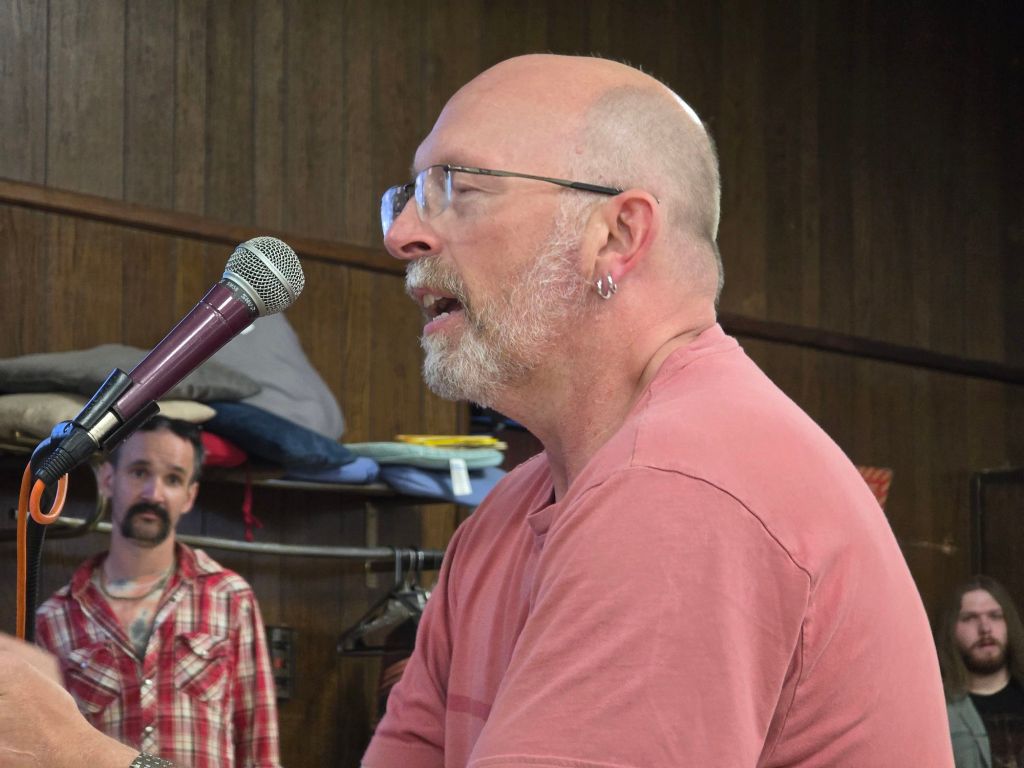
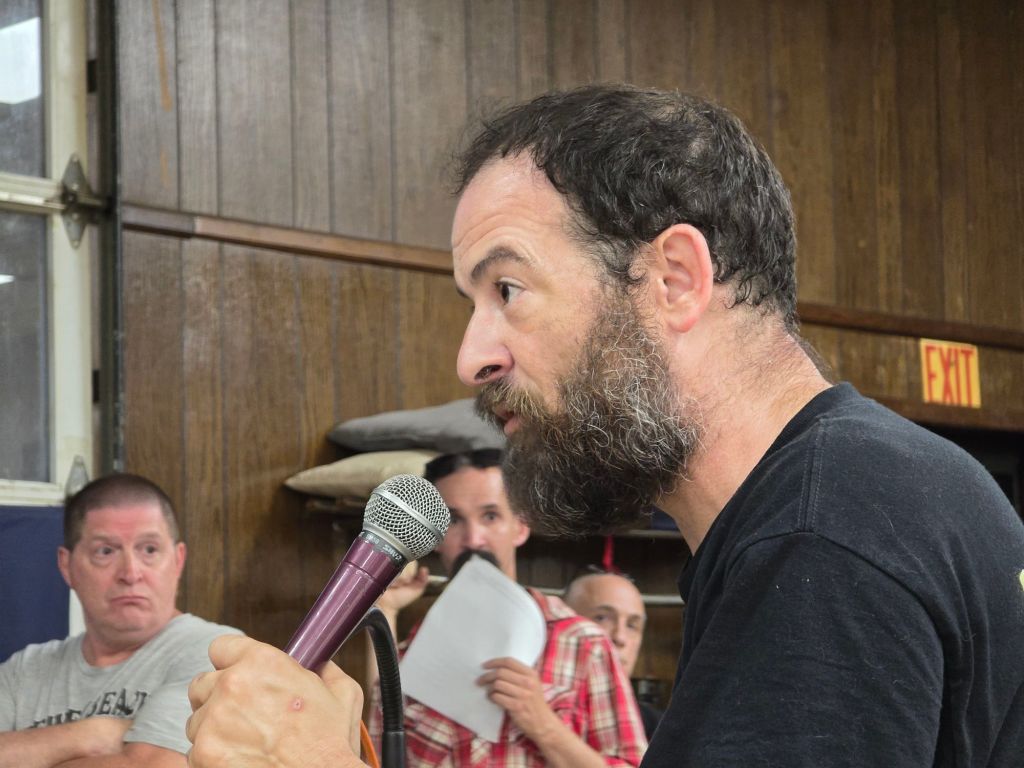
Brad Chambers: “The McGinness property should not have been purchased by our council in the first place.”
JOE LINTNER | COLUMBIA SPY
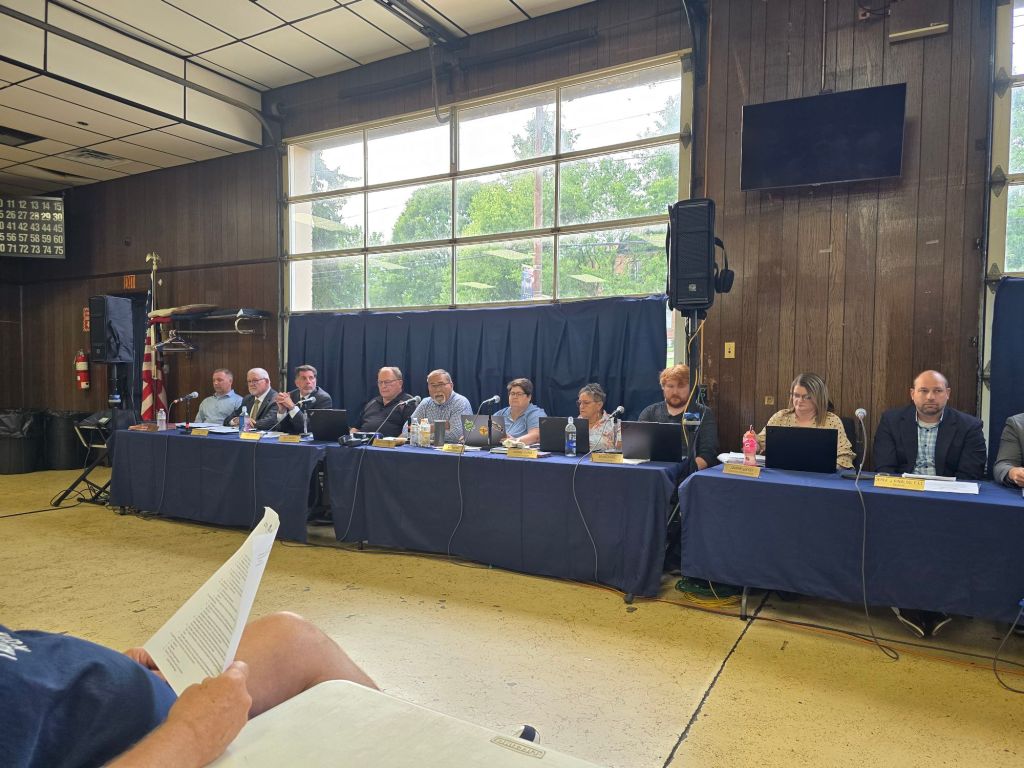
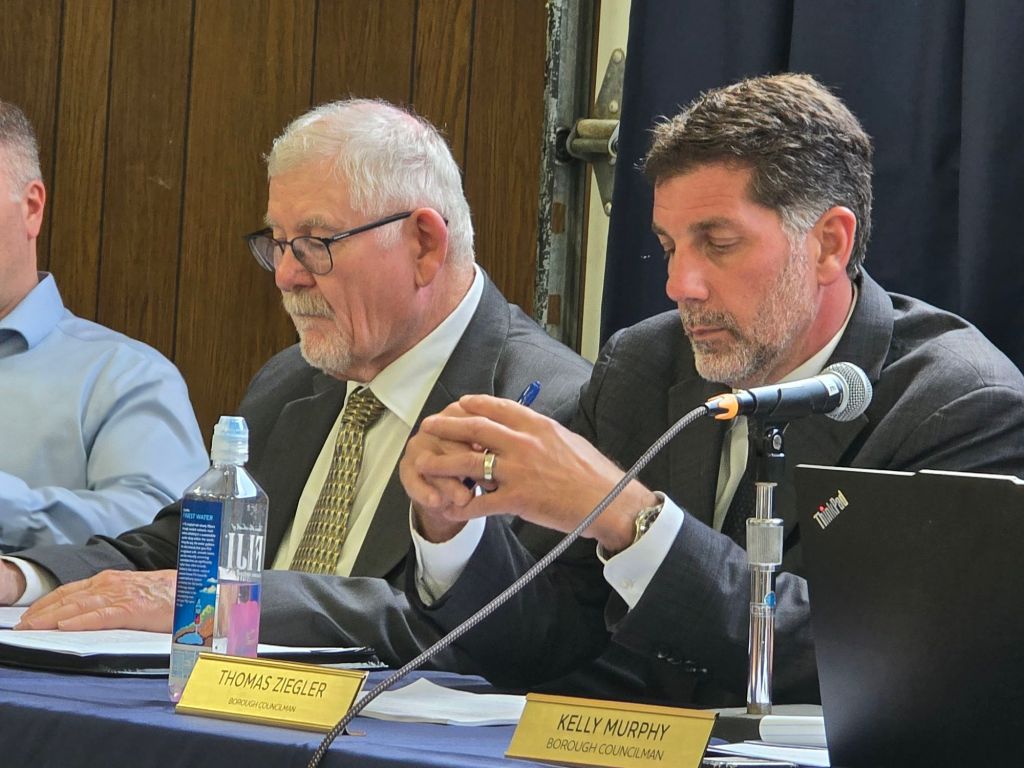
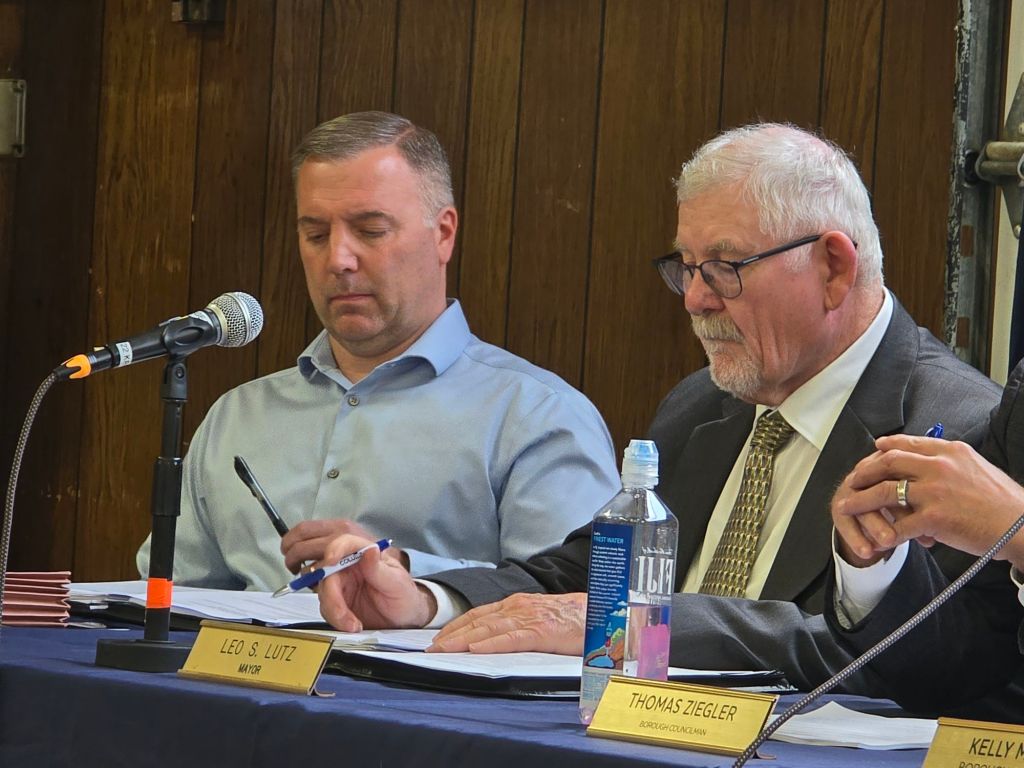
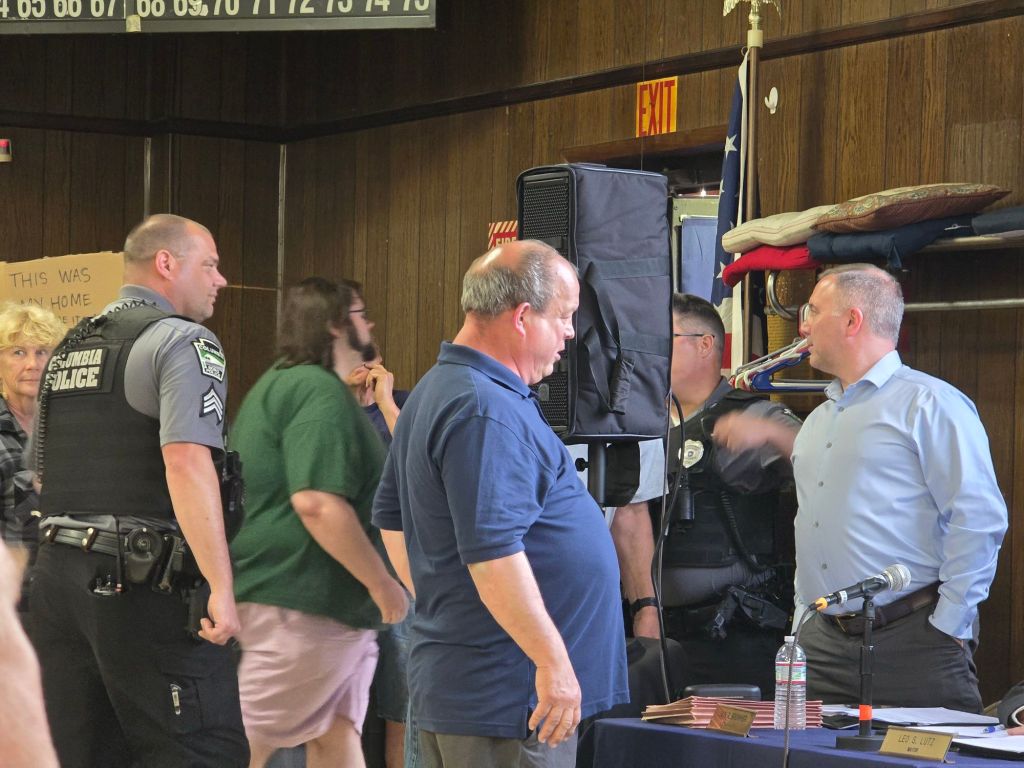
Columbia Borough Council voted unanimously Tuesday night to reject a $6.35 million bid for the former McGinness Airport property, in a four-and-a-half hour meeting that drew a standing-room-only crowd.
The sole bid came from Saadia Holdings LLC, a New York-based company that manages retail properties and owns a large distribution center in Lancaster County. Residents widely believed the 41-acre site on Manor Street, currently known as the McGinness Innovation Park, was being eyed for AI data center development.
Ally Reitzel: “How could this issue . . . have any positivity towards our housing market?”
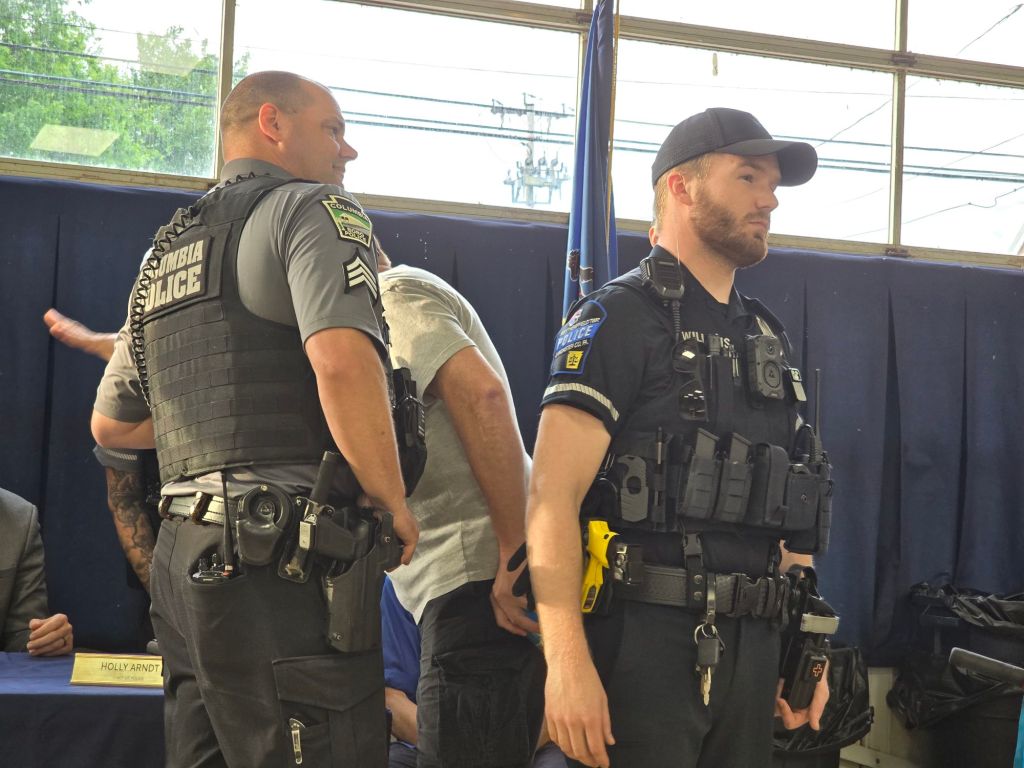
More than 300 residents packed the Columbia Borough Fire Hall, which had replaced the municipal building as the meeting venue in anticipation of heavy attendance. At one point, the crowd had swelled to between 500 and 600 attendees, some of whom were asked to leave the hall due to fire regulations. Roughly 40 residents spoke during public comment, and a petition against data center development that had gathered nearly 1,500 signatures was presented.
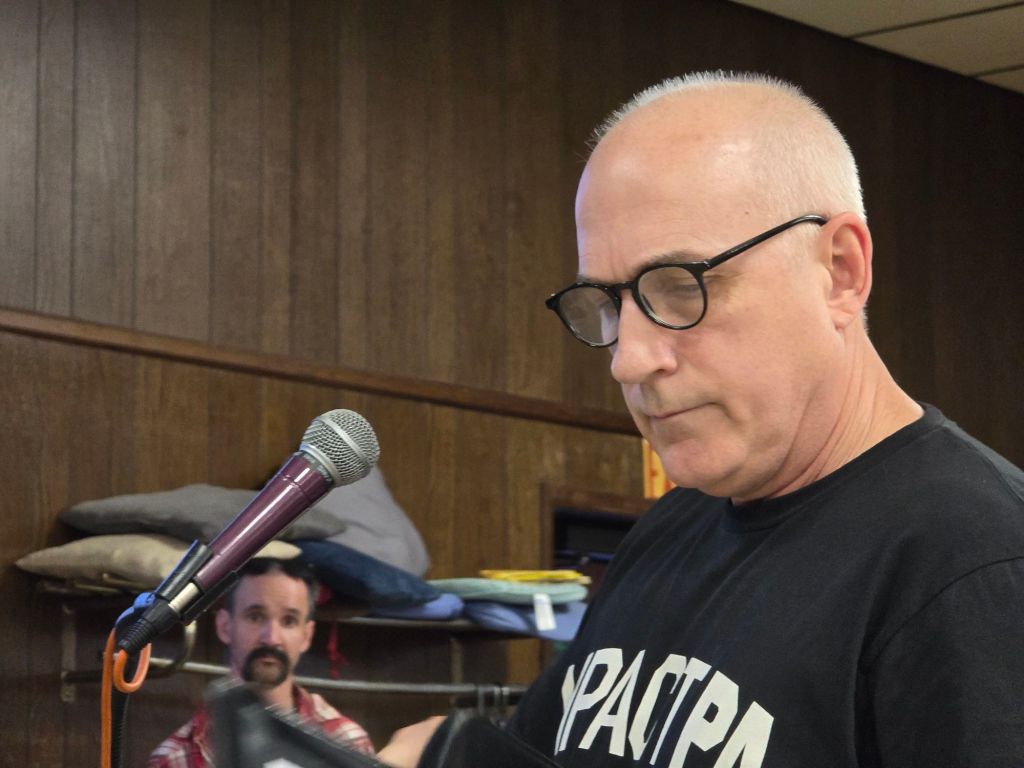
Dennis Wolpert: “Nobody included us as taxpayers and residents of this town about our opinion whether we should buy that property down there.”
Speakers raised a wide range of concerns, including property values, potential environmental damage to the Susquehanna River, increased water and energy consumption, industrial noise, and the limited number of jobs such a facility would create. Many argued the property would better serve Columbia’s emerging identity as a recreation-focused river town, with calls for housing, tourism, or community-centered development instead.
The bid ultimately failed on a technical flaw. Council Vice President Heather Zink explained that Saadia’s proposal did not guarantee payment within a state-required 60-day window following a bid award. The company had sought to delay payment until permits were approved, a timeline that could have exceeded that deadline. An attorney for Saadia told the council she was not authorized to modify the bid’s terms on the spot, leaving council little choice but to vote no.
Council members acknowledged the borough’s financial situation. The property, purchased in 2021, has yet to generate revenue, and officials noted a significant running deficit. Supporters of the sale argued it represented an opportunity for immediate funding and future tax income. Those arguments, however, did not sway the outcome.
Transparency concerns also surfaced throughout the meeting. Pennsylvania’s sealed bid law limited what council could disclose about Saadia’s intentions ahead of the vote. Data centers are already permitted by right under the property’s current zoning, meaning future development could potentially move forward without additional public hearings.
A proposed ordinance to regulate data centers in the borough remains in draft form and was tabled for further review, leaving the community without clear regulatory guidelines. Pennsylvania law requires municipalities to zone for all purposes, making it likely the council will revisit the issue.
With the bid rejected, the future of the McGinness property remains open. Council may reopen the bidding process, pursue alternative development partnerships, or revisit the borough’s zoning framework before entertaining new proposals.











 Columbia Spy
